When should a sawmill upgrade its material handling equipment?
A sawmill should upgrade its material handling equipment when maintenance costs are rising consistently, throughput is falling behind demand, or machinery can no longer support modern safety and efficiency standards. For most operations, that inflection point arrives somewhere between 10 and 20 years of heavy use, though the real trigger is operational performance rather than age alone. The sections below walk through the key questions every sawmill manager should ask before making that call.
What are the signs that sawmill handling equipment needs replacing?
The clearest signs that sawmill equipment needs replacing are frequent unplanned breakdowns, rising repair frequency, difficulty sourcing spare parts, and visible declines in handling speed or precision. When downtime starts eating into production schedules on a regular basis, the machine is telling you something the maintenance log already knows.
Beyond breakdowns, watch for subtler signals. Operators compensating for equipment limitations by slowing cycles, skipping loads, or manually correcting positioning errors are all signs that the machine is no longer performing to spec. Excessive fuel or energy consumption compared to newer benchmarks is another indicator that should not be ignored. If your hydraulic material handling machine is struggling to maintain consistent grip pressure, response time, or lift capacity, those degraded functions compound across every shift.
Regulatory pressure is also a legitimate trigger. Emissions standards, noise regulations, and workplace safety requirements have tightened significantly over the past decade. Equipment that was compliant when it was purchased may now fall outside acceptable limits, creating liability as well as inefficiency.
How does outdated equipment affect sawmill productivity and costs?
Outdated sawmill equipment reduces productivity by slowing cycle times, increasing unplanned downtime, and forcing operators to work around machine limitations rather than with them. On the cost side, older machinery typically consumes more fuel, demands more frequent servicing, and carries a higher risk of catastrophic failure that halts production entirely.
The productivity drag is often gradual, which makes it easy to underestimate. A machine that once handled a full log deck in a given time window may now require longer cycles due to worn hydraulics or sluggish control response. Multiplied across hundreds of cycles per shift, that slowdown translates directly into reduced throughput and missed delivery windows.
Maintenance costs compound the problem. Older machines require more labor hours to keep running, and replacement parts for discontinued models become progressively harder to find and more expensive to source. There is also the hidden cost of operator fatigue: working with unreliable or imprecise equipment is mentally taxing and increases the likelihood of handling errors that damage product or create safety incidents.
What material handling equipment does a sawmill actually need?
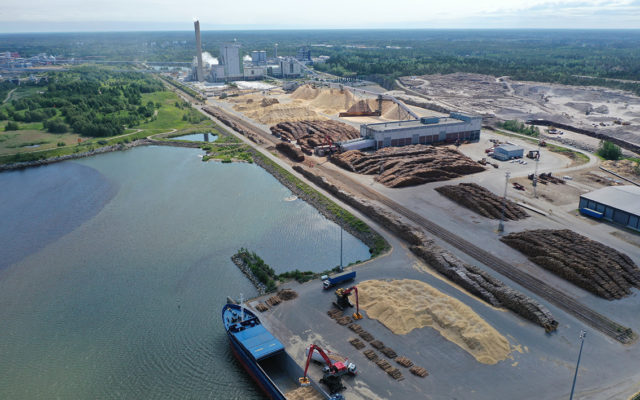
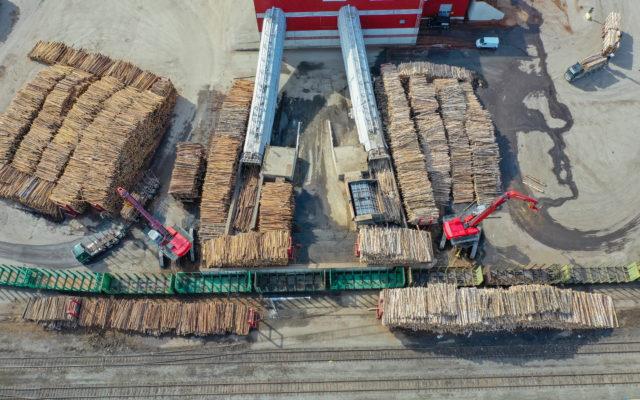
A sawmill’s core material handling needs typically include log infeed equipment, hydraulic cranes or handlers for log yard operations, stackers for lumber sorting and storage, and loading equipment for outbound logistics. The exact configuration depends on production volume, site layout, and whether the operation includes a wood terminal or direct shipping function.
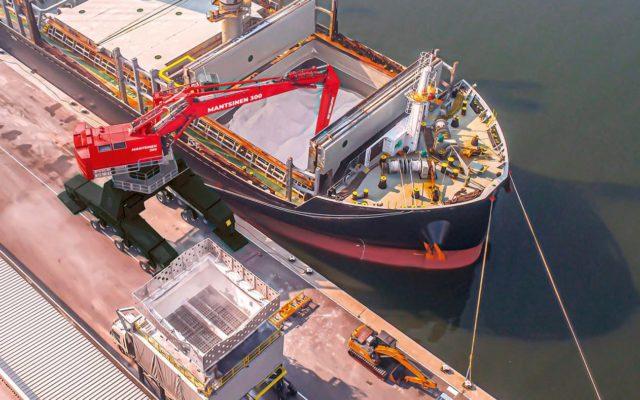
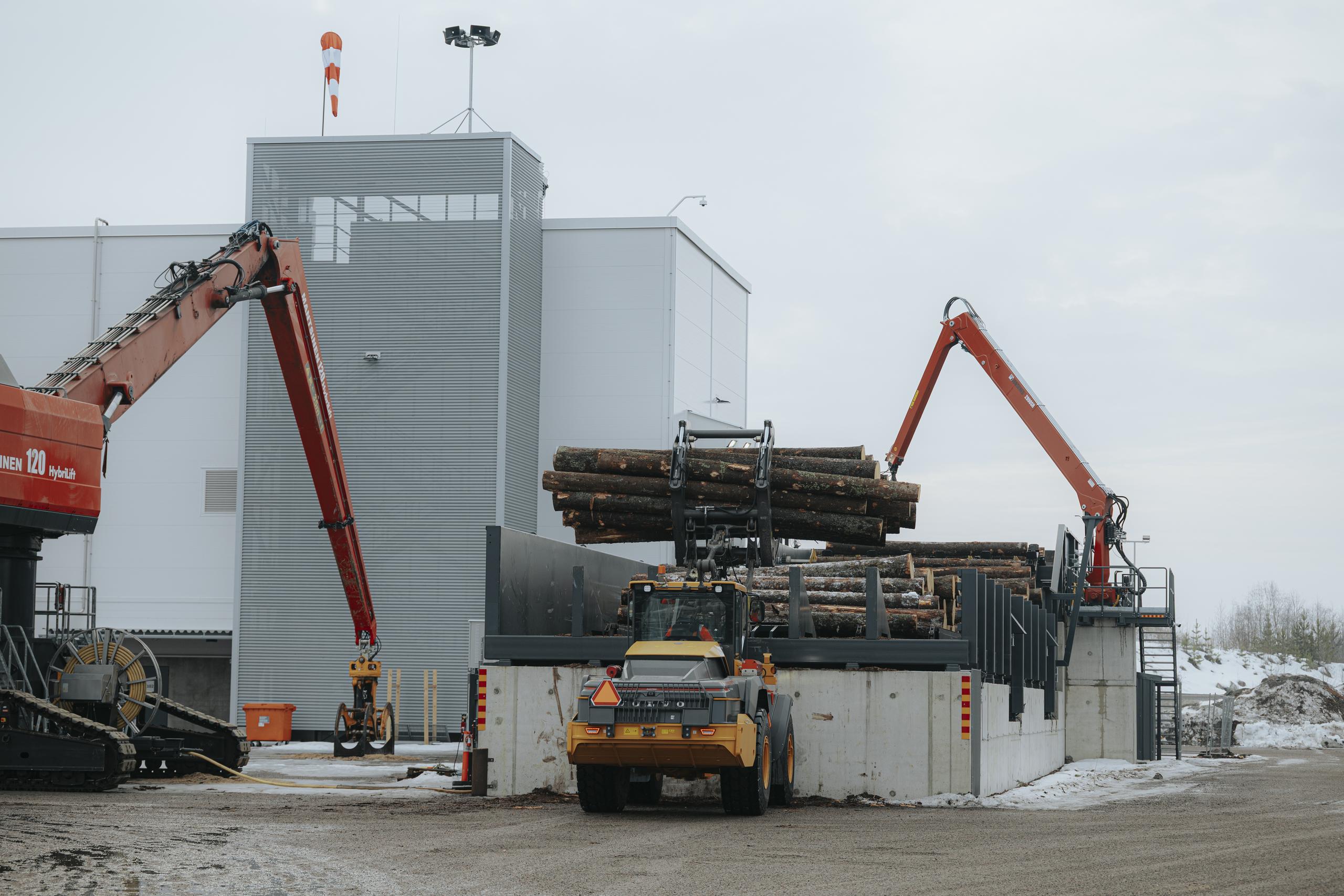
For log yard and wood terminal operations, hydraulic material handling machines are the workhorses. These machines need to handle large, irregular loads with precision, operate reliably in outdoor conditions across all seasons, and maintain consistent cycle performance over long shifts. Equipment designed specifically for wood terminal logistics, rather than adapted from general construction or port applications, tends to deliver better long-term performance in sawmill environments.
Attachments matter as much as the base machine. Grapples, log grabs, and specialized clamps designed for round wood or sawn timber each serve distinct functions. A sawmill upgrading its equipment should evaluate the full attachment ecosystem alongside the prime mover, not treat them as afterthoughts.
When is repairing sawmill equipment better than replacing it?
Repairing sawmill equipment makes more sense than replacing it when the machine’s core structure is sound, the repair addresses a specific and isolated fault, and the total repair cost is well below the threshold of ongoing annual maintenance spending. A single hydraulic seal failure or a worn attachment component is rarely a reason to replace an otherwise functional machine.
A useful rule of thumb: if the projected cost of a repair exceeds roughly 30 to 40 percent of the machine’s current market value, the economics of replacement deserve serious evaluation. Similarly, if a machine has required multiple significant repairs within a short period, the pattern suggests systemic wear rather than isolated faults, and continued repair investment may simply delay an inevitable replacement decision.
Age alone is not a disqualifier for repair. A well-maintained machine that has been serviced consistently and operated within its design parameters can remain productive well past its nominal service life. The decision should always be driven by performance data and cost trajectory, not the year of manufacture.
What should a sawmill look for in new material handling equipment?
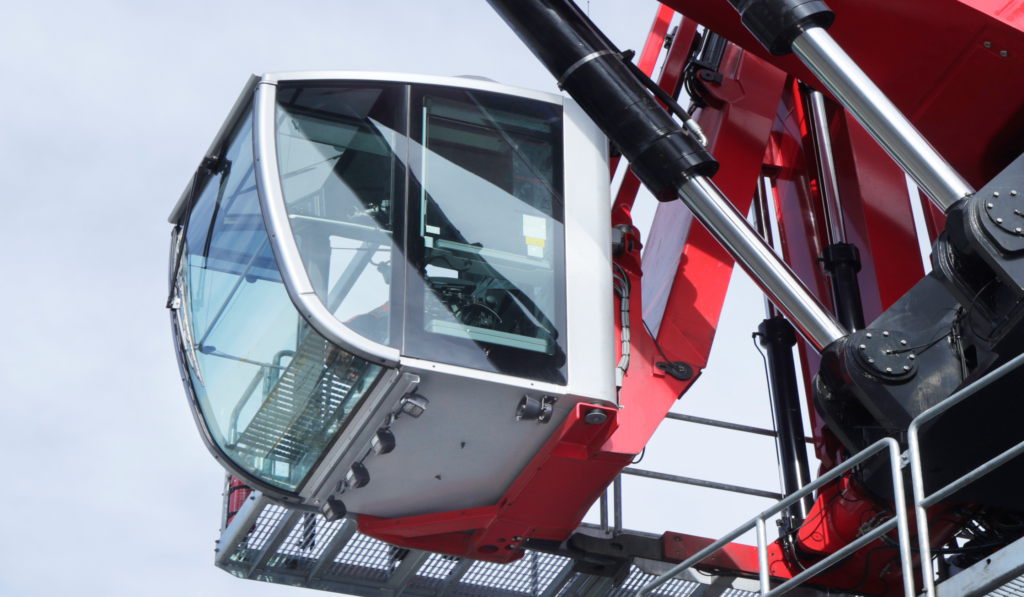
When evaluating new material handling equipment for a sawmill, prioritize lifting capacity matched to your log dimensions, energy efficiency, operator ergonomics, and the availability of manufacturer support including parts and service. Machines built specifically for wood terminal and sawmill logistics will outperform general-purpose alternatives over a full service life.
Energy efficiency deserves particular attention in 2026, given both fuel costs and sustainability reporting requirements. Our Mantsinen Hybrilift® system captures energy from the boom’s downward movement and reuses it to power the boom back up, reducing energy consumption by up to 50 percent. Over the life of a machine, that kind of efficiency gain has a direct and measurable impact on operating costs.
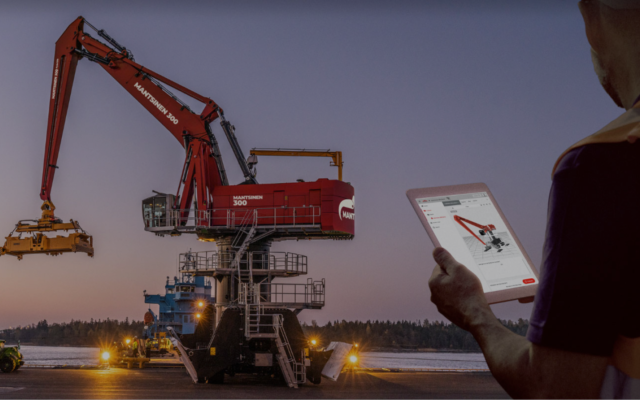
Connectivity and telematics are increasingly important selection criteria. Modern machines that provide real-time performance data, fault diagnostics, and remote monitoring give operations teams the visibility to schedule maintenance proactively rather than react to breakdowns. That shift from reactive to predictive maintenance is one of the most effective ways to protect uptime in a high-throughput sawmill environment.
How long does it take to see ROI after upgrading sawmill equipment?
Most sawmill operations begin to see a measurable return on investment from a material handling equipment upgrade within one to three years, depending on production volume, the efficiency gap between old and new equipment, and prevailing fuel and labor costs. Higher-volume operations with significant downtime or energy waste typically recover their investment faster.
The ROI calculation should account for more than the purchase price. Reduced fuel consumption, lower maintenance labor costs, fewer unplanned stoppages, and improved throughput all contribute to the return. Operations moving from aging diesel-only machines to dual-power configurations or machines equipped with energy recovery systems often see the fastest payback, since the energy savings begin on day one of operation.
It is also worth factoring in the cost of not upgrading. Every month a sawmill continues operating with underperforming equipment is a month of avoidable inefficiency, elevated maintenance spending, and competitive disadvantage. When framed that way, the ROI question is not just about how quickly new equipment pays for itself, but about how much the delay is already costing.