How do lifecycle services lower total cost of ownership for port equipment?
Lifecycle services lower the total cost of ownership for port equipment by reducing unplanned downtime, extending machine lifespan, optimizing energy use, and shifting maintenance costs from reactive to predictable. For port operators running hydraulic material handling equipment around the clock, these savings compound significantly over a machine’s operational life. The questions below unpack each dimension of that value in detail.
What components make up the total cost of ownership for port equipment?
The total cost of ownership (TCO) for port equipment includes the initial purchase price, installation and commissioning costs, ongoing maintenance and spare parts, operator training, energy consumption, downtime losses, and eventual decommissioning or resale. For hydraulic material handling machines in port environments, energy and maintenance typically account for the largest share of lifetime costs, often exceeding the original capital outlay.
Understanding each cost component helps port operators make smarter procurement decisions. The purchase price is visible and easy to compare, but it represents only a fraction of what a machine will cost over its full lifecycle. Here is a breakdown of the main TCO components to track:
- Capital expenditure: Purchase price, delivery, and installation
- Commissioning and training: On-site setup, system integration, and operator qualification
- Scheduled maintenance: Routine inspections, fluid changes, and component replacements
- Unplanned downtime: Emergency repairs, lost throughput, and expedited parts sourcing
- Energy costs: Fuel or electricity consumption over the full operational period
- Spare parts and consumables: Ongoing procurement throughout the machine’s life
- Upgrades and overhauls: Mid-life investments to restore or enhance performance
- Residual value: Resale or trade-in value at end of service life
A professional tip here: build a TCO model before you purchase, not after. Operators who evaluate equipment purely on sticker price frequently underestimate energy and maintenance costs, which can make a cheaper machine significantly more expensive over ten to fifteen years of operation.
How do lifecycle services reduce maintenance and downtime costs?
Lifecycle services reduce maintenance and downtime costs by shifting port equipment management from reactive to proactive. Scheduled inspections catch developing faults before they cause failures, original spare parts ensure reliable repairs, and remote diagnostics allow many issues to be resolved without waiting for an on-site technician. Together, these measures maximize machine availability and keep throughput consistent.
Unplanned downtime is one of the most damaging costs in port operations. When a material handler stops unexpectedly, it does not just create a repair bill, it disrupts vessel schedules, delays cargo handling, and can trigger contractual penalties. Proactive lifecycle service programs address this in several ways.
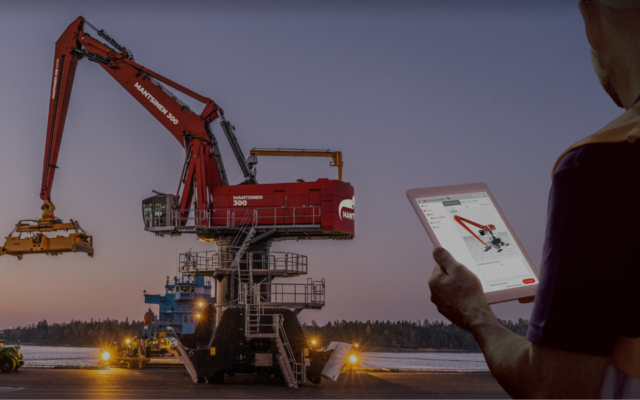
Remote monitoring technology plays a growing role in this area. We offer Mantsinen INSIGHT™ telematics, which continuously tracks machine performance and flags potential issues before they escalate. Many faults can be diagnosed and resolved remotely, cutting both resolution time and the environmental footprint of unnecessary site visits.
Original spare parts are another critical factor. Using genuine parts rather than aftermarket alternatives ensures that components meet the original engineering specifications, which directly affects machine longevity and performance consistency. Our comprehensive equipment maintenance and support services keep parts accessible so that scheduled and emergency maintenance can proceed without long lead times.
What is the difference between a service contract and a full lifecycle service agreement?
A service contract typically covers a defined set of scheduled maintenance tasks for a fixed period, such as annual inspections or specific component replacements. A full lifecycle service agreement is broader: it covers the entire operational life of the machine, from initial commissioning and operator training through spare parts supply, remote monitoring, upgrades, and eventual overhaul or end-of-life assessment.
The practical distinction matters for how port operators budget and plan. A standard service contract gives you predictability for routine maintenance but leaves you exposed to the cost and disruption of unplanned events. A lifecycle service agreement builds a longer-term partnership with the equipment manufacturer or dealer, where the goal is sustained performance across the machine’s full service life rather than just completing scheduled tasks.
For port machinery operating in demanding, high-cycle environments, the lifecycle agreement model tends to deliver better TCO outcomes. It aligns the service provider’s incentives with the operator’s: both parties benefit when the machine runs reliably for as long as possible. Key elements that distinguish a full lifecycle service agreement include:
- Extended warranty coverage beyond the standard period for predictable cost planning
- Comprehensive documentation, including certificates, user manuals, and online spare parts catalogs
- Access to factory technical support for both partners and end customers
- Condition inspections and expert assessments, including for second-hand machines
- Upgrade and overhaul packages tailored to the machine’s age and operational profile
Professional tip: when evaluating service agreements, ask specifically what is covered when something unexpected happens, not just what the routine schedule looks like. The real value of a comprehensive agreement shows up in those unplanned moments.
How does energy recovery technology affect long-term operating costs?
Energy recovery technology reduces long-term operating costs by capturing energy that would otherwise be lost during machine operation and feeding it back into the system. For hydraulic material handling equipment, this primarily means recovering energy from boom movements and reusing it to power other machine functions, which directly cuts fuel or electricity consumption over thousands of operating hours.
In port environments where machines run continuously across multiple shifts, energy costs accumulate rapidly. A meaningful reduction in consumption per cycle translates into substantial savings over a machine’s operational life. Our Mantsinen Hybrilift® system, developed from 2006 onward, reduces energy consumption and costs by up to 50% by harvesting energy generated during boom movements and reapplying it within the machine’s hydraulic system.
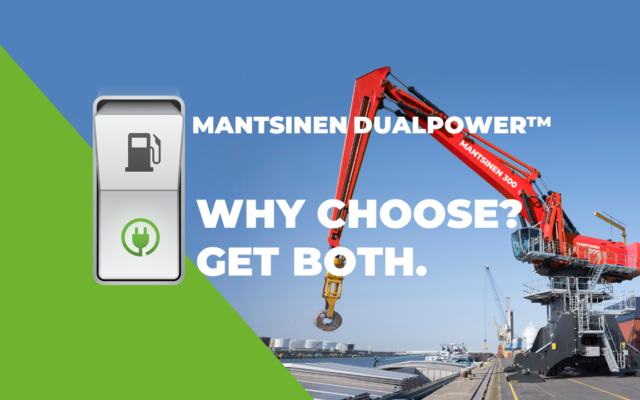
Our DualPower concept extends this further by combining an electric motor and a diesel engine in a single machine. Operators can run on electric power when grid connection is available, switching to diesel when mobility is needed. This flexibility means energy costs can be optimized based on real operational conditions rather than being locked into a single power source.
For TCO calculations, energy recovery technology should be treated as a long-term investment with compounding returns. The upfront cost of a machine equipped with these systems is offset by lower fuel bills and reduced emissions-related compliance costs, both of which are becoming more significant as port operators face tightening environmental regulations in 2026 and beyond.
When should a port operator consider upgrading versus extending equipment life?
A port operator should consider upgrading when a machine’s performance no longer meets operational demands, when safety standards have evolved beyond the machine’s current specification, or when the cost of keeping aging equipment running approaches the cost of a new machine. Life extension through overhaul is the better choice when the machine’s structural condition is sound and targeted refurbishment can restore reliable performance at a fraction of replacement cost.
This decision is rarely straightforward, and the right answer depends on a thorough condition assessment. Machines that have been well maintained and run within their design parameters often have significant service life remaining, but that life needs to be unlocked with the right interventions. Key questions to ask when making this decision include:
- Is the machine’s structural frame and primary hydraulic system in sound condition?
- Are replacement parts still available and cost-effective to source?
- Would a targeted upgrade, such as a new control system, attachment, or safety feature retrofit, restore the machine to a competitive performance level?
- What is the projected cost of a full overhaul compared to a new machine over the next five to ten years?
- Are there new operational requirements, such as higher throughput targets or emissions limits, that the current machine cannot meet even after refurbishment?
We offer upgrade and life extension solutions designed specifically to address these situations. From performance and safety upgrades to comprehensive overhauls, our packages are tailored to the machine’s age, condition, and the operator’s operational goals. Retrofit options allow new features and the latest technology to be added during the machine’s lifecycle without full replacement.
Professional tip: commission an expert condition inspection before making the upgrade-versus-replace decision. An objective technical assessment of the machine’s current state gives you the factual basis to compare options accurately, and avoids both premature replacement and over-investment in equipment that has genuinely reached the end of its useful life. Contact our sales team to discuss equipment options and get guidance tailored to your specific operational situation.