What should we look for when choosing a material handler supplier?
When choosing a material handler supplier, prioritize proven technical expertise, a robust after-sales support network, and machines designed specifically for your application and operating environment. The right supplier does more than sell equipment — they become a long-term partner in your productivity, uptime, and operational cost management. The questions below break down exactly what to evaluate before you commit.
What criteria separate a reliable material handler supplier from the rest?
A reliable material handling equipment supplier combines deep product knowledge with genuine field experience, a strong dealer network, and a clear commitment to after-sales support. The most dependable suppliers do not simply manufacture machines — they understand the workflows, load cycles, and environmental demands their equipment will face every day at your site.
Start by looking at how long the supplier has been active in the industry and in which sectors. A manufacturer with decades of continuous operation has refined their designs through real-world feedback, not just engineering theory. Check whether the company operates its own equipment in production environments. Suppliers who run their machines alongside customers have a fundamentally different relationship with product quality — every design flaw or maintenance shortcoming affects their own bottom line.
Next, evaluate the breadth of their dealer and service network. A machine that cannot be serviced quickly becomes a liability. Ask specifically how many authorized service partners are in your region and how quickly critical spare parts can be delivered. A supplier who stocks parts locally and offers remote diagnostic capabilities signals a serious, long-term commitment to customer uptime rather than just the initial sale.
What types of material handlers are available, and which fits your application?
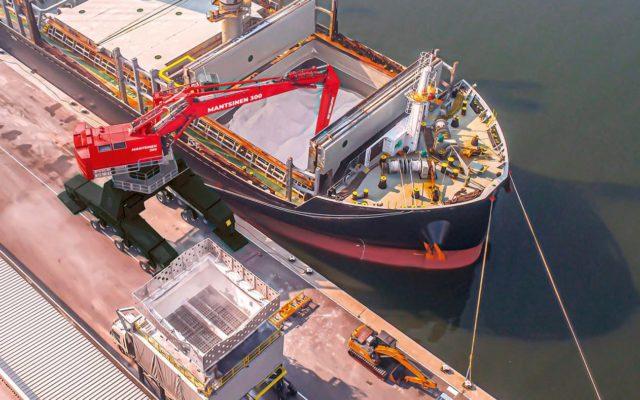
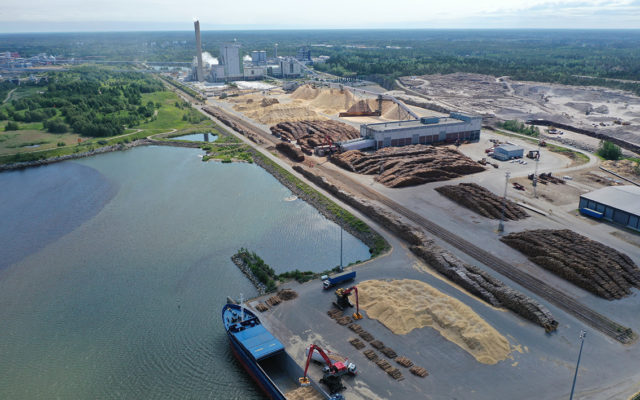
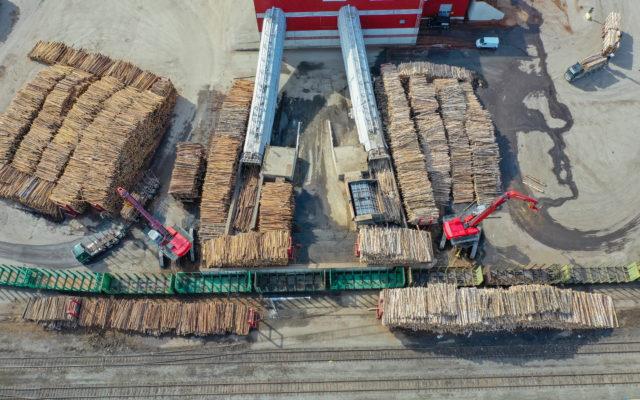
Hydraulic material handlers for heavy-duty bulk handling are the dominant choice for heavy-duty bulk material handling in ports, wood terminals, steel mills, and industrial facilities. They are available in a wide range of sizes and configurations, from mid-range machines suited to covered warehouses and smaller terminals to very large-capacity handlers designed for high-throughput port and industrial operations.
The key variables when matching a machine to your application are reach, lifting capacity, cycle time requirements, and the type of attachment needed. Log grapples, orange-peel grabs, electro-magnets, and specialized clamshell buckets each suit different materials and loading scenarios. A good material handler manufacturer will guide you through attachment selection as part of the machine specification process rather than treating it as an afterthought.
Power configuration is another important dimension. Diesel-powered machines offer full mobility and are well suited to sites without reliable electrical infrastructure. Electric-powered machines reduce emissions and fuel costs in fixed or semi-fixed positions. Hybrid configurations — such as those that combine a diesel engine with an electric motor — give operators the flexibility of mobility while capturing the efficiency benefits of electrification. Choosing the right power setup from the start avoids costly retrofits later.
How does energy efficiency factor into choosing a material handler?
Energy efficiency directly affects your long-term operating costs, carbon footprint, and regulatory compliance. In high-cycle operations like port terminals or wood handling facilities, fuel and energy costs can represent a substantial portion of total machine ownership costs, making efficiency a financial decision as much as an environmental one.
When evaluating suppliers, ask specifically about energy recovery systems. Some modern hydraulic material handlers incorporate regenerative technology that captures energy from boom movements and reuses it within the hydraulic system, meaningfully reducing fuel consumption per operating hour. We developed our Mantsinen Hybrilift® energy recovery system starting in 2006 — a system that captures the kinetic energy of the boom during lowering and uses it to assist the boom during lifting. It has demonstrated reductions in energy consumption and costs of up to 50% in real operating conditions — not laboratory estimates.
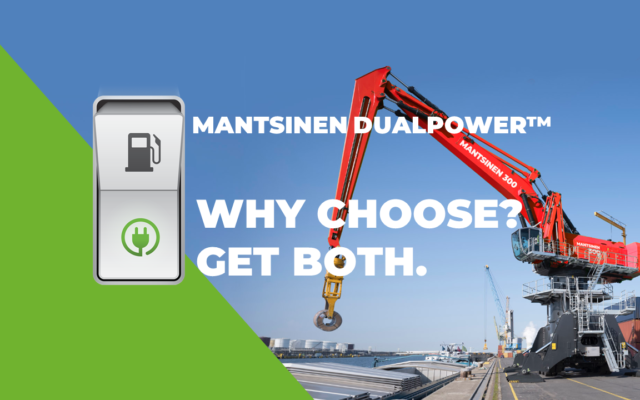
Also consider the DualPower concept, which combines a diesel engine and an electric motor in a single machine. This approach gives operators the freedom to run on electricity when connected to the grid and switch to diesel when mobility is required. For operations that are transitioning toward lower-emission targets, this kind of flexibility provides a practical path forward without sacrificing productivity.
What should you ask a supplier about after-sales service and spare parts?
Before purchasing any material handling machine, ask your supplier directly: How is service delivered in my region? How are spare parts stocked, and how quickly can they be delivered? What remote support capabilities do you offer? The answers reveal whether the supplier treats after-sales as a core business function or as an obligation they would rather minimize.
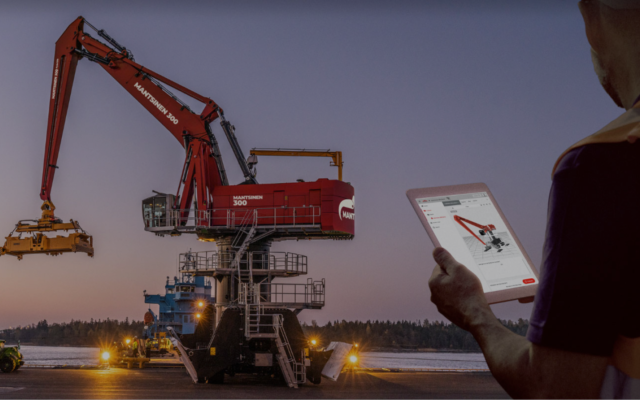
We take a structured approach to technical support that is worth understanding as a benchmark. Our Mantsinen Insight telematics system monitors machine health and can automatically notify operators or owners when scheduled maintenance is approaching, reducing the risk of missed service intervals. When a technical issue arises, our factory customer service team can connect directly to the machine remotely to diagnose problems and support local service technicians in real time — shortening resolution times significantly.
On spare parts, ask whether the supplier uses a modular design philosophy. Machines built on modular platforms allow the same components to serve multiple machine sizes, which reduces the inventory a dealer needs to stock and speeds up parts availability for you. Original manufacturer parts are always preferable to aftermarket alternatives — they are designed and tested for the specific machine, preserving performance and extending service life. Our standard warranty covers machines and attachments for 12 months, with extended warranty options available through local dealers for added confidence.
Why does a supplier’s own operational experience matter when buying a material handler?
A supplier who operates its own machines in production environments understands performance, reliability, and maintenance in a way that pure manufacturers simply cannot. Operational experience closes the gap between design intent and real-world performance, and it produces machines that have been tested against the demands of actual logistics and industrial workflows.
We are the only material handler manufacturer in the world that also operates our own machines as a service provider at forest industry and steel industry facilities. With over 60 years of operational history and more than 500 million cubic meters of material handled, we have accumulated practical knowledge that feeds directly back into machine design and development. When we specify a component, set a maintenance interval, or design a new attachment, we are drawing on our own firsthand experience — not just customer feedback.
This matters to you as a buyer because it means design decisions are made with operational reality in mind. Machines are built to be maintained efficiently, to perform consistently across long shifts, and to handle the kinds of edge cases that only emerge after thousands of operating hours. Ask any supplier you are evaluating whether they run their own equipment commercially. The answer tells you a great deal about how deeply they understand the work their machines are asked to do.
How do you compare material handler suppliers across different markets?
Comparing material handler suppliers across different markets requires looking beyond machine specifications to evaluate global reach, local support infrastructure, and adaptability to regional operating conditions. A supplier with strong sales in one market but limited service presence in yours creates real operational risk, no matter how capable their machines are on paper.
Start with geographic coverage. Does the supplier have authorized dealers and service partners in your country or region? Are spare parts warehoused locally, or does every order require international shipping? These logistics questions have a direct impact on machine uptime and total cost of ownership. Suppliers who export to more than 50 countries and maintain structured regional distribution networks demonstrate the kind of global commitment that supports buyers in diverse markets.
Also evaluate how well the supplier’s product range addresses the specific conditions of your market. Port environments, wood terminals, and steel mills each have distinct requirements around machine size, attachment type, and duty cycle. A supplier who offers a broad, configurable product lineup — from mid-range machines to the largest hydraulic handlers available — gives you more room to match equipment precisely to your needs rather than accepting a compromise. Finally, look at the supplier’s financial stability and track record. A company with a strong revenue base and decades of continuous operation is more likely to be there to support you five or ten years from now than a newer entrant still establishing its market position.