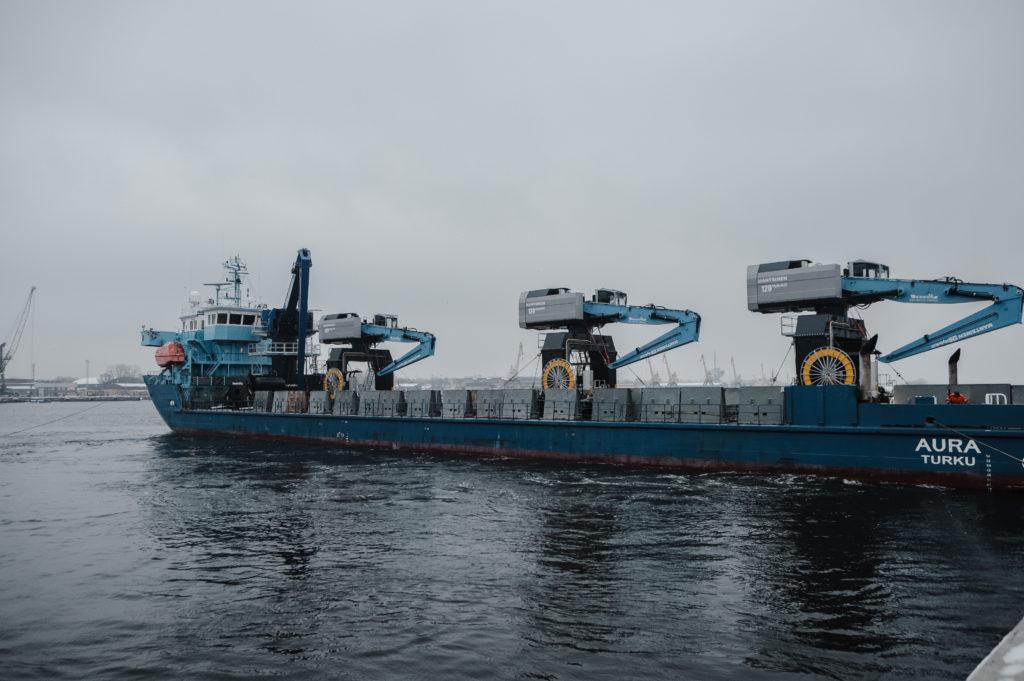
Why is energy recovery important in wood terminal material handlers?
Energy recovery is important in wood terminal material handlers because it directly reduces fuel consumption and operating costs while lowering emissions from one of the most energy-intensive operations in timber logistics. Hydraulic handlers repeatedly lift and lower heavy loads throughout every shift, and without energy recovery, the potential energy released during lowering is wasted as heat. The sections below unpack how this works in practice, what operators can realistically expect to save, and when upgrading makes business sense.
How does energy recovery work in hydraulic material handlers?
Energy recovery in hydraulic material handlers captures the kinetic and potential energy generated when the boom lowers a load and feeds it back into the machine’s power system instead of dissipating it as heat. In conventional hydraulic machines, this energy is simply lost through the hydraulic braking circuit. Recovery systems intercept it and store it or reuse it immediately.
Our Mantsinen Hybrilift® system is a practical example of how this works in a real wood terminal setting. Hybrilift® is a system that captures the boom’s kinetic energy during the lowering movement and makes it available for the next lifting cycle. The result is that a significant portion of each lift is powered by energy recovered from the previous lowering movement rather than by fresh fuel combustion.
The engineering behind this is straightforward in principle but demanding in execution. The system must respond quickly enough to match the continuous, variable rhythm of a working handler, store recovered energy in a form that can be released on demand, and integrate seamlessly with the machine’s existing hydraulic and control architecture. When these elements work together, the machine effectively recycles its own work energy across every operating cycle.
How much energy can a wood terminal handler actually save?
A wood terminal material handler equipped with an effective energy recovery system can reduce energy consumption by up to 50% compared to a conventional hydraulic machine performing the same tasks. This figure reflects the potential of systems like our Hybrilift, which we began developing in 2006 specifically to address the repetitive lifting cycles that define wood terminal operations.
The actual savings in any specific terminal depend on several factors. Handlers that perform frequent, high-cycle lifting and lowering movements see the greatest benefit because there are more recovery opportunities per shift. Terminals where machines run long daily hours amplify the cumulative effect. Load weight also matters: heavier loads generate more recoverable energy on descent, so handlers working with dense timber volumes tend to see stronger results than those handling lighter material.
It is worth being precise about what “energy savings” means in this context. In diesel-powered machines, reduced energy demand translates directly into lower fuel consumption per tonne of material handled. In machines with electric or hybrid power, it reduces the draw on the electrical supply or battery system. In both cases, the handler does more work per unit of energy input, which is the practical definition of efficiency in terminal logistics.
What are the main cost benefits of energy recovery for terminal operators?
The primary cost benefit of energy recovery for wood terminal operators is a direct reduction in fuel or electricity expenditure, which in high-utilization terminals represents one of the largest controllable operating costs. Secondary benefits include reduced wear on power components, lower maintenance frequency, and extended machine service life.
Fuel costs in a busy wood terminal are substantial. A large hydraulic handler running multiple shifts per day consumes significant quantities of diesel, and fuel price volatility makes this a persistent budget risk. When energy recovery cuts consumption by a meaningful percentage, the savings compound over thousands of operating hours. Operators can model this straightforwardly: take current annual fuel spend, apply the efficiency gain, and the result is a recurring annual saving that contributes directly to return on investment calculations for the machine.
Beyond fuel, energy recovery systems reduce thermal stress on hydraulic components. Conventional machines generate excess heat during braking cycles, and managing that heat requires additional cooling capacity and accelerates wear on seals, valves, and fluid. Recovery systems eliminate much of this heat generation at the source, which means cooling systems work less hard and hydraulic components experience less thermal degradation. Over a machine’s operational lifespan, this translates into lower maintenance costs and fewer unplanned stoppages.
How does energy recovery reduce the environmental impact of wood terminals?
Energy recovery reduces the environmental impact of wood terminals by cutting fuel combustion directly at the machine level, which lowers carbon dioxide and particulate emissions without requiring changes to terminal layout, workflow, or throughput targets. Fewer litres of diesel burned per tonne handled means a proportionally smaller emissions footprint for the same volume of timber processed.
Wood terminals occupy an interesting position in the broader sustainability picture. They are a critical link in the supply chain for renewable raw materials, yet the machines that handle timber are traditionally heavy consumers of fossil fuel. Energy recovery bridges this gap by making the machinery itself more consistent with the environmental profile of the material it handles.
For terminals operating under emissions reporting requirements or sustainability commitments, the measurable reduction in fuel consumption provides a concrete figure that can be reported and verified. This is increasingly relevant as timber customers, shipping partners, and regulators apply greater scrutiny to Scope 3 emissions across the supply chain. A terminal that can demonstrate lower emissions per tonne of material handled is better positioned in procurement discussions and regulatory frameworks alike.
What is the difference between a hybrid and a fully electric material handler?
A hybrid material handler combines a diesel engine and an electric motor in a single powertrain, allowing the machine to draw on both sources depending on operating conditions, while a fully electric handler runs entirely on grid or battery power with no onboard combustion engine. The practical difference for wood terminal operators is flexibility versus emissions purity.
Hybrid handlers
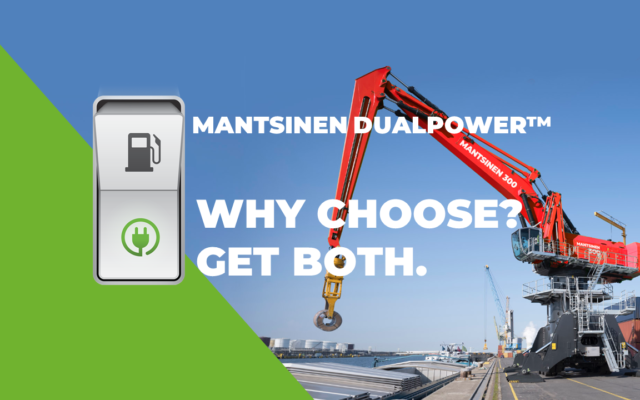
Our Mantsinen DualPower concept represents the hybrid approach. It pairs a diesel engine with an electric motor so that the machine can operate on electric power when connected to a grid supply and switch to diesel when working in locations without electrical infrastructure. This makes hybrid handlers well suited to terminals that have partial electrification or that need machines capable of working across different site conditions. Energy recovery systems like Hybrilift integrate naturally with hybrid powertrains, capturing recovered energy and feeding it into whichever power source is active.
Fully electric handlers
A fully electric handler eliminates diesel combustion entirely and draws all power from an external electrical supply. This delivers the lowest possible operational emissions and removes exposure to diesel fuel pricing, but it requires reliable, high-capacity electrical infrastructure at the terminal. For terminals that can provide this, full electrification is the logical endpoint of the efficiency journey. Energy recovery remains valuable in fully electric machines because it reduces the draw on the electrical supply, lowering energy costs and reducing peak demand charges.
When should a wood terminal upgrade to an energy-recovering machine?
A wood terminal should consider upgrading to an energy-recovering material handler when annual fuel costs are a significant budget line, when the current fleet is approaching the end of its service life, or when the terminal faces emissions targets that the existing machines cannot meet. These three triggers frequently coincide, making the upgrade decision both financially and operationally straightforward.
High-utilization terminals see the fastest payback. If a handler runs two or three shifts per day across most of the year, the cumulative fuel savings from energy recovery accumulate quickly and can offset the capital difference between a conventional and a recovery-equipped machine within a manageable number of operating years. Lower-utilization sites still benefit, but the payback period extends accordingly.
Fleet replacement cycles are a natural upgrade window. Replacing an aging machine with an energy-recovering model avoids the double cost of maintaining an inefficient machine while planning a future upgrade. When the replacement decision is already on the table, specifying energy recovery adds relatively little to the capital cost while delivering ongoing operational savings for the full life of the new machine.
Regulatory and customer pressure is an accelerating factor in 2026. Terminals that supply timber to manufacturers with published sustainability targets are increasingly expected to demonstrate their own emissions performance. Upgrading to energy-recovering equipment provides a measurable, reportable improvement that supports these conversations. If your terminal is navigating any of these situations, it is worth discussing your specific operating profile with our experienced team at Mantsinen to identify which configuration of energy recovery and power system best fits your throughput, infrastructure, and cost targets.