Can remote diagnostics replace on-site service for terminal equipment?
Remote diagnostics cannot fully replace on-site service for terminal equipment, but it can handle a significant portion of troubleshooting, monitoring, and early fault detection without a technician ever setting foot on site. For terminals running hydraulic material handling machines, remote diagnostics is most powerful as a first line of response that reduces call-out frequency and shortens resolution time when on-site visits are genuinely needed.
The sections below break down exactly what remote diagnostics can and cannot do, how it works in practice on hydraulic machines, and how to build a maintenance strategy that gets the best out of both approaches.
What can remote diagnostics actually detect on terminal equipment?
Remote diagnostics on terminal equipment can detect a wide range of operational and mechanical issues in real time, including hydraulic pressure anomalies, engine fault codes, temperature deviations, sensor failures, cycle time irregularities, and fuel or energy consumption patterns that fall outside normal parameters. Essentially, any condition that generates a data signal from the machine’s control systems is visible remotely.
On hydraulic material handling machines specifically, this covers a lot of ground. Hydraulic systems are instrumented with pressure sensors, temperature probes, and flow monitors that continuously report to the machine’s onboard controller. When values drift outside acceptable ranges, the system flags them immediately. Remote access to those flags means a technical team can begin diagnosing the root cause before a local technician has even been dispatched.
Beyond fault codes, remote diagnostics also tracks utilization patterns. If a machine is working harder than its duty cycle suggests, or if a particular actuator is showing signs of wear through slower response times, that information is captured and can be acted on before a failure occurs. This kind of visibility is what makes remote diagnostics genuinely valuable rather than just a convenience feature.
How does remote diagnostics work on hydraulic material handling machines?
Remote diagnostics on hydraulic material handling machines works through a telematics system that connects the machine’s onboard control unit to a secure cloud platform or direct communication channel. Authorized technical personnel can then access live machine data, run diagnostic routines, read fault logs, and in many cases adjust parameters without being physically present.
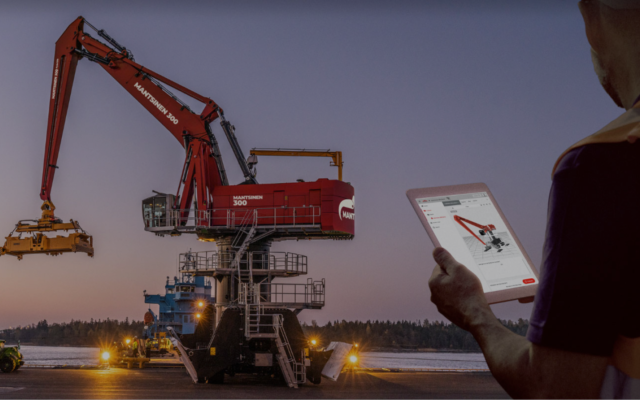
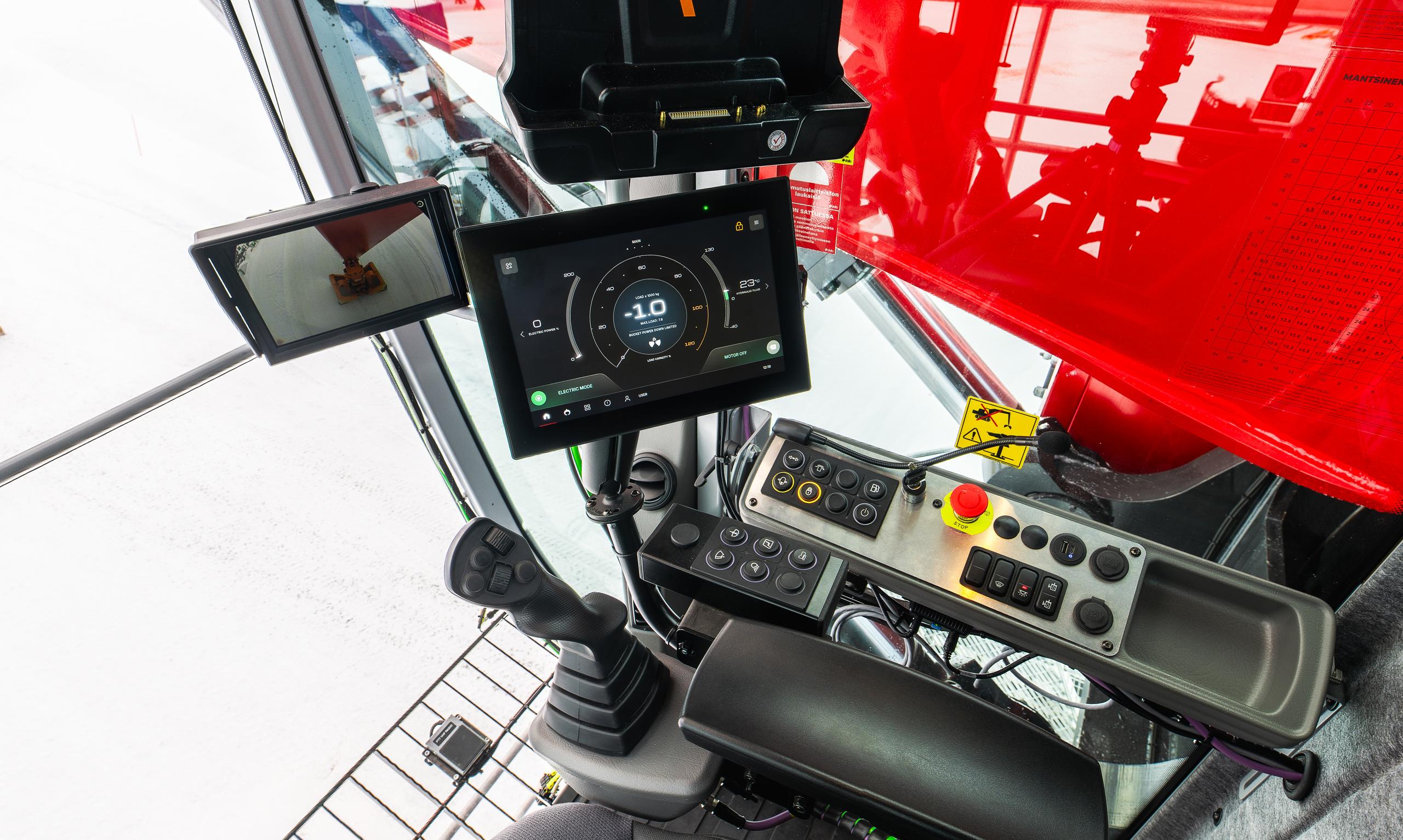
Our Mantsinen Insight telematics system is built exactly for this purpose. It provides a direct connection for our factory technical customer service team to troubleshoot most issues remotely. When a problem is reported or a fault code appears, our team can establish a live connection to the machine, review the data in real time, and guide the local service team through the resolution. This significantly improves resolution time and reduces the pressure on local technicians to diagnose complex hydraulic faults without support.
Mantsinen Insight also handles proactive communication. The system can be configured to automatically notify the machine operator or owner when a scheduled service interval is approaching, so maintenance never gets missed because of a busy operational calendar. When machines are kept on schedule through our dealer network, the operational reliability and predictability of the machine improve considerably.
What types of service issues still require an on-site technician?
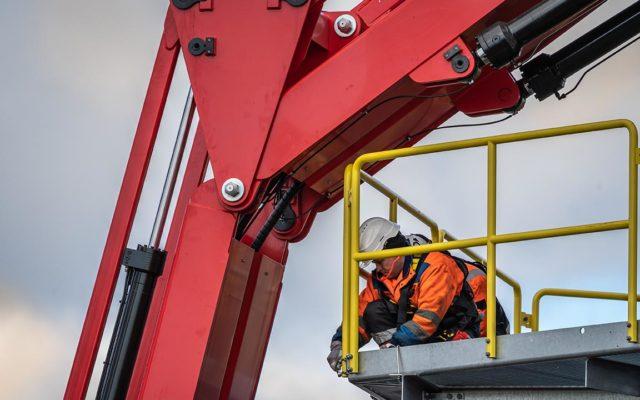
Physical component replacement, structural inspection, hydraulic seal changes, mechanical adjustments, and any repair that involves hands-on intervention with the machine’s hardware require an on-site technician. Remote diagnostics can identify and isolate these issues, but it cannot physically fix them. The distinction is between diagnosis and repair.
Some specific examples of work that always requires a technician on location include:
- Replacing hydraulic hoses, cylinders, or seals that have failed or are showing signs of wear
- Inspecting structural welds, boom components, or attachment points for fatigue or damage
- Calibrating sensors or load measurement systems that require physical reference checks
- Clearing blockages or contamination from hydraulic circuits that need flushing
- Commissioning after major component replacement, which requires test cycles under supervision
- Any safety-critical inspection that must be signed off by a certified technician
Remote diagnostics makes on-site visits more efficient by ensuring the technician arrives with the right parts and a clear understanding of the fault before they begin. That preparation time savings is itself a meaningful reduction in total downtime, even when the physical visit is unavoidable.
What’s the difference between reactive, preventive, and predictive maintenance for terminal equipment?
Reactive maintenance means fixing equipment after it breaks. Preventive maintenance means servicing equipment on a fixed schedule regardless of actual condition. Predictive maintenance means using real-time data and condition monitoring to service equipment only when the data indicates it is needed. For terminal equipment, predictive maintenance delivers the best balance of uptime and cost efficiency.
Reactive maintenance
Reactive maintenance is the most expensive approach over time. Unplanned breakdowns in a terminal environment cause cascading delays, and emergency call-outs for hydraulic material handling machines typically involve premium labor costs and extended downtime while parts are sourced. Terminals that rely primarily on reactive maintenance carry significant operational risk.
Preventive maintenance
Preventive maintenance reduces breakdown risk by keeping machines serviced at regular intervals. This is a reliable baseline strategy, and periodic maintenance through a knowledgeable dealer network remains the recommended foundation for keeping hydraulic material handling machines in peak condition. The limitation is that fixed schedules do not account for actual machine condition, so some services happen earlier than needed while some faults develop between service intervals.
Predictive maintenance
Predictive maintenance uses telematics data to identify developing faults before they cause failures. It does not replace scheduled servicing but adds a continuous monitoring layer between service visits. When a hydraulic temperature trend or a cycle time deviation signals a developing problem, maintenance can be planned around operational schedules rather than forced by an unexpected breakdown.
How much downtime can remote diagnostics prevent for terminal equipment?
Remote diagnostics can meaningfully reduce unplanned downtime for terminal equipment by catching developing faults early, accelerating fault diagnosis when issues do occur, and ensuring maintenance is never missed due to scheduling oversights. The exact reduction depends on the machine’s operating environment, duty cycle, and how actively the diagnostic data is monitored and acted upon.
The most direct downtime savings come from faster fault resolution. When a fault code appears on a machine in a remote port or terminal, the difference between waiting for a technician to travel and diagnose versus having a factory technical team connected within minutes can be measured in hours or even days. For high-throughput terminals where a single material handler handles thousands of tons per shift, that time difference has significant operational and financial consequences.
Proactive service alerts also prevent the kind of downtime that comes from deferred maintenance. A machine that misses a hydraulic fluid service because the terminal was too busy to schedule it is a machine that is accumulating risk. Automated service reminders through a telematics system remove that human scheduling gap from the equation entirely.
Should terminals use remote diagnostics as a replacement or a complement to on-site service?
Terminals should use remote diagnostics as a complement to on-site service, not a replacement. The two approaches address different parts of the maintenance challenge. Remote diagnostics excels at continuous monitoring, early fault detection, and accelerating diagnosis. On-site service is essential for all physical repair, inspection, and commissioning work. A terminal that relies on one without the other is either missing early warning signals or lacking the hands-on capability to act on them.
The most effective maintenance strategy for terminal equipment combines three elements working together: a solid foundation of scheduled preventive maintenance carried out through a qualified dealer network, a telematics layer that provides continuous remote monitoring and automatic service alerts, and access to factory-level technical support that can connect remotely to assist local teams when complex faults arise.
This layered approach means that routine servicing keeps machines in baseline condition, remote monitoring catches what scheduled maintenance cannot, and expert remote support reduces the burden on local technicians when the situation demands specialist knowledge. For terminals operating hydraulic material handling machines in demanding environments, that combination is what turns maintenance from a reactive cost into a proactive operational advantage.