What is the difference between DualPower and diesel-only machines?
The key difference between DualPower and diesel-only machines is that DualPower combines an electric motor and a diesel engine in a single machine, allowing operators to switch between power sources depending on the working environment. Diesel-only machines rely exclusively on combustion, while DualPower gives you the flexibility to run on grid electricity where it is available and diesel where it is not. The sections below break down how this plays out across costs, emissions, performance, and application fit.
How Does DualPower Combine Electric and Diesel Motors?
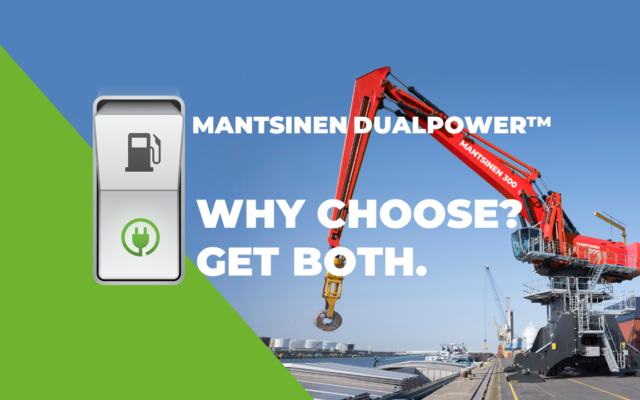
Mantsinen DualPower is the first dual-power concept in material handling machines that integrates an electric motor and a diesel engine into one machine, letting operators select the power source that best suits the situation. When connected to a power grid, the machine runs on electricity. When grid access is unavailable or impractical, the diesel engine takes over seamlessly without interrupting work cycles.
The system is not a hybrid in the traditional automotive sense, where both sources run simultaneously. Instead, DualPower is a switchable dual-source architecture. The electric motor and diesel engine each drive the machine independently, and the transition between them is designed to be straightforward for operators. This means a single machine can serve both indoor or grid-connected environments and remote or outdoor sites where only diesel is practical.
The engineering behind this concept draws on decades of hydraulic machine development. We designed DualPower to deliver equivalent power output from either source, so operators do not face a performance trade-off when choosing between electric and diesel modes.
What Are the Fuel and Energy Cost Differences Between DualPower and Diesel-Only?
DualPower machines offer meaningful cost advantages over diesel-only machines when grid electricity is accessible, because electricity is typically less expensive per unit of energy than diesel fuel. Operations that run primarily on electric power can reduce their fuel expenditure significantly over the machine’s lifetime, with the exact savings depending on local electricity rates, diesel prices, and how many hours the machine operates in each mode.
For diesel-only machines, every operating hour draws from the fuel tank, and fuel costs accumulate predictably over time. DualPower shifts a portion of those hours to the electricity grid, reducing diesel consumption proportionally. In port and terminal environments where machines often work long shifts near fixed infrastructure, the opportunity to run on grid power for the majority of hours makes the cost case for DualPower particularly strong.
It is also worth factoring in maintenance costs. Electric motors have fewer moving parts than diesel engines and generally require less servicing. A machine that spends more hours in electric mode will accumulate fewer diesel engine hours, which can extend service intervals and reduce wear-related expenses over the life cycle.
Which Applications Are Best Suited for DualPower Machines?
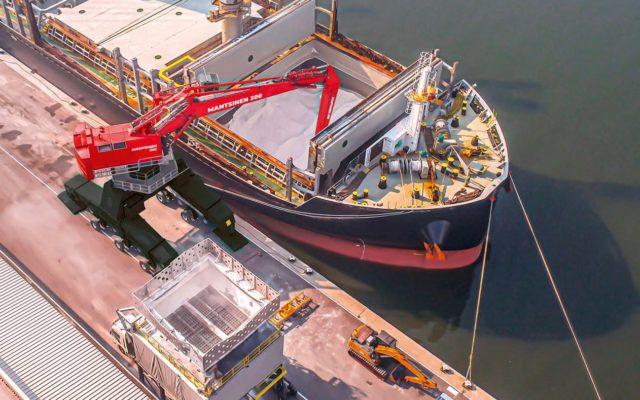
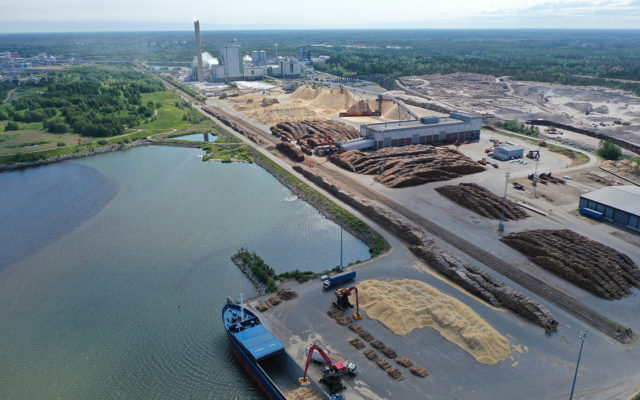
DualPower machines are best suited for operations that work across both grid-connected and off-grid environments, or that need to comply with indoor emissions regulations while retaining the ability to work in the open field. Ports, paper mills, steel terminals, and wood handling facilities are prime examples, because these sites often have fixed grid infrastructure in some areas and open-air zones in others.
Indoor and enclosed environments benefit most from electric mode. Running on electricity eliminates exhaust emissions at the point of operation, which matters in warehouses, covered terminals, and any facility with ventilation constraints or strict air quality requirements. When the same machine needs to move cargo in an open yard or travel to a remote area of a site, diesel mode provides the mobility that a fixed-power machine cannot.
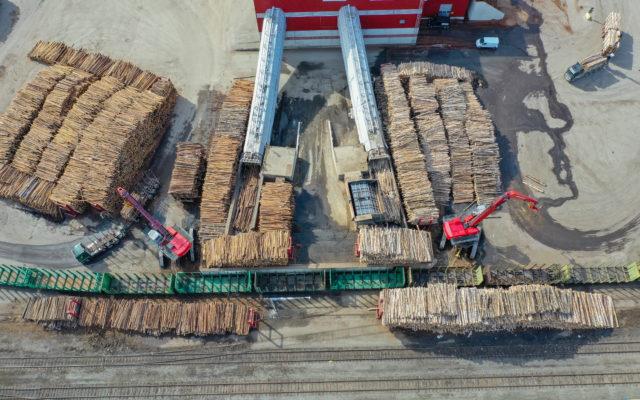
Operations that handle wood, pulp, or steel often have exactly this mixed-environment profile, which is why we developed DualPower with those industries in mind. A single DualPower machine can replace what might otherwise require two separate machines configured for different power sources.
How Do Emissions Compare Between DualPower and Diesel-Only Machines?
DualPower machines produce zero exhaust emissions at the point of operation when running in electric mode, while diesel-only machines emit exhaust continuously throughout every working hour. Over a full operating shift, a DualPower machine working primarily on grid electricity can dramatically reduce local air pollution compared to a diesel-only equivalent of the same size and capacity.
For operations with environmental targets or regulatory obligations, this distinction is significant. Many ports and industrial facilities face increasingly strict emissions standards, and DualPower provides a practical path toward compliance without sacrificing machine capability. Diesel-only machines, regardless of how modern their engines are, will always produce combustion emissions during operation.
It is important to note that the overall carbon footprint of electric operation depends on the energy mix of the local grid. In regions where electricity comes predominantly from renewable sources, the emissions advantage of DualPower is substantial. In regions with a coal-heavy grid, the benefit is more modest, though local air quality at the worksite still improves when running in electric mode.
Does DualPower Affect Machine Mobility or Performance?
DualPower does not compromise machine mobility or performance. In diesel mode, a DualPower machine operates with the same freedom of movement as a conventional diesel-only machine. The diesel engine provides full power for travel, lifting, and all standard work cycles without restriction. Switching to electric mode requires a connection to the power grid, which does mean the machine is tethered to a cable, but within that constraint, performance remains strong.
The power output from both sources is engineered to be equivalent, so operators do not experience a reduction in lifting capacity, cycle speed, or hydraulic response when switching modes. This parity is a deliberate design goal: we built DualPower so that the choice of power source is driven by the environment and cost factors, not by performance trade-offs.
Cable management is the main practical consideration in electric mode. Well-designed terminal and port layouts can accommodate cable routing effectively, and experienced operators quickly adapt to working with the cable. For sites that have not previously used cabled machines, some planning around cable routing and power connection points is worthwhile before commissioning.
When Should an Operation Choose Diesel-Only Over DualPower?
Diesel-only machines are the right choice when an operation is entirely remote, has no reliable access to grid electricity, or works exclusively in open environments where cable management would be impractical. If a machine will never realistically connect to a power source, the added complexity and initial investment of a dual-power system offer no return.
Highly mobile operations that move machines frequently between sites are also better served by diesel-only configurations. When a machine spends most of its life traveling between locations rather than working in a fixed facility, the infrastructure required to take advantage of electric mode is rarely in place.
Budget considerations can also play a role. DualPower machines carry a higher upfront cost than comparable diesel-only machines. For operations with tight capital budgets and no near-term access to grid power, a diesel-only machine may be the more practical starting point. That said, as emissions regulations tighten globally, the long-term value of DualPower capability is worth weighing carefully against the initial price difference.
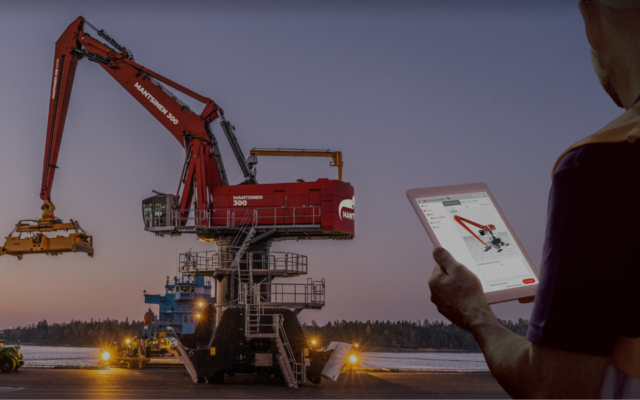
Whichever power system you choose, protecting your investment with strong lifecycle support makes a real difference. We offer comprehensive machine lifecycle support services from delivery and operator training through to remote diagnostics via Mantsinen INSIGHT™ telematics, scheduled maintenance, spare parts through our global dealer network, and upgrade options that keep your machine performing at its best throughout its working life. Getting the power system decision right from the start, backed by solid service planning, is the foundation of a low total cost of ownership.