Why is energy recovery important in material handling equipment?
Energy recovery is important in material handling equipment because it captures energy that would otherwise be wasted during braking and boom lowering cycles, then reuses that energy to power other machine functions. For port terminals and industrial operators running heavy hydraulic machines around the clock, this directly reduces fuel consumption, cuts operating costs, and lowers emissions. The sections below answer the most common questions about how energy recovery works, what it delivers, and how to evaluate it.
How does energy recovery work in hydraulic material handling machines?
Energy recovery in hydraulic material handling machines works by capturing the kinetic and potential energy released when heavy booms and attachments move downward or when the machine decelerates. Instead of dissipating that energy as heat through hydraulic braking, the system converts it into a usable form and stores it for reuse in subsequent lifting or swing cycles.
In practice, when a loaded boom lowers, the hydraulic pressure generated during that movement is directed into an energy storage unit rather than being vented away. That stored energy is then released to assist the next lifting cycle, reducing the load on the diesel engine or electric motor. The result is a machine that works smarter with the energy it already generates.
Our Mantsinen Hybrilift® system is built on exactly this principle. Development began in 2006, making us one of the earliest pioneers of hybrid energy recovery in heavy material handlers. The system captures energy from boom movements and feeds it back into the machine’s operations, creating a continuous loop that reduces the demand placed on the primary power source during every working cycle.
How much energy can material handling equipment actually recover?
The amount of energy that material handling equipment can recover depends on the machine’s duty cycle, the weight of loads handled, and the frequency of boom lowering movements. In intensive port and terminal operations where machines lift and lower heavy loads repeatedly, energy recovery systems can reduce overall energy consumption by up to 50%.
The Mantsinen Hybrilift® system achieves this level of savings because port and timber terminal operations involve constant, repetitive lifting cycles. Each lowering movement represents a significant energy return opportunity. The more frequently a machine cycles through lift-and-lower sequences, the greater the cumulative benefit of capturing that energy rather than losing it as heat.
It is worth noting that recovery rates vary with application. A machine handling lighter, mixed loads with irregular cycles will recover less than one running in high-tonnage, high-frequency port operations. Operators should evaluate their specific duty profile when estimating real-world savings.
What are the financial benefits of energy recovery for terminal operators?
Energy recovery delivers direct financial benefits to terminal operators through reduced fuel costs, lower maintenance expenses, and extended engine and hydraulic component life. When a machine recycles up to half its energy consumption, the savings compound across every operating hour, every shift, and every year of the machine’s service life.
Fuel is one of the largest variable costs in terminal and port operations. A machine that consistently reduces its fuel draw by a substantial margin generates measurable savings from day one. Over a machine’s full operational lifespan, which typically spans many years of intensive use, the cumulative fuel savings can offset a significant portion of the original capital investment.
Beyond fuel, energy recovery reduces thermal stress on hydraulic components because less energy is being converted to waste heat. This translates to longer service intervals, reduced wear on seals and valves, and lower unplanned downtime costs. For operators running multiple machines across a terminal, these maintenance savings scale proportionally.
What environmental impact does energy recovery have in port and industrial operations?
Energy recovery in port and industrial material handling operations directly reduces fuel consumption, which lowers CO2 emissions, particulate output, and overall environmental impact per tonne of material handled. For terminals operating under increasingly strict environmental regulations, this makes energy recovery a practical compliance tool as well as a sustainability commitment.
Ports and industrial terminals are under growing pressure from regulators and customers to demonstrate measurable emissions reductions. A machine that consumes significantly less fuel produces proportionally fewer exhaust emissions during every working hour. Across a full terminal fleet, the aggregate reduction in emissions can be substantial.
Energy recovery also reduces the noise and heat generated by heavy machines working at peak engine load. When the primary power source is assisted by recovered energy, it does not need to work as hard, which contributes to a quieter and cooler working environment. These secondary environmental benefits matter in urban port settings where community relations and noise regulations are relevant factors.
How does energy recovery differ from dual-power and electric machine concepts?
Energy recovery, dual-power systems, and fully electric machines are three distinct approaches to reducing the environmental and cost footprint of material handling equipment. Energy recovery captures and reuses energy the machine already generates. Dual-power systems combine two independent power sources. Fully electric machines eliminate the combustion engine entirely. Each addresses a different aspect of efficiency and sustainability, and a full overview of these innovations is available on our material handling machine technology page.
Energy recovery systems
Energy recovery systems like Mantsinen Hybrilift® work within the existing machine architecture to recycle energy that would otherwise be wasted. They do not replace the primary power source but make it work more efficiently. This approach is highly effective in high-cycle operations and can be combined with other power concepts.
Dual-power systems
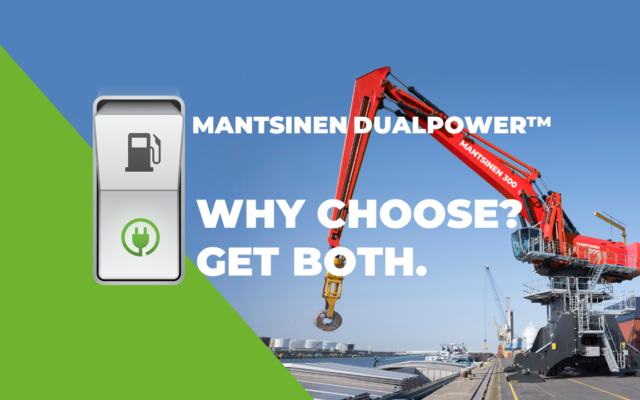
Our Mantsinen DualPower is the first dual-power concept in material handlers. It combines the best features of an electric motor and a diesel engine in a single machine, delivering mobility, productivity, and environmental performance in one platform. Where grid power is available, the machine runs on electricity. Where it is not, the diesel engine takes over. This flexibility makes DualPower particularly valuable in terminals with partial or developing electrical infrastructure.
The two concepts are complementary rather than competing. An operator might benefit from DualPower for site flexibility and energy recovery for cycle efficiency, and in the best configurations, both work together to maximize overall performance.
What should operators look for when evaluating energy recovery systems?
When evaluating energy recovery systems for material handling equipment, operators should assess duty cycle compatibility, the transparency of the energy savings data provided by the manufacturer, integration with the machine’s control system, and the supplier’s track record of operating machines in real-world conditions rather than just selling them.
Here are the key evaluation criteria to apply:
- Duty cycle match: Energy recovery delivers the greatest returns in high-frequency, high-load lifting cycles. Confirm that your terminal’s operating profile aligns with the conditions where the system performs best.
- Control system integration: An intelligent control system is essential for maximizing recovery efficiency. The system should automatically manage energy flow, display performance data clearly, and allow operators to monitor savings in real time.
- Remote diagnostics capability: Modern systems should support remote monitoring and diagnostics so that performance can be tracked and optimized without requiring on-site intervention for every adjustment.
- Manufacturer operational experience: Prefer suppliers who operate their own machines in live terminal environments. We have more than 60 years of hands-on operational experience and over 500 million cubic meters handled, which means our energy recovery solutions are shaped by real-world demands, not just engineering theory.
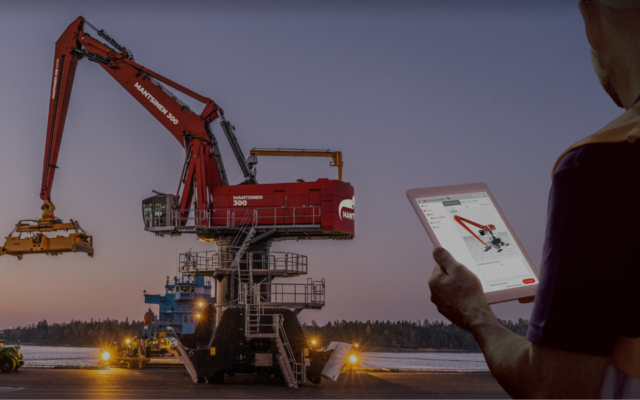
- Telematics and performance reporting: Systems like Mantsinen Insight allow continuous monitoring of machine performance and energy efficiency from any location, giving operators the data they need to verify that recovery targets are being met.
The most important professional tip for any operator evaluating energy recovery technology is to look beyond the headline savings figure and ask how those savings are measured, under what conditions, and whether the supplier has the operational depth to back up the claim. For more than two decades, we have led the development of energy-saving innovations in heavy material handling, and that experience is built into every machine we deliver.