What makes a material handler suitable for heavy port operations?
A material handler is suitable for heavy port operations when it combines high load capacity, robust hydraulic performance, versatile attachments, and intelligent control systems built specifically for the demands of port logistics. The machine must handle extreme weight, operate reliably in harsh weather and tight spaces, and sustain high productivity across long shifts. The questions below break down exactly what to look for when selecting port material handling equipment.
What load capacities does a port material handler need?
A heavy port material handler typically needs a lifting capacity ranging from several tonnes up to 50 tonnes or more, depending on the cargo type and operational scale. Bulk cargo terminals, timber ports, and steel handling facilities each place different demands on the machine, so capacity must be matched precisely to the heaviest loads the operation regularly encounters.
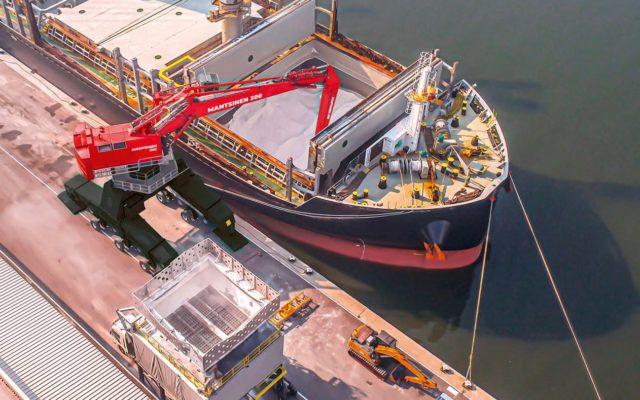
In practice, undersizing a machine creates bottlenecks and puts excessive stress on components, while oversizing wastes energy and capital. The right approach is to assess the peak load weight, including the attachment itself, and select a machine with a rated capacity that comfortably covers that figure with a safety margin. We design our machines across a wide range of capacity classes so that port operators can match the machine to the actual workload rather than compromising in either direction. Our flagship model, the Mantsinen 300, stands as the world’s largest hydraulic material handling machine, built precisely for the heaviest port environments.
How does a hydraulic material handler perform in port conditions?
A hydraulic material handler performs exceptionally well in port conditions because hydraulic systems deliver high force output, smooth controllability, and reliable operation across a wide range of temperatures and load variations. Hydraulics allow fine-tuned movements essential for precise cargo placement, and the system maintains consistent power even under the continuous, high-cycle demands typical in busy port logistics.
Ports expose machines to salt air, moisture, temperature swings, and demanding shift patterns. Hydraulic systems are well suited to these environments when properly engineered, because they are sealed, pressure-regulated, and can be configured for corrosion resistance. The boom and stick geometry of a purpose-built hydraulic material handler also gives operators the reach needed to work across wide vessel holds and high stockpile areas. Our machines are developed from real operational experience in exactly these environments, which means the hydraulic configuration reflects what actually happens on a working port rather than theoretical design assumptions.
What attachments make a material handler suitable for port work?
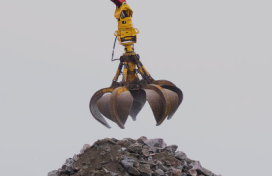
The most important attachments for port material handling equipment include grabs, magnets, clamps, and grapples, each suited to a specific cargo type. Hydraulic grabs handle bulk materials such as wood chips, grain, and aggregates; lifting magnets are essential for steel and scrap metal; and log grapples or timber clamps cover forest industry cargo. The right attachment transforms a general machine into a precision tool for a specific port operation.
Quick-coupler systems allow operators to switch between attachments efficiently, which is a significant advantage in multi-cargo terminals. Attachment quality also matters: a poorly matched or low-quality grab reduces cycle efficiency, increases spillage, and adds wear to the machine. We offer a comprehensive range of work tools engineered to integrate directly with our machines, ensuring that the hydraulic flow, pressure settings, and control system are optimized for each attachment rather than relying on generic aftermarket solutions.
How does energy consumption affect material handler suitability for ports?
Energy consumption directly affects the long-term cost and environmental suitability of a heavy port material handler. Ports operate around the clock, meaning even modest reductions in fuel or electricity use per cycle compound into significant savings over a year. High energy costs also affect a port’s ability to meet increasingly strict emissions and sustainability targets set by port authorities and shipping customers.
We have spent more than two decades developing energy-saving innovations and advanced machine technology specifically for this challenge. Our Mantsinen Hybrilift® system recovers energy generated by boom movements and reuses it within the machine, reducing energy consumption and costs by up to 50%. This is not a marginal improvement; it fundamentally changes the operating economics of a port handler over its service life.
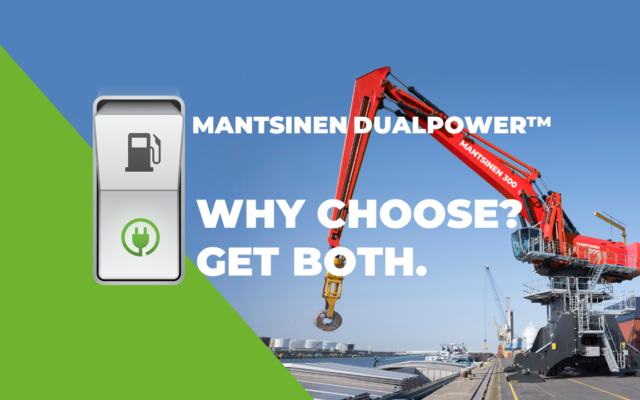
For operations that need both flexibility and sustainability, our Mantsinen DualPower concept offers the first dual-power system in material handlers. It combines an electric motor and a diesel engine, giving operators the clean efficiency of electric power when infrastructure allows and the mobility of diesel when it does not. The result is a machine that is productive, flexible, and significantly more environmentally friendly than a conventional single-power handler.
What safety features are essential in a heavy port material handler?
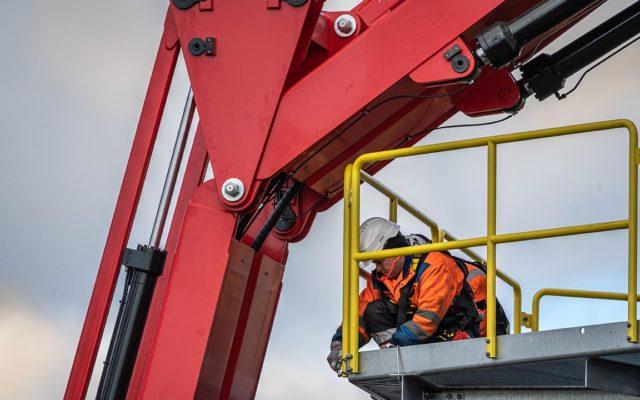
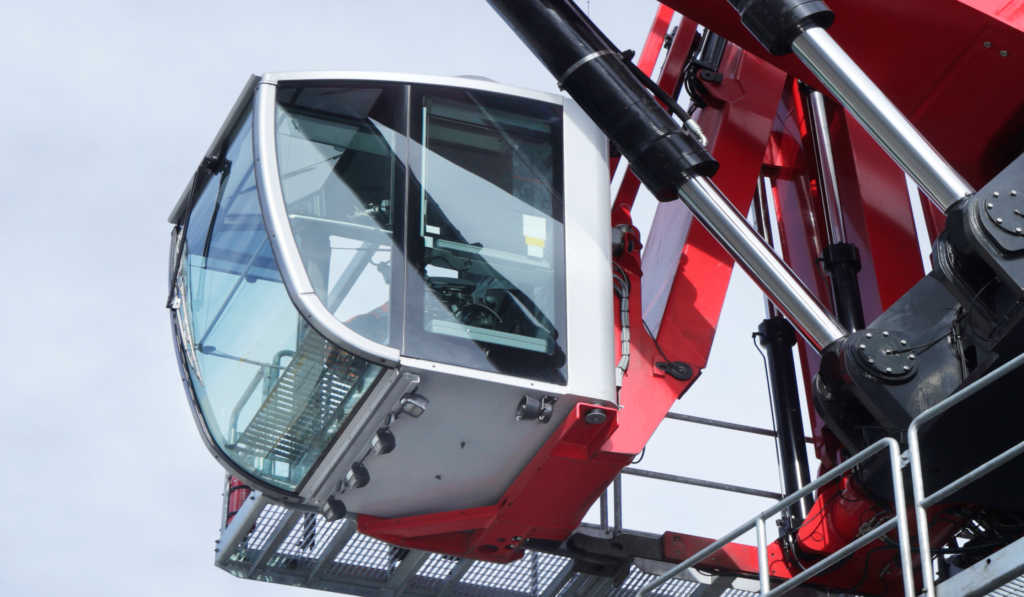
Essential safety features in a heavy-duty material handler for ports include load moment indicators, anti-collision systems, 360-degree visibility solutions, emergency stop systems, and a stable cabin design that protects the operator in demanding conditions. Because port environments involve other vehicles, personnel on the ground, and high-value cargo, the safety architecture of the machine must address both machine integrity and site safety simultaneously.
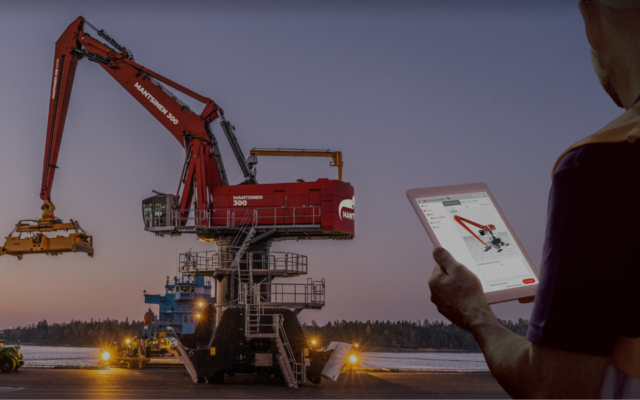
Intelligent control systems play a central role in modern port machine safety. Our control system acts as the operational brain of the machine, continuously monitoring machine functions and providing the operator with clear, easy-to-read information on screen. The system allows machine behavior to be fine-tuned, for example adjusting boom and stick speed and response, so that the machine moves predictably and the operator stays in full control under all load conditions.
Remote diagnostics capability is another safety-adjacent feature worth prioritizing. Our machines connect to the Mantsinen Insight telematics system, which monitors machine performance and efficiency in real time regardless of location. This means potential issues can be identified and addressed before they develop into failures that create safety risks or costly downtime.
How do you choose between a wheeled and a rail-mounted material handler for ports?
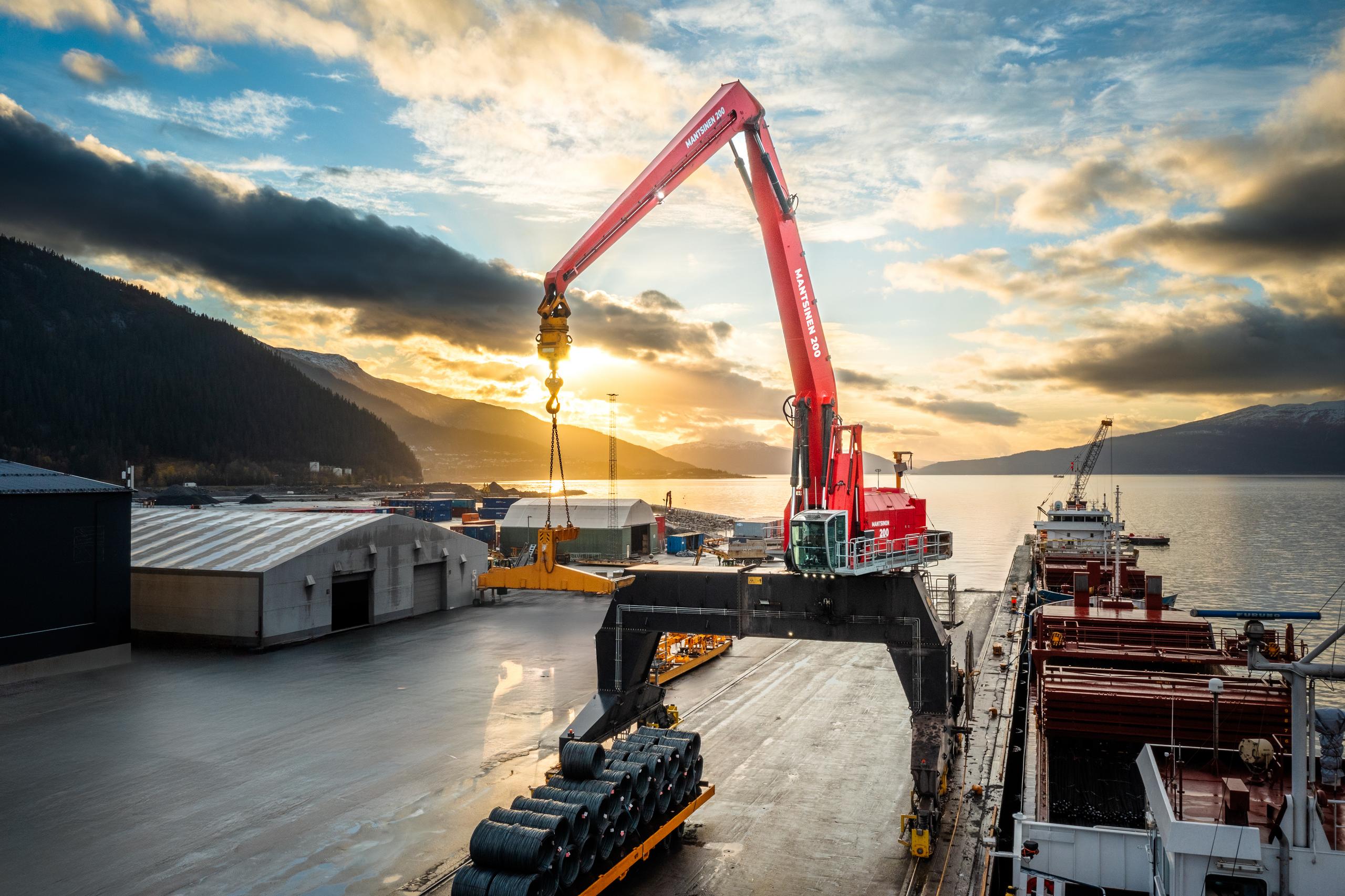
The choice between a wheeled and a rail-mounted material handler for ports depends primarily on whether the operation requires mobility across the site or fixed, high-capacity coverage along a defined path. Wheeled machines offer flexibility and can reposition quickly between different areas of a port, while rail-mounted handlers provide maximum stability and reach for operations concentrated along a quayside or stockpile corridor.
Wheeled handlers suit ports with varied cargo flows, multiple berths, or layouts that change over time. They can move between tasks without infrastructure investment and are generally faster to deploy. Rail-mounted machines suit high-throughput terminals with predictable, repetitive handling patterns where the added stability translates directly into higher cycle efficiency and greater lift capacity at full reach.
The infrastructure commitment is also a practical consideration. Rail systems require investment in track, maintenance, and fixed power supply, while wheeled machines need only suitable ground conditions and, in the case of electric or dual-power models, accessible charging or power connection points. We work with port operators to analyze their specific layout, cargo mix, and throughput targets to recommend the configuration that delivers the best combination of productivity and return on investment. Our deep operational experience means this advice is grounded in what actually works in live port environments, not just engineering theory.