How do ports handle different bulk materials with one machine?
Running a busy port means moving enormous quantities of diverse materials every single day. Wood chips arrive on one vessel, iron ore on another, and a container ship may be waiting at the next berth. The question port operators ask more and more often is whether a single bulk material handler can do all that work reliably, safely, and efficiently. The answer, increasingly, is yes.
Modern hydraulic material handlers have transformed port logistics by replacing fleets of specialised equipment with versatile, intelligent machines capable of switching between tasks in minutes. This guide walks through the most common questions about how these machines work, what they can handle, and how ports can get the most out of them.
What is a bulk material handler and how is it used in ports?
A bulk material handler is a hydraulic, crane-type machine designed to load, unload, and move large volumes of loose or unitised cargo at ports, terminals, and industrial sites. Unlike a traditional cable harbour crane, it uses a hydraulic boom and interchangeable attachments to grip, scoop, or lift materials directly, giving operators far greater control, speed, and versatility.
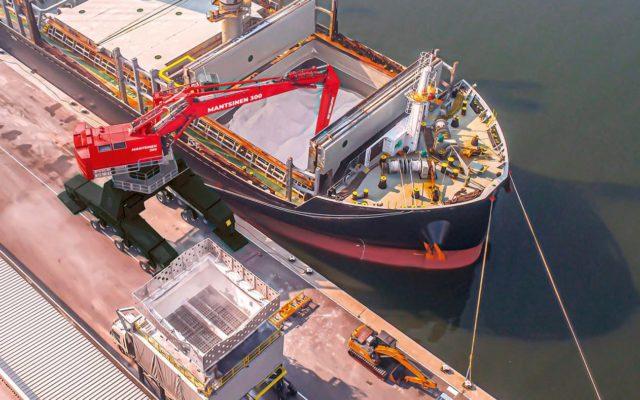
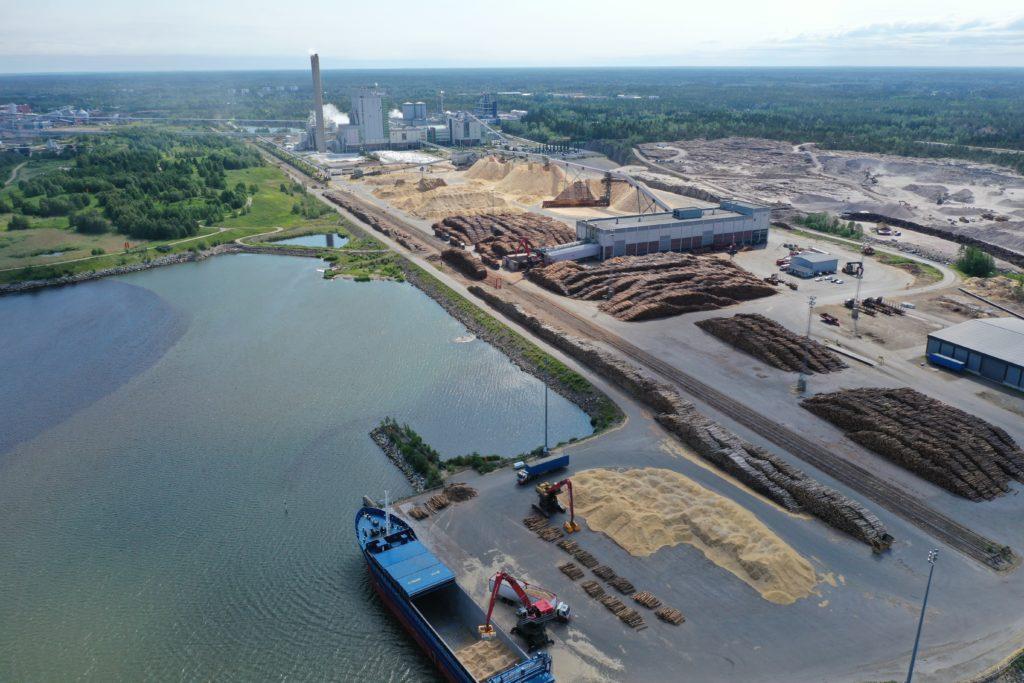
In a port environment, these machines sit at the quayside or in the terminal yard and work continuously through vessel loading and unloading cycles. They can reach deep into a ship’s hold, swing across to a conveyor or stockpile, and return for the next grab in a matter of seconds. That rapid work cycle is what makes harbour crane efficiency so much higher with a hydraulic handler than with older cable-operated systems.
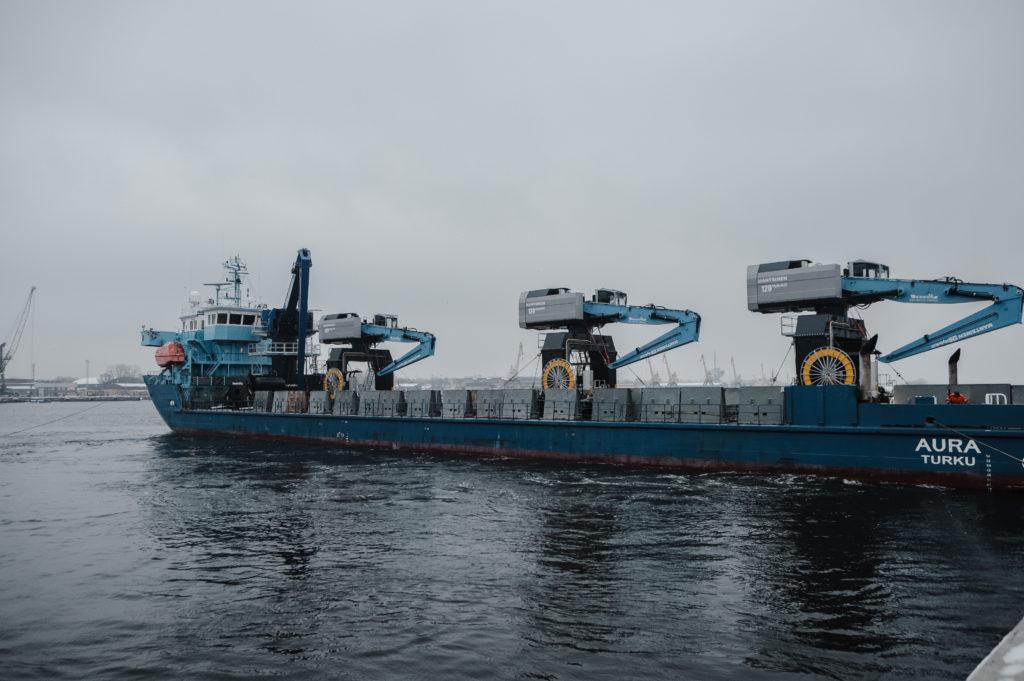
The machines are built on robust undercarriages that allow repositioning along the quay without lengthy setup times. Some models are rail-mounted for fixed terminal layouts, while others operate on rubber tyres or crawler tracks for maximum mobility. This flexibility makes the hydraulic material handler one of the most valuable pieces of port logistics equipment available today.
What types of bulk materials can one machine handle?
A single hydraulic material handler can handle a wide range of bulk materials, including wood chips, grain, fertilisers, sand, gravel, iron ore, pellets, coal, metal scrap, steel products, and standard containers. The key is pairing the right attachment with each material type, which modern quick-coupler systems make fast and straightforward.
The range of materials is broader than many operators initially expect. Dry bulk commodities such as grain and fertilisers require enclosed clamshell buckets that minimise dust and spillage. Heavier, denser materials like iron ore and pellets need buckets sized for higher cylinder forces. Lighter, more voluminous materials such as wood chips benefit from large-capacity open buckets that maximise fill volume per cycle.
Scrap metal adds another dimension entirely. Shredded steel, heavy plate, and demolition scrap all have different densities and shapes, so the machine needs a grapple rather than a bucket. Containers, meanwhile, require a spreader attachment that locks onto the corner castings of a standard 20- or 40-foot box. The fact that one machine can transition between all these tasks is what makes multi-material handling so commercially attractive for busy mixed-cargo terminals.
How do attachments allow one machine to handle different materials?
Attachments transform a hydraulic material handler into a specialised tool for each material type. By fitting a different bucket, grapple, or spreader, the same base machine can switch from scooping grain to grabbing scrap to lifting a container, usually within a few minutes using a quick-coupler system that requires no additional tools.
Clamshell buckets for bulk cargo
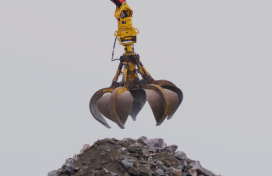
Clamshell buckets are the workhorse attachment for loose bulk materials. Their shape, size, and cylinder force are matched to the specific material being handled. A bucket designed for light wood chips will have a much larger volume than one designed for dense iron ore pellets, because the goal is always to maximise payload per cycle within the machine’s rated capacity. The varying properties of each material, including density, moisture content, and flow characteristics, are taken into account during the design of each bucket variant.
Scrap grapples for recycling and steel
Scrap handling demands a completely different approach. Grapples with four, five, or six tines are available in open, semi-open, or closed-tine configurations. Open tines penetrate deep into a loose scrap pile, while closed tines are better at retaining smaller pieces. Four-tine grapples work particularly well for loading scrap into truck trailers or railcars, where manoeuvrability in a confined space matters. Selecting the right tine count and model for the specific scrap type is one of the most important decisions in a recycling terminal setup.
Spreaders for container operations
Fixed and adjustable spreaders connect the machine to standard ISO containers, allowing the handler to lift and position 20- and 40-foot boxes with the same precision and speed it brings to bulk work. Multiple quick-coupler options ensure that switching between a bulk bucket and a spreader is a safe, controlled process that keeps downtime to an absolute minimum.
What’s the difference between a dedicated crane and a multi-purpose material handler?
The key difference is the control mechanism and versatility. A traditional cable harbour crane uses wire ropes and a grab suspended on cables, which limits precision and slows cycle times. A hydraulic material handler uses a rigid, articulated boom driven by hydraulic cylinders, giving the operator direct, immediate control over the attachment’s position, force, and angle. The result is faster cycles and the ability to use a much wider range of attachments.
In practical terms, handling capacity with a hydraulic handler can be more than double that of a traditional cable crane in many bulk applications. The hydraulic system allows the operator to apply exactly the right force for delicate cargo like steel coils without risking damage, and then switch to full-power bulk scooping for the next job. A dedicated cable crane simply cannot offer that range.
There is also a structural difference in how the machines are built. Hydraulic material handlers are classified under the highest machine design standards, meaning they are built to absorb the repeated shock loads that come with heavy scrap and dense bulk work. Dedicated cranes optimised for a single cargo type may be lighter and less robust, which becomes a liability in a mixed-cargo terminal where the machine encounters very different load profiles throughout a single shift.
How does machine size affect bulk handling efficiency in ports?
Machine size directly determines reach, lifting capacity, and cycle speed, which together define how much cargo a port can move per hour. Larger machines can work deeper holds, lift heavier grabs, and serve larger vessels, while smaller machines offer greater agility and lower operating costs in tighter spaces or with smaller cargo volumes.
Choosing the right size is one of the most consequential decisions in terminal planning. A machine that is too small for the vessel sizes calling at the port will create bottlenecks, while an oversized machine working at low utilisation rates increases the cost per handled tonne unnecessarily. Our full range spans from compact, high-productivity models suited to smaller ports and terminals all the way up to the Mantsinen 300, the world’s largest hydraulic material handling machine, which is capable of serving vessels up to Panamax class and can move a full 40-foot container approximately 22 metres without repositioning. To find the right model for your operation, speak with our specialist sales team about your specific requirements.
Mid-range machines for mixed-cargo terminals
For many ports, mid-range machines offer the best balance of capability and economy. Models in the 120 to 200 size class handle the full spectrum of bulk materials, general cargo, and containers, making them the backbone of small and medium-sized port operations. Their combination of reach, speed, and attachment compatibility means a single machine can cover multiple berths and cargo types across a working day.
Large machines for high-volume bulk terminals
High-volume bulk terminals moving coal, ore, or wood chips in continuous operations benefit most from larger machines with the fastest work cycles in their class. The combination of high grab capacity and short cycle time drives throughput, and at scale, even small improvements in cycle time translate into significant gains in daily tonnage.
How can ports reduce energy costs in bulk material handling?
Ports can reduce energy costs in bulk material handling by investing in machines equipped with energy recovery systems that capture and reuse the kinetic energy generated during boom lowering and other downward movements. Hybrid and dual-power configurations also allow machines to draw from the electrical grid when connected, significantly cutting fuel consumption compared to diesel-only operation.
Energy efficiency has become a central concern for port operators facing both rising fuel costs and tightening emissions regulations. Our Hybrilift® energy recovery system, developed in 2006 and now available in a next-generation patented version for our largest machines, captures the energy produced by boom movement and feeds it back into the machine’s power system. This approach can reduce energy consumption and costs by up to 50% compared to conventional systems, a figure that compounds significantly across the thousands of cycles a busy port machine completes each day.
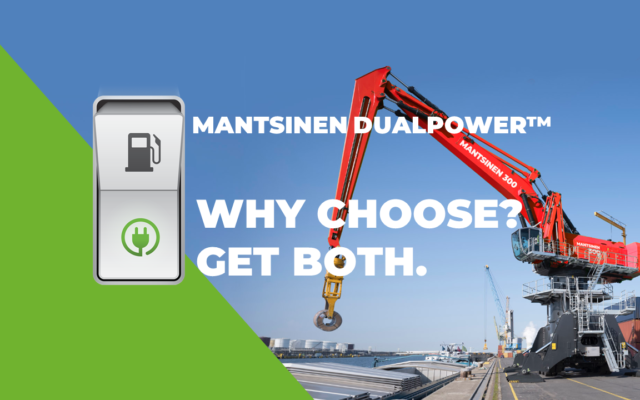
The Mantsinen DualPower concept takes this further by combining an electric motor and a diesel engine in a single machine. When shore power is available, the machine runs on electricity. When it needs to move or work in areas without a power connection, the diesel engine takes over seamlessly. This dual approach gives port operators the mobility of a diesel machine and the low operating costs and emissions profile of an electric one, making it one of the most practical answers to the challenge of decarbonising port logistics equipment without sacrificing productivity.
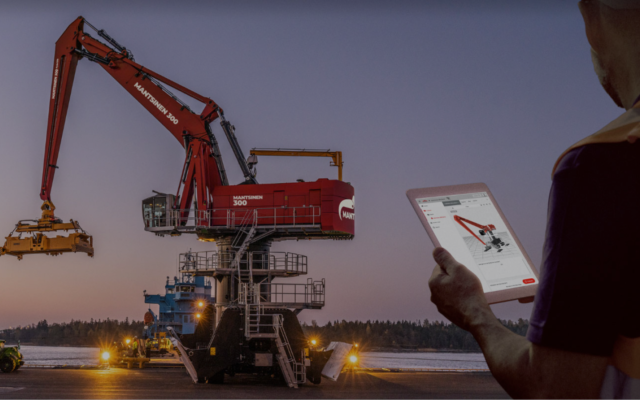
Beyond the powertrain, intelligent load control systems and operator assistance technology reduce unnecessary movements and improve fill rates per cycle, which means fewer cycles are needed to move the same tonnage. When energy savings, reduced maintenance intervals, and higher throughput are considered together, the total cost of ownership for a modern hybrid material handler is substantially lower than that of an older diesel-only machine, even before accounting for any carbon pricing or emissions compliance costs. Our aftermarket and maintenance services are designed to help port operators sustain these efficiency gains throughout the machine’s working life.