What are the advantages of electric material handlers in ports?
Electric material handlers offer ports significant advantages in energy efficiency, operating costs, and environmental compliance. By replacing or supplementing diesel power with electric drive systems, these machines can cut fuel costs substantially, reduce on-site emissions, and deliver smoother, more controllable performance across bulk handling operations. The sections below unpack the most common questions port operators ask before making the switch.
How do electric material handlers actually work in a port environment?
Electric material handlers in ports use electric motors to drive hydraulic systems, booms, and slewing functions, drawing power either from a shore power connection, an onboard battery pack, or a combination of both. The core working principle is the same as a diesel machine, but the combustion engine is replaced or supplemented by electric drive, giving operators precise, responsive control with far less mechanical complexity at the power source.
In a typical port setup, the machine connects to the terminal’s electrical grid via a cable reel or a festoon system, allowing continuous operation without interruption for refuelling. Some configurations use an approach where an onboard battery or capacitor handles peak demand during heavy lifts, while grid power covers steady-state operation. This flexibility makes electric handlers well suited to fixed or semi-fixed working positions, such as quayside bulk unloading or stockpile feeding, where the machine works intensively in a defined area.
The hydraulic systems themselves remain largely unchanged from diesel equivalents, which means attachments, grabs, and work tools are fully compatible. The key difference is in the power generation stage, where electricity replaces combustion and the associated losses that come with it.
What energy savings can ports expect from electric material handlers?
Ports switching to electric material handlers can expect meaningful reductions in energy costs compared to diesel operation, with the exact savings depending on local electricity tariffs, machine utilisation rates, and the specific work cycle. Electric drive systems are inherently more efficient than diesel engines, which lose a significant share of fuel energy as heat, particularly at partial loads common in port operations.
One of the most impactful technologies in this space is regenerative energy recovery. Our Mantsinen Hybrilift® system, developed from 2006 onwards, captures the energy generated when the boom is lowered and feeds it back into the machine’s systems to assist subsequent boom lifting movements, rather than wasting it as heat. This kind of energy recovery can reduce overall consumption by up to 50% compared to a conventional diesel machine running the same duty cycle. For a machine working two or three shifts per day, that reduction translates directly into lower operating costs and a faster return on investment in electrification.
It is also worth noting that electric motors deliver consistent efficiency across a wide range of speeds and loads, whereas diesel engines are tuned to a narrow optimal band. Port cycles involve frequent acceleration, deceleration, and holding loads, all conditions where electric drive maintains its efficiency advantage.
How do electric handlers help ports meet environmental regulations?
Electric material handlers help ports meet environmental regulations by eliminating or drastically reducing exhaust emissions at the point of operation. As port authorities and terminal operators worldwide tighten air quality standards and push towards zero emission port machinery targets, diesel-powered equipment faces increasing restrictions, particularly in urban or sensitive coastal locations where local air quality directly affects communities.
Running on grid electricity or stored energy, fully electric handlers produce no direct NOx, particulate matter, or CO2 at the machine itself. Even where grid electricity is not fully renewable, the emissions are generated at a central power plant where they can be managed, filtered, and progressively reduced as the energy mix improves. This makes electric bulk material handlers a future-compatible investment rather than one that may face regulatory obsolescence.
Beyond air quality, electric handlers also reduce noise pollution significantly. Electric motors and their associated hydraulics operate at lower sound levels than diesel engines under load, which matters increasingly as ports face pressure to limit noise in areas close to residential zones or protected habitats. Quieter operation also improves the working environment for terminal staff, which has practical safety and wellbeing benefits.
What is the difference between a fully electric and a hybrid material handler?
A fully electric material handler draws all its power from an external electricity supply or onboard batteries, producing no combustion emissions during operation. A hybrid material handler combines an electric motor with a diesel engine, allowing the machine to use either power source depending on conditions, availability of grid connection, or operational demand.
The practical distinction matters a great deal for port operators planning their infrastructure. Fully electric machines require reliable shore power infrastructure, including sufficient cable management systems and grid capacity at the working position. They are ideal for terminals with stable, high-utilisation working zones where the investment in electrical infrastructure is justified by the volume of work.
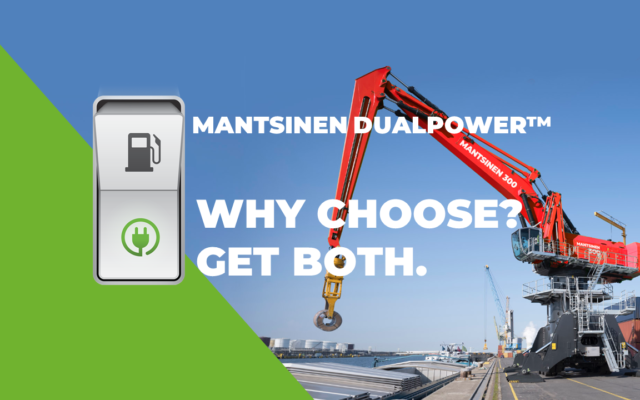
Hybrid machines, such as our Mantsinen DualPower concept, offer a middle path. DualPower combines a diesel engine and an electric motor in a single machine, allowing the operator to run on electric power when grid connection is available and switch to diesel when working in areas without power supply. This preserves full machine mobility across the terminal without sacrificing the efficiency and emission benefits of electric drive where they can be used. For ports in the process of transitioning their infrastructure, hybrid machines allow electrification to proceed gradually without disrupting operations.
What are the main challenges of switching to electric material handlers?
The main challenges of switching to electric material handlers in ports are upfront infrastructure investment, grid capacity requirements, and operational planning around power supply. These are real considerations, but they are manageable with the right planning and equipment choices.
- Electrical infrastructure: Ports need sufficient grid capacity and well-positioned connection points. Installing cable reel systems or festoon tracks requires capital investment and coordination with grid operators, especially for high-capacity machines.
- Machine mobility constraints: Fully electric machines are tethered to a power supply, which limits how freely they can move across a large terminal. Operations that require frequent repositioning over long distances need either hybrid machines or careful infrastructure planning.
- Higher initial purchase cost: Electric and hybrid machines typically carry a higher purchase price than comparable diesel models, though lower fuel and maintenance costs offset this over the machine’s working life.
- Staff training and change management: Operators and maintenance teams need to adapt to different systems. Electric drive components, battery management, and cable handling all require updated procedures and training.
- Grid reliability: In locations where power supply is intermittent or grid quality is poor, fully electric operation carries operational risk. Hybrid configurations reduce this exposure by retaining diesel capability as a backup.
None of these challenges are insurmountable, and many ports across Europe have already navigated them successfully. The key is to assess the specific terminal layout, work cycles, and infrastructure realistically before specifying the machine type.
Which port operations benefit most from electric material handlers?
Port operations that benefit most from electric material handlers are those involving intensive, repetitive work in a fixed or semi-fixed location, where the machine works long hours in a defined area and grid connection is practical to establish. High-utilisation applications extract the greatest value from electric drive because the efficiency gains and fuel savings accumulate over many operating hours.
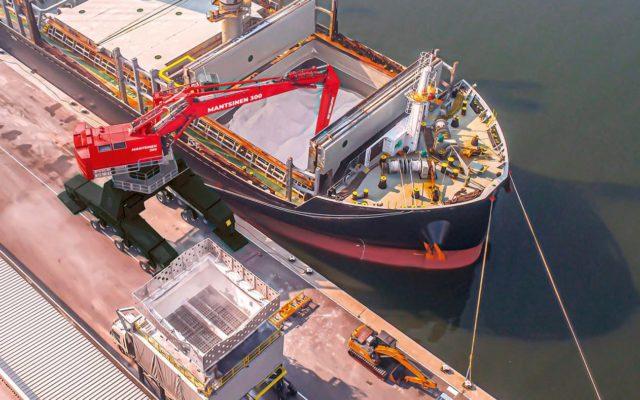
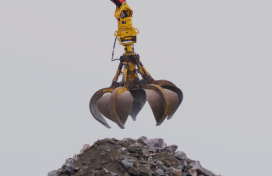
Bulk unloading from vessels is a prime example. A machine working continuously at a quayside, grab unloading coal, wood chips, grain, or scrap metal, runs the kind of sustained, high-demand cycle where electric drive delivers its strongest performance advantage over diesel. The machine stays in roughly the same working zone for extended periods, making cable management straightforward and the infrastructure investment easy to justify.
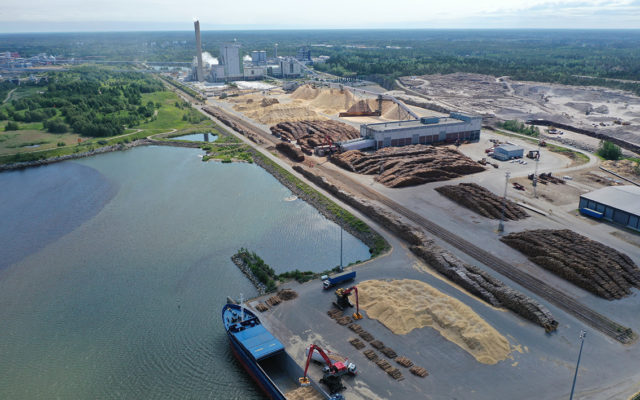
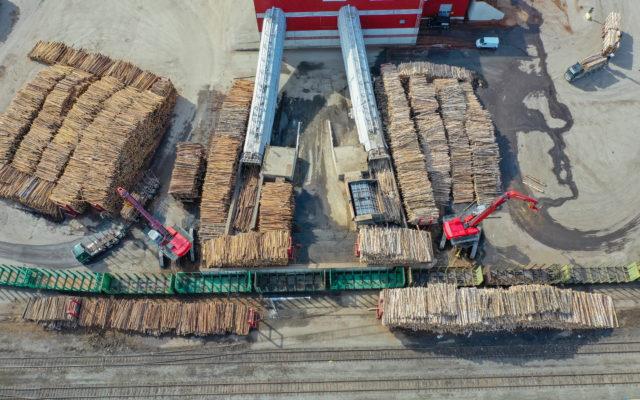
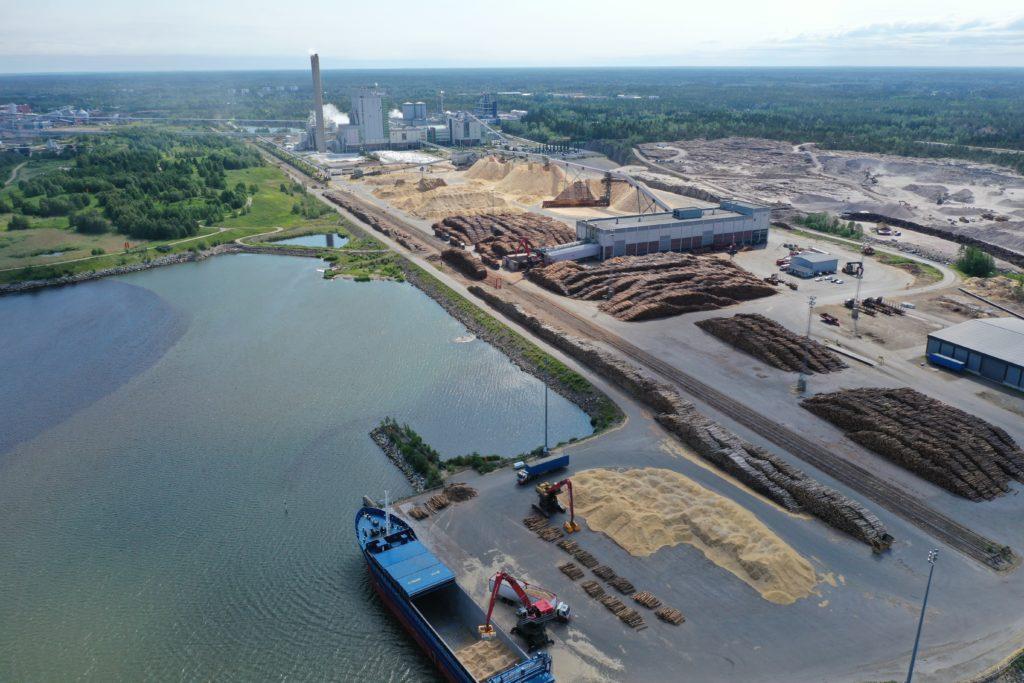
Stockpile management and feeding operations share similar characteristics. Machines working between a stockpile and a conveyor or processing line follow predictable, repetitive paths where a fixed power connection is entirely practical. Timber terminals, biomass handling facilities, and steel scrap yards all fall into this category.
Operations that involve frequent travel across large open yards, or irregular repositioning between widely spaced working points, are less immediately suited to fully electric machines, though hybrid configurations handle these scenarios well. As port infrastructure continues to develop and wireless or inductive charging technology matures, even mobile operations will increasingly be candidates for electrification. To find out more about how we support these transitions, visit our machine maintenance and support services page.