How can ports reduce operating costs in material handling?
Port operations run on tight margins. Between fuel consumption, equipment wear, labour, and vessel turnaround times, the pressure to reduce costs without sacrificing throughput is constant. For port managers and terminal operators, understanding where money is actually being lost—and which investments genuinely change the equation—is the foundation of smarter logistics planning.
This article answers the most common questions port operators ask about port operating costs and material handling efficiency, from identifying the biggest cost drivers to knowing when a fleet upgrade makes financial sense. Each section is designed to give you a clear, actionable answer you can use.
What are the biggest operating costs in port material handling?
The biggest operating costs in port material handling are energy consumption, equipment maintenance and repair, labour, and vessel idle time. Energy costs alone—primarily diesel fuel for material handling machines—can account for a significant share of daily operating expenditure. When equipment is slow or unreliable, vessel waiting costs multiply quickly and compound every other cost category.
Understanding these cost categories individually helps you prioritise improvements that deliver the greatest return. Energy is often the most controllable variable, particularly as equipment technology has advanced considerably in recent years. Labour costs are closely tied to machine productivity: a faster, more capable machine reduces the number of shifts or operators needed to move the same volume of cargo. Maintenance costs depend heavily on design quality and on how well machines are matched to the specific demands of the terminal.
Vessel idle time is perhaps the most underestimated cost in port logistics. Ports typically pay demurrage fees when ships wait longer than contracted. A single delayed vessel can cost more in a day than a week of routine maintenance. This makes handling speed and machine reliability directly connected to financial performance, not just operational performance.
How does equipment choice affect port handling costs?
Equipment choice is one of the most consequential decisions a port can make for its long-term cost structure. The right machine reduces cycle times, lowers fuel consumption, cuts maintenance frequency, and increases the volume of cargo handled per shift. The wrong machine creates bottlenecks, drives up operating costs, and limits a terminal’s ability to compete for larger vessels or higher cargo volumes.
Handling capacity and cycle time
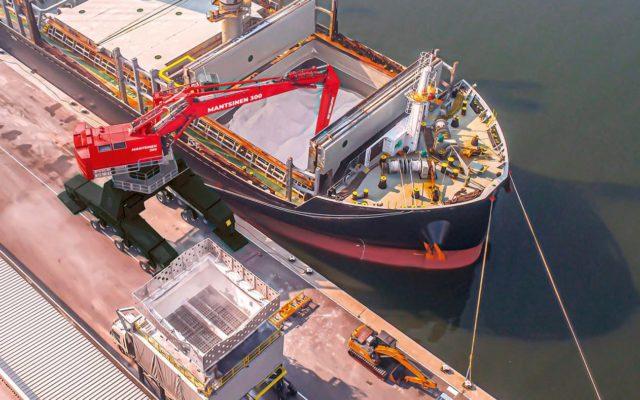
Hydraulic material handling machines offer a significant advantage over traditional cable harbour cranes in many applications. In ship loading and unloading operations, handling capacity can be more than doubled compared with cable cranes, which directly reduces the time vessels spend at berth. Faster cycle times mean more cargo moved per hour, lower labour costs per tonne, and fewer demurrage charges.
Machine size and application fit
Matching machine size to the specific application is critical for material handling costs. A machine that is too small for the cargo volume creates bottlenecks. A machine that is oversized for the application wastes fuel and capital. For example, a mid-size machine like the Mantsinen 140 is optimised for ship loading and unloading at ports where cost per operated tonne is the key performance indicator, while larger machines in the 200 and 300 class are designed for high-volume operations at medium to large terminals. Getting this match right from the outset avoids expensive corrections later.
Attachment versatility
Ports handling multiple cargo types, such as bulk materials, scrap, containers, and timber, benefit from machines that support a wide range of attachments. Quick-coupler systems that allow safe and rapid attachment changes reduce downtime between cargo types and allow a single machine to perform roles that would otherwise require two. This versatility directly reduces capital expenditure and fleet size requirements. To discuss the right configuration for your terminal, you can speak with our port equipment sales team.
What is hybrid energy recovery and how does it reduce costs?
Hybrid energy recovery in material handling machines captures the energy generated when the machine’s boom lowers and reuses it to power subsequent lifting cycles. Instead of releasing that energy as heat, the system stores it and feeds it back into the machine’s hydraulic or electrical systems. This can reduce total energy consumption and associated fuel costs by up to 50%.
We developed our Mantsinen Hybrilift® energy recovery and savings system starting in 2006, making it one of the longest-running and most refined energy recovery systems in the material handling industry. The system works by harvesting the potential energy released during boom movement and recycling it within the machine’s power system. Over thousands of daily cycles in a busy port environment, the cumulative fuel savings are substantial.
Beyond direct fuel savings, reduced energy consumption also lowers emissions, which is increasingly relevant as ports face tighter environmental regulations and sustainability reporting requirements. Reducing port operating costs and meeting environmental targets are no longer competing priorities when the right technology is in place. Energy efficiency has become a competitive differentiator for terminals operating under emissions targets or seeking green port certification.
What’s the difference between diesel and electric-diesel material handlers?
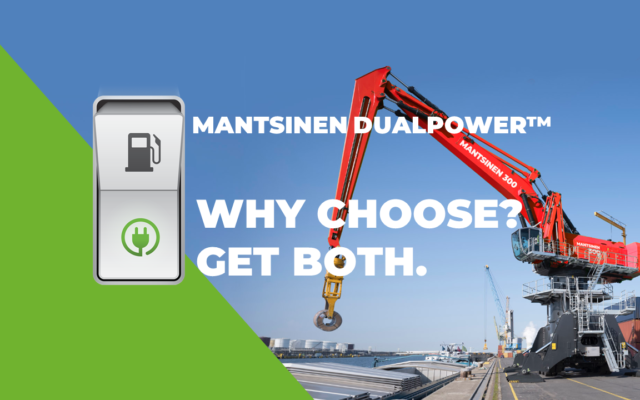
A diesel material handler runs entirely on a combustion engine, while an electric-diesel machine combines an electric motor with a diesel engine, allowing the operator to switch between power sources depending on operational needs and infrastructure availability. The key difference is flexibility: the dual-power approach gives ports the productivity of diesel with the cost and emissions benefits of electric operation where grid power is accessible.
Our Mantsinen DualPower concept is the first dual-power system developed specifically for material handling machines. It combines the strengths of both power sources: the electric motor delivers lower operating costs and zero local emissions when connected to shore power, while the diesel engine ensures full operational capability when the machine needs to move or when grid access is unavailable. This makes DualPower machines particularly well suited to ports that are expanding their electrical infrastructure but cannot yet commit to fully electric operations.
From a cost perspective, electric operation significantly reduces fuel expenditure during stationary or semi-stationary work cycles. Maintenance costs can also decrease over time because electric motors have fewer moving parts than diesel engines and experience less wear under normal operating conditions. For ports planning long-term port cost reduction strategies, investing in dual-power capability positions the terminal well for tightening emissions regulations and rising fuel prices.
How can ports lower maintenance and downtime costs?
Ports can lower maintenance and downtime costs by choosing machines built to high design classifications, ensuring correct machine-to-application matching, establishing predictive maintenance routines, and working with manufacturers who provide readily available local support. The combination of robust machine design and proactive servicing is what keeps unplanned downtime to a minimum.
Machine build quality and design classification
Not all material handling machines are built to the same structural standard. Machines designed according to the highest classification for their category are built to withstand the repetitive high-load cycles that port operations demand. A machine that is underbuilt for its application will show accelerated wear, require more frequent repairs, and ultimately cost more over its operational life than a more robustly constructed alternative. This is especially relevant in demanding applications such as scrap handling, where every machine in our range is designed to handle heavy scrap loads with ease, regardless of size class.
Local support and parts availability
Downtime costs are not just about the repair itself. They include every hour a machine stands idle while waiting for parts or a service technician. Choosing a manufacturer with a strong local support network and readily available spare parts dramatically reduces the duration of any unplanned outage. Long-term partnerships with manufacturers that commit to ongoing maintenance support and service programmes provide a structural advantage in keeping terminal logistics operations running with maximum predictability.
Operator training and safety systems
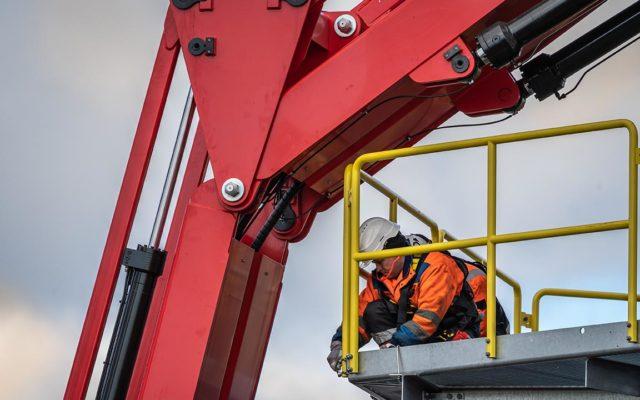
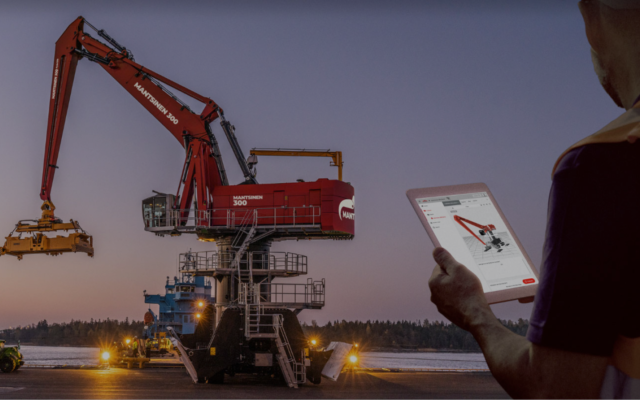
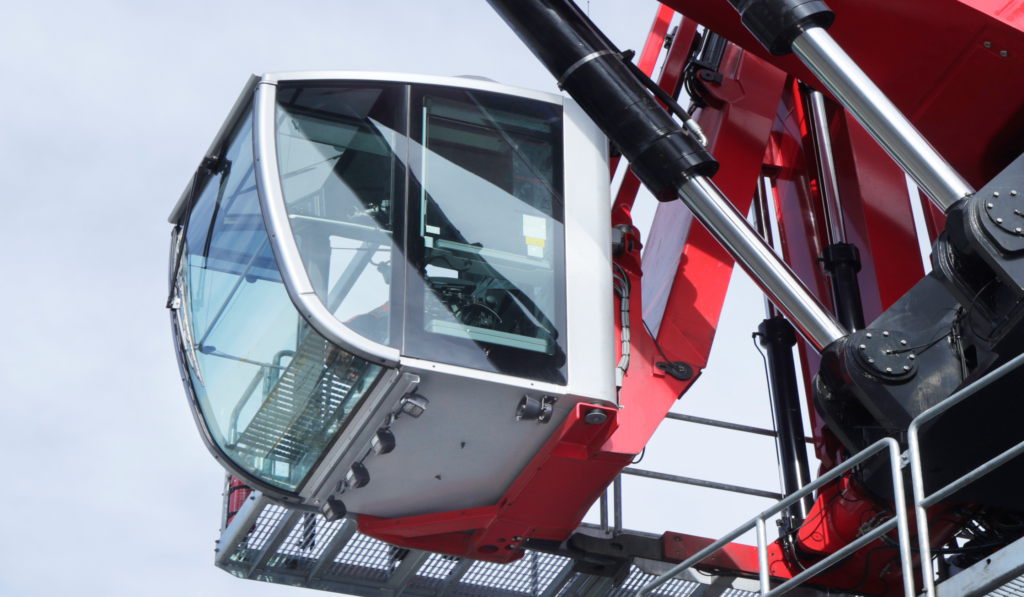
Operator error is a significant contributor to both machine wear and safety incidents. Machines equipped with intelligent load control systems, safety monitoring as standard, and well-designed operator cabins reduce the likelihood of operational mistakes that cause damage. Operator comfort also plays a role: a fatigued or uncomfortable operator makes more errors and handles cargo less efficiently, increasing both wear and cycle times.
When should a port invest in upgrading its material handling fleet?
A port should consider upgrading its material handling fleet when current equipment is limiting throughput, when maintenance costs are rising faster than productivity gains justify, when energy costs are significantly above what modern equipment would require, or when the port is targeting new cargo types or larger vessel classes that existing machines cannot handle efficiently.
The financial case for upgrading is strongest when multiple cost pressures are occurring simultaneously. If a machine is ageing, consuming high volumes of fuel, requiring frequent repairs, and slowing vessel turnaround times, the cumulative cost of keeping it running often exceeds the investment required to replace it with a modern, efficient alternative. Calculating the total cost of ownership, including energy, maintenance, downtime, and lost throughput, gives a much clearer picture than comparing purchase prices alone.
Ports that are expanding their cargo-handling capabilities or entering new market segments also have a strong case for fleet investment. Handling containers, bulk materials, and general cargo with the same machine requires a versatile platform with the right attachments and intelligent control systems. Upgrading to machines that support a full range of cargo-handling tasks reduces the need for multiple specialised pieces of equipment, lowering both capital expenditure and operational complexity.
Finally, regulatory and sustainability pressures are accelerating upgrade timelines for many ports. Emissions standards, noise regulations, and green port requirements are tightening across major shipping regions. Investing in energy-efficient port equipment with hybrid or dual-power capability now positions a terminal ahead of regulatory changes rather than forcing reactive—and often more expensive—upgrades later. The most competitive ports treat fleet investment as a strategic decision, not just a maintenance replacement.