Mantsinen Group Electrifies Industrial Logistics Operations in Äänekoski – Circular Economy Integrated into 24/7 Operations
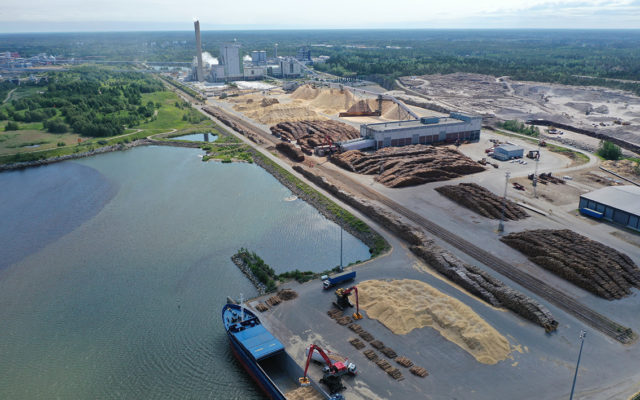
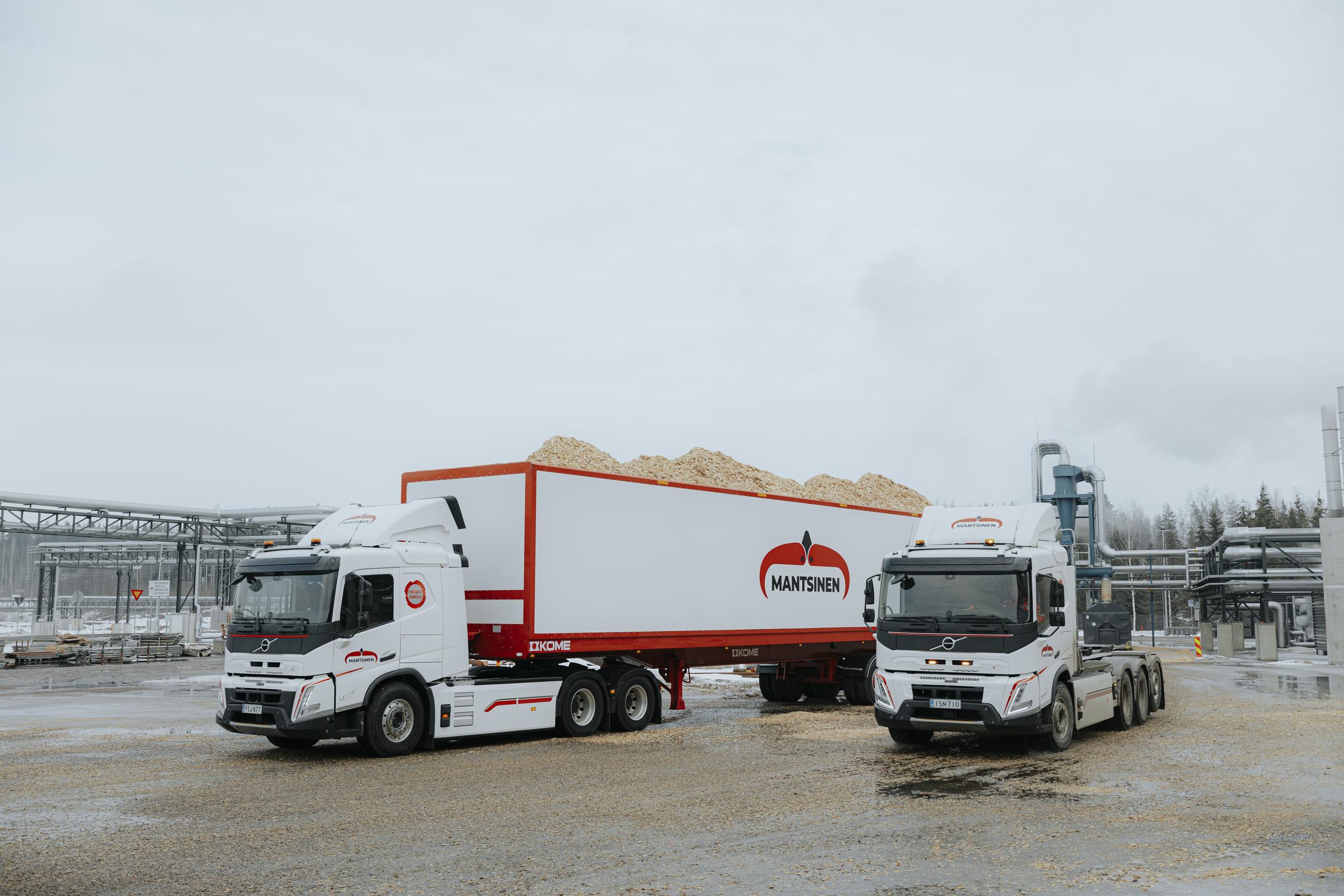
Mantsinen Group Ltd Oy has implemented a fully electric industrial logistics solution at the Äänekoski Kerto® LVL mill in Finland. The solution covers everything from material handling to internal factory transportation, with all machinery and vehicles operating electrically. The setup enables tailpipe emission-free operations around the clock.
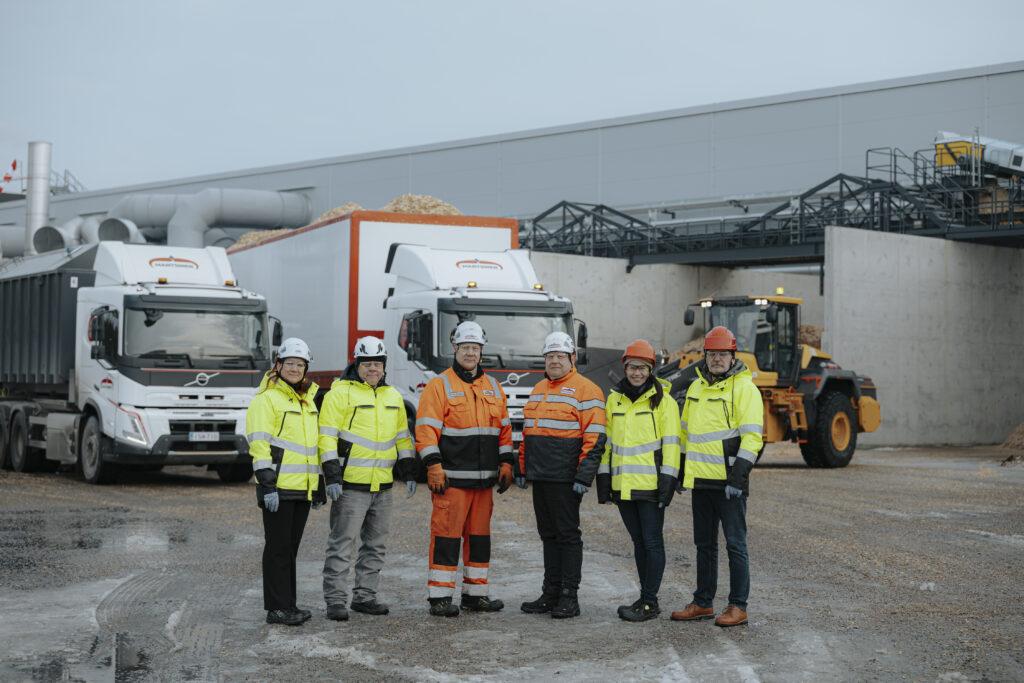
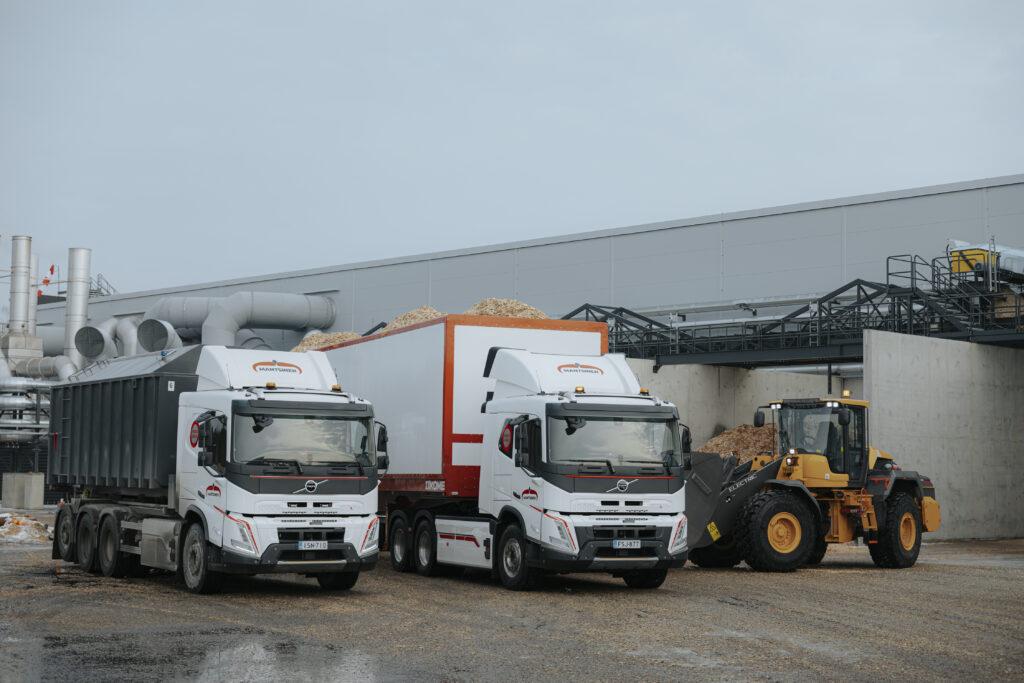
At the core of the solution are Volvo Trucks’ electric Volvo FMX Electric 8x4R and Volvo FMX Electric 6x4T trucks, along with Volvo Construction Equipment’s L120 Electric wheel loader. The machines are fully integrated into a continuous 24/7 logistics process. The solution has been designed specifically for a demanding industrial environment where equipment utilization rates are high and operational reliability is critical.
The development and utilization of electrically powered material handling solutions have long been part of Mantsinen’s operations, and the transition to electric logistics operations was seen as a natural continuation of the company’s sustainability and development efforts.
“The manufacturing and operation of electrically powered material handling machines have long been part of Mantsinen’s core expertise. Electrifying industrial logistics operations was the next natural step in our development, and we have now found the right partner for it,” says Mikko Mantsinen, Fleet Manager at Mantsinen Group Ltd Oy.
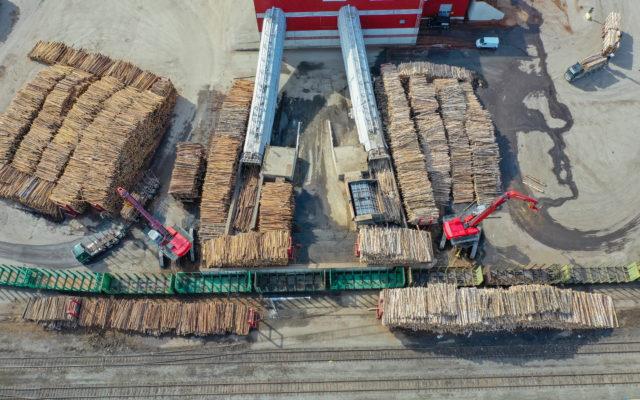
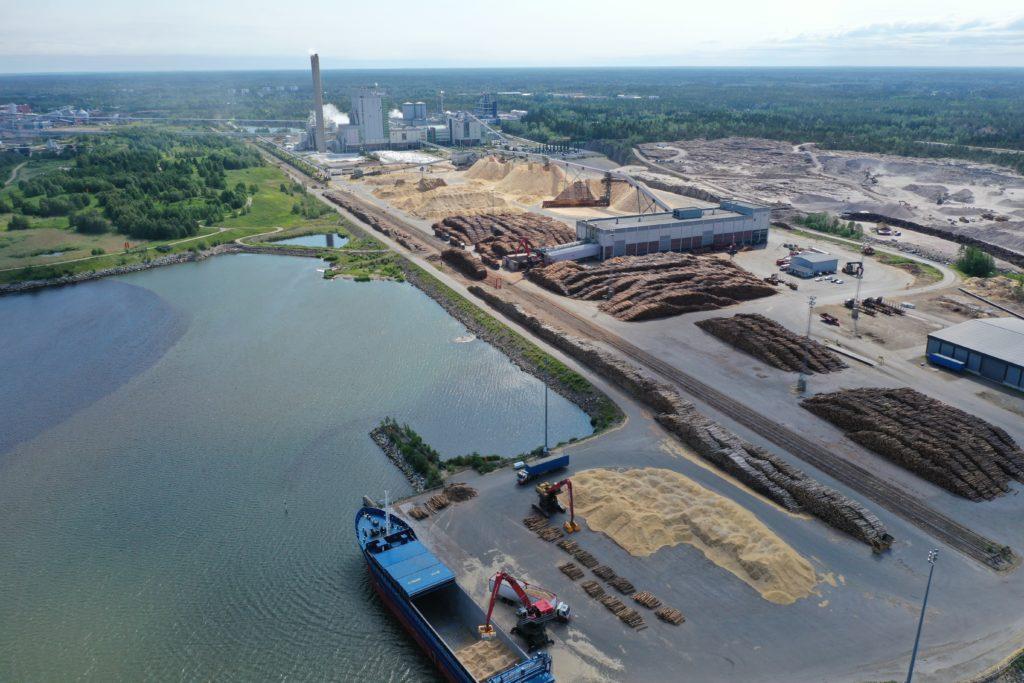
A unique aspect of the logistics solution is the connection between material flows and energy production. Side streams generated at the mill are utilized in energy production, and the electricity generated is used to charge the electric fleet. This makes the solution exceptional also from a resource efficiency and circular economy perspective.
“The bark handled at the mill is burned in the plant’s own power facility to generate electricity. In practice, the operating energy for the machines comes from the very material they are handling,” Mantsinen explains.
Electrification Starts with Careful Planning
The factory environment provides excellent conditions for electrification, as operations are predictable and take place within a limited area. Routes, loads and work cycles can be analyzed accurately, enabling energy consumption and charging to be optimized as part of daily operations.
“A closed and predictable operating environment is ideal for electrification. The fleet operates within a limited area, and the charging infrastructure can be integrated directly into the operating environment,” says Janne Silvonen, Commercial and Technical Manager Electromobility at Volvo Trucks.
The solution was designed based on a detailed operational analysis, taking into account driving routes, load weights, work cycles, and loading and unloading times. The entire operation was simulated using tools specifically developed for electric heavy-duty transport before implementation.
Charging Infrastructure Enables Continuous Operations
One of the key factors in deploying electric heavy-duty equipment is charging infrastructure. At the Äänekoski mill, charging has been integrated into the normal workflow and does not require separate charging breaks.
“While the trucks are being loaded, they can be charged simultaneously. Likewise, when the trucks are operating, the wheel loader can be recharged during operation cycles. This ensures that the equipment remains continuously available,” says Mikko Mantsinen, Fleet Manager at Mantsinen Group Ltd Oy.
Charging points have been positioned directly at workstations, enabling opportunity charging during work phases. Efficient charging infrastructure is essential for utilizing electric heavyduty equipment effectively.
Electric Equipment Also Improves Daily Operations
In addition to reducing emissions, electric equipment delivers clear operational benefits in daily work. Driving comfort, noise levels, and workflow efficiency improve compared to traditional machinery.
“Electric trucks offer an entirely different level of driving comfort. Power is available instantly, without delay. The same applies to the electric wheel loader – power is immediately accessible, and operators have really enjoyed working with the machine,” Mantsinen says.
Lower noise levels also improve occupational safety by enabling clearer and more effective communication on site.
Demand for Electric Heavy Equipment Is Growing Rapidly
Demand for electric transport vehicles and construction equipment is increasing rapidly. The operating ranges of the latest electric trucks already suit many distribution and industrial logistics applications, while advances in battery technology continue to improve energy efficiency and operational reliability. The popularity of electric construction equipment is also clearly growing.
This development is driven by tightening EU emissions regulations, companies’ own carbon neutrality targets, and the technological advancement of heavy-duty equipment.
At the same time, charging solutions are evolving rapidly. High-power charging, opportunity charging integrated into work cycles, and site-specific infrastructure design enable efficient fleet utilization even in continuous 24/7 operations. Especially in closed and predictable operating environments such as industrial sites, electric heavy-duty equipment is already a competitive alternative to traditional solutions.
Mantsinen Sets an Example for Industrial Electrification
Mantsinen’s implementation demonstrates that electric heavy-duty equipment is also suitable for demanding industrial use when the entire operation is designed correctly. In Äänekoski, the solution has enabled significant emission reductions without compromising operational efficiency or reliability. Although the amount of equipment has increased, overall emissions have been significantly reduced at the same time.
Further Information
Janne Silvonen
Commercial and Technical Manager Electromobility, Volvo Trucks
moc.ovlov@nenovlis.ennaj
Tel. +358 40 922 3206
Niina Reiju
Head of Sales, Volvo Construction Equipment Finland Oy
moc.ovlov@ujier.aniin
Tel. +358 40 539 8234
Mikko Mantsinen
Fleet Manager, Mantsinen Group Ltd Oy
moc.nenistnam@nenistnam.okkim
Tel. +358 400 176 266