How does a hydraulic material handler work in a sawmill?
A hydraulic material handler moves, sorts, lifts, and stacks logs and timber products throughout a sawmill using a hydraulic arm and interchangeable grapple attachments. The machine converts engine or motor power into pressurized hydraulic fluid, which drives cylinders and motors to deliver precise, high-force movements across the log yard and infeed areas. The sections below unpack how each part of that system works and how to choose the right setup for your operation.
What tasks does a hydraulic material handler perform in a sawmill?
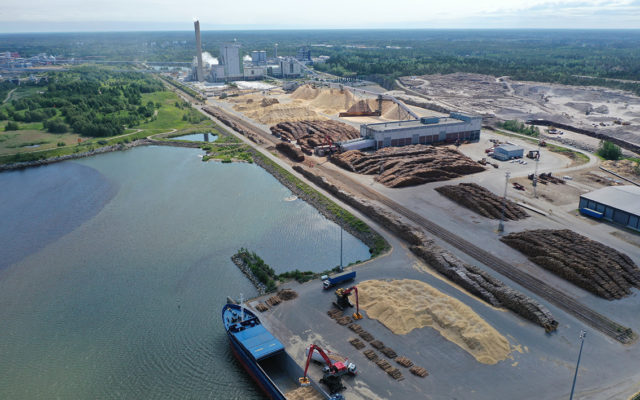
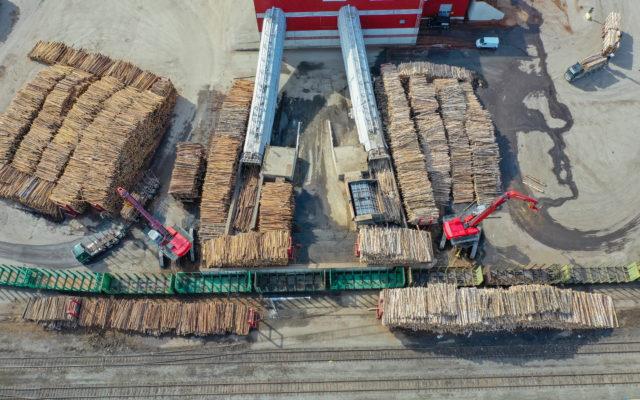
A hydraulic material handler in a sawmill handles log reception, sorting, stacking, and infeed loading. It unloads timber from trucks and rail cars, organizes logs by species or diameter in the log yard, feeds the sawline at a controlled pace, and manages residual wood such as slabs and chips. One machine can replace multiple pieces of fixed conveyor infrastructure.
In a working sawmill, the handler is typically the first and last machine to touch raw timber. When a timber truck arrives, the handler lifts and deposits logs into sorting bays, often working with a scale or measurement system integrated into the cab display. During production, it feeds logs onto the infeed conveyor at a rate matched to the saw’s capacity, preventing bottlenecks. At the end of the process, it loads finished lumber or residuals for outbound transport.
Beyond the primary material flow, a hydraulic material handler for sawmills also performs maintenance-adjacent tasks: clearing jams on conveyors, repositioning large logs that roll out of alignment, and managing the log yard after storm or ice events. This versatility is one of the core reasons sawmill operators favor hydraulic handlers over fixed automation for yard-side work. The machine’s ability to reach, rotate, and precisely place loads in tight spaces makes it genuinely irreplaceable in day-to-day mill operations.
How does the hydraulic system generate and control lifting power?
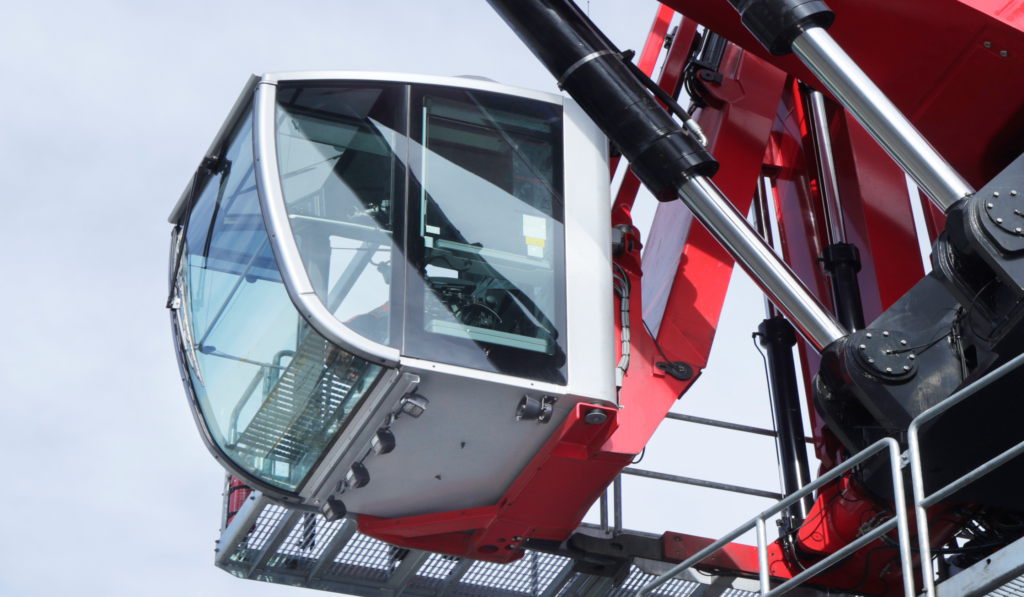
The hydraulic system generates lifting power by using a pump to pressurize hydraulic fluid, which is then directed through control valves into cylinders and hydraulic motors. Pressure acts on the cylinder piston to produce linear force, while flow rate controls speed. The operator commands the system through joysticks, which send signals to proportional valves that meter fluid precisely to each function.
The pump is driven either by a diesel engine or an electric motor, depending on the machine configuration. Gear pumps and variable-displacement piston pumps are the most common types in material handlers. Variable-displacement pumps are particularly efficient because they adjust output to match demand, reducing energy waste during low-load moments such as slewing without a load.
Modern hydraulic handlers use electronic load-sensing systems that continuously monitor pressure at the working tool and adjust pump output accordingly. This means the machine delivers exactly the force needed for each task rather than running at full pressure constantly. The result is lower fuel consumption, less heat generation in the hydraulic oil, and longer component life. Control software also enforces stability limits, preventing the operator from extending the boom beyond the machine’s rated capacity at a given radius.
What attachments and grapples are used for wood handling?
The most common attachment for wood handling in a sawmill is a rotator grapple, which combines a hydraulic rotator with opposing tines or jaws sized for log bundles. Clamshell grapples handle loose chips and bark, while single-tine or multi-tine log grapples are used for precise single-log placement on infeed conveyors. Attachment choice depends on log size, species density, and the specific task.
Rotator grapples for log sorting and stacking
Rotator grapples are the workhorses of sawmill log handling. The hydraulic rotator allows the operator to align a log bundle with a stack or conveyor slot without repositioning the whole machine, dramatically reducing cycle times. Tine spacing and jaw opening width are sized to the log diameter range the mill typically processes. For large-diameter hardwood logs, heavy-duty grapples with reinforced tines and higher closing force are specified.
Specialty attachments for residual and chip handling
Clamshell buckets and orange-peel grapples move bark, chips, and sawdust efficiently without the need for a separate wheel loader or conveyor. Some mills use a timber fork for unit-load handling of packaged lumber. Quick-coupler systems allow a single handler to switch between a log grapple and a chip bucket in minutes, maximizing machine utilization across the full production cycle.
How does energy recovery technology reduce operating costs in sawmill handlers?
Energy recovery technology in hydraulic material handlers captures the potential energy released when a loaded boom lowers and stores it for reuse, rather than dissipating it as heat through the hydraulic relief valves. This recovered energy is then applied to the next lift or to auxiliary systems, reducing the total power demand on the engine or motor and cutting fuel or electricity costs significantly.
Our Mantsinen Hybrilift® system, developed from 2006 onward, applies exactly this principle. When the boom descends under a load, the kinetic energy generated during that movement is captured and stored, then redeployed on the next lifting cycle. In high-cycle sawmill operations where the handler is continuously lifting and lowering heavy log bundles, this recovery loop runs constantly throughout the shift. The result is an energy savings of up to 50% compared with a conventional hydraulic system that simply releases that energy as waste heat.
Beyond the direct fuel savings, reduced heat generation means the hydraulic oil stays cooler, extending oil life and reducing wear on seals and pump components. Cooler operating temperatures also mean fewer unplanned stops for overheating, which matters in sawmills running two or three shifts. Over a machine’s service life, the maintenance cost reduction compounds alongside the fuel savings to produce a significant total cost-of-ownership advantage.
What’s the difference between diesel-powered and electric-hybrid handlers for sawmills?
A diesel-powered handler runs entirely on an internal combustion engine and can operate anywhere without infrastructure requirements, while an electric-hybrid handler combines an electric motor with a diesel engine to reduce emissions and fuel consumption. The key practical difference is that diesel suits remote or mobile applications, while electric-hybrid configurations deliver lower running costs and quieter operation where grid power or stable infrastructure is available.
Diesel handlers: flexibility and independence
Diesel-powered hydraulic handlers require no electrical infrastructure, making them the default choice for sawmills in remote locations or for operations that move between sites. Refueling is straightforward, and the machine is not limited by cable length or charging windows. The trade-off is higher fuel costs per operating hour and greater engine maintenance requirements over time.
Electric-hybrid handlers: efficiency and reduced emissions
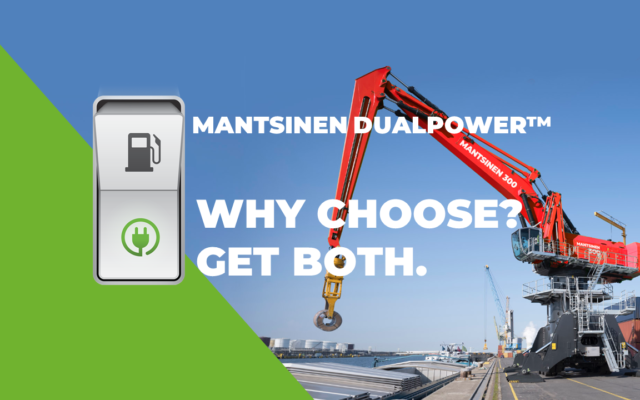
Our DualPower concept combines an electric motor and a diesel engine in a single machine, allowing the operator to run on electric power when connected to the grid and switch to diesel when operating away from the cable. In a sawmill where the handler works a fixed area of the log yard, running primarily on electricity is practical and reduces both operating costs and noise levels inside the facility. The diesel engine serves as a backup and for peak-demand moments, rather than as the primary power source. This dual-mode approach means the mill does not need to choose between mobility and efficiency.
How do you match the right handler size to a sawmill’s throughput needs?
Matching handler size to sawmill throughput requires calculating the required lift capacity at the working radius, the number of cycles per hour needed to keep the sawline fed, and the log dimensions typical for your timber supply. A handler that is undersized creates infeed bottlenecks, while an oversized machine wastes capital and fuel on tasks that a smaller unit could handle equally well.
Start with the sawmill’s target throughput in cubic meters per shift and work backward. Determine the average log bundle weight the handler will lift, then identify the maximum reach required to cover the log yard and infeed conveyor from a fixed position. Hydraulic handler capacity ratings are always given at a specific radius, so a machine rated for a large lift at short reach may fall below requirements when working at the outer edge of its boom.
Cycle time is equally important. A mill processing high volumes of short-rotation timber needs a handler that completes lifts quickly, which points toward machines with fast hydraulic response and efficient energy recovery rather than simply the highest raw lift capacity. Conversely, a mill handling large-diameter hardwood or long sawlogs needs outright lifting force and structural rigidity in the boom.
We design our machines across a range of sizes precisely to address this spectrum of sawmill requirements, from compact handlers suited to smaller operations up to the Mantsinen 300, the world’s largest hydraulic material handler, for the highest-volume industrial sawmill and port timber terminal applications. Talking through your specific log species, yard layout, and shift structure with our experienced engineering team is the most reliable way to identify the right machine class before committing to a specification.