How do you evaluate a material handler supplier for a wood terminal?
To evaluate a material handler supplier for a wood terminal, focus on three core criteria: operational experience in wood handling environments, machine performance and energy efficiency, and the quality of after-sales support. The right supplier is not simply a manufacturer but a partner who understands the specific demands of timber, pulpwood, and biomass handling at scale. The questions below break down each evaluation dimension so you can make a confident, informed decision.
What criteria matter most when selecting a material handler for a wood terminal?
The most important criteria when selecting a material handler supplier for a wood terminal are industry-specific machine capability, proven operational experience, energy efficiency technology, and reliable after-sales infrastructure. A supplier that checks all four boxes will deliver a lower total cost of ownership and fewer unplanned stoppages over the machine’s working life.
Start by verifying that the supplier designs machines specifically for wood terminal conditions. Wood handling places unique stress on hydraulic systems, booms, and attachments because of irregular load shapes, high cycle frequencies, and exposure to bark, moisture, and debris. A machine built to generic material handling specifications will wear faster and perform less predictably than one engineered for timber and biomass.
Beyond machine design, evaluate the supplier’s financial stability, global reference list, and willingness to share performance data from existing installations. A manufacturer with a strong international track record in wood terminals can demonstrate measurable throughput figures from real-world operations, which is far more useful than brochure specifications alone.
How does a supplier’s operational experience affect machine performance?
A supplier’s direct operational experience in wood terminals translates into better machine design decisions, because the engineering team understands failure modes, throughput bottlenecks, and operator ergonomics from firsthand exposure rather than theory. Suppliers who have only sold machines, but never operated them, tend to underestimate the cumulative stress of high-volume timber handling cycles.
We at Mantsinen as a company and service provider hold a position that is genuinely rare in this industry: we operate our own machines at forest and steel industry customer sites as a service provider, giving us over 60 years of hands-on experience and more than 500 million cubic meters of handled material. That operational feedback loop feeds directly into machine development, meaning that design improvements are driven by real production challenges rather than laboratory assumptions.
When assessing any supplier, ask specifically whether their engineers have spent time operating or supervising machines in wood terminal conditions. Suppliers with that background will have made better decisions about hydraulic system sizing, boom geometry, cab visibility, and attachment interface strength, all of which affect daily productivity and long-term reliability.
What energy efficiency features should a wood terminal machine have?
A hydraulic material handler built for wood terminals should include energy recovery systems that capture and reuse the kinetic energy generated when the boom lowers, along with efficient hydraulic circuits and the option to run on electric or hybrid power. These features reduce fuel or electricity costs significantly over a machine’s operational lifetime.
Energy recovery is particularly valuable in wood terminal operations because the boom cycles continuously through lift-and-lower sequences across a full shift. Systems that capture the energy released during lowering and redirect it to power other machine functions can cut total energy consumption substantially. Our Mantsinen Hybrilift® system, developed since 2006, achieves energy savings of up to 50% by capturing boom movement energy during lowering and reusing it to power the boom’s lifting motion — energy that would otherwise be lost as heat.
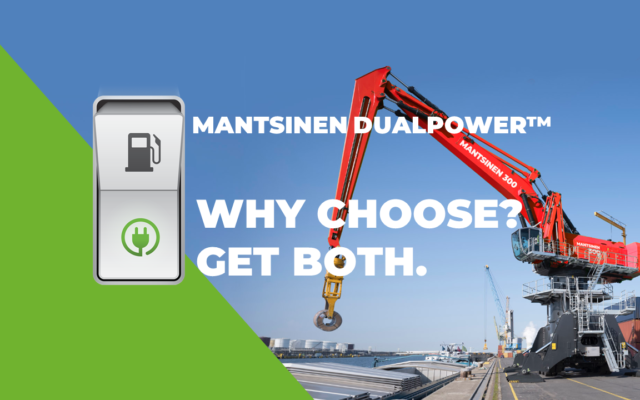
Dual-power capability is another feature worth evaluating. Our Mantsinen DualPower concept combines an electric motor and a diesel engine in a single machine, so operators can run on grid electricity when a connection is available and switch to diesel when working away from infrastructure. This flexibility reduces emissions, lowers running costs, and future-proofs the machine as energy regulations tighten.
When comparing suppliers, ask for verified energy consumption data from comparable wood terminal installations rather than theoretical efficiency ratings. Real-world figures from similar operating conditions are the only reliable basis for cost projections.
How do you assess after-sales support and spare parts availability?
To assess after-sales support, evaluate response time commitments, spare parts inventory depth, remote diagnostics capability, and the geographic coverage of the supplier’s service network. A material handler that sits idle waiting for parts or technicians costs far more in lost production than the price difference between suppliers.
Request specific information about parts lead times for high-wear components such as hydraulic cylinders, seals, and attachment pins. A supplier with a well-organized warehouse and a global distribution network can typically deliver critical parts within 24 to 48 hours. Suppliers who rely on third-party logistics without dedicated stock often cannot meet that standard.
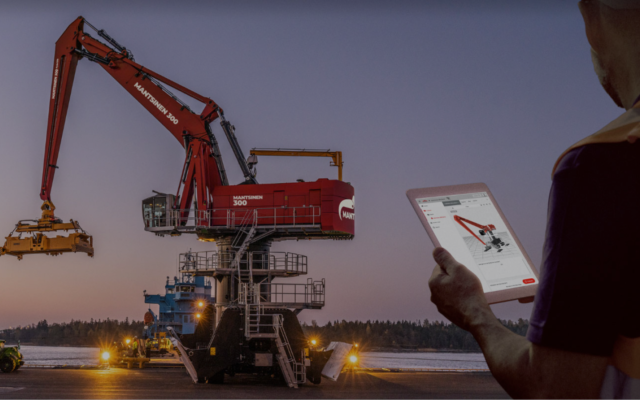
Remote diagnostics is increasingly important for wood terminal operators who run machines in shifts around the clock. Suppliers who can monitor machine health data remotely and identify developing faults before they cause breakdowns add real operational value. Ask whether the supplier offers a telematics platform and what level of proactive support is included in the service contract.
Finally, check the supplier’s service training program. A supplier who trains your maintenance team on the machine’s hydraulic system, electrical architecture, and software interface reduces your dependence on external technicians and shortens repair times when issues do occur.
What’s the difference between a general material handler and one built for wood terminals?
A general-purpose material handler is designed for a broad range of bulk and piece goods, while a wood terminal machine is engineered specifically for the high cycle rates, irregular load shapes, and environmental conditions of timber and biomass handling. The differences show up in boom strength, hydraulic capacity, attachment compatibility, and long-term durability under wood-specific stress.
Wood terminals demand machines that can handle everything from individual logs to large bundles of pulpwood or biomass bales, often in wet or freezing conditions. General handlers may lack the reach, lifting capacity, or attachment mounting strength required for these tasks. They may also use hydraulic systems sized for lighter-duty cycles, which leads to overheating and accelerated wear when pushed into continuous wood handling.
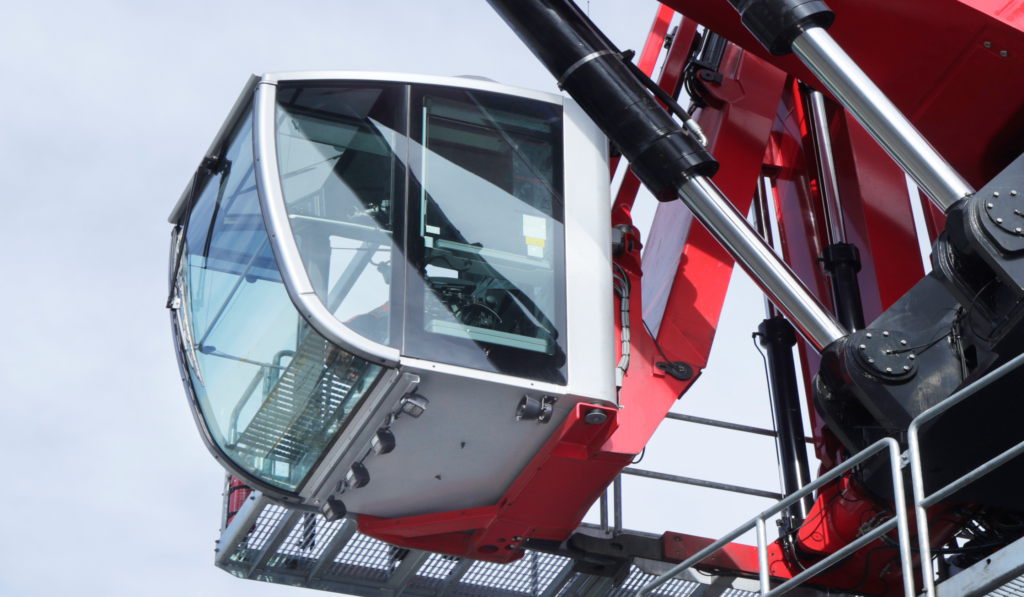
Machines built for wood terminals typically feature reinforced booms, purpose-designed grapple interfaces, and hydraulic circuits optimized for high-frequency operation. Cab design also differs: wood terminal operators need excellent visibility over large log piles and precise control at extended reach, which requires a cab position and control layout that general machines rarely prioritize.
The practical implication is straightforward: using a general material handler in a wood terminal increases maintenance costs, reduces throughput, and shortens machine service life compared to equipment designed for the application from the ground up.
Should you choose a local or international material handler supplier?
For wood terminal applications, an international material handler manufacturer with a proven global reference list and a local or regional service presence offers the best combination of technical specialization and practical support. Choosing purely on geography risks limiting your access to the most capable machines and the most relevant operational expertise.
International suppliers who have installed and supported machines across multiple continents have encountered a wider range of operating conditions, regulatory environments, and customer requirements. That breadth of experience typically results in more robust machine designs and more mature service processes. It also means you can speak directly with reference customers in comparable operations before committing to a purchase.
The key qualification is service coverage. An international supplier must be able to provide fast, responsive support in your region, whether through a local subsidiary, a trained dealer network, or a dedicated service team. Before signing a contract, confirm exactly who will respond to a breakdown call, where they are based, and what their guaranteed response time is.
Local suppliers can be a strong choice when they have genuine wood terminal expertise and a robust parts infrastructure, but the pool of manufacturers with deep specialization in large hydraulic material handlers for wood terminals is relatively small globally. Prioritize expertise and proven performance over proximity, then verify that service coverage meets your operational requirements.