How do you choose the right machine delivery concept for your port?
Choosing the right machine delivery concept for your port comes down to three core factors: your operational model, your capital structure, and your long-term throughput goals. Ports that handle consistent, high volumes typically benefit from ownership, while those with seasonal demand or expanding capacity may find leasing or outsourced operation more practical. The sections below walk through each key decision point so you can match the right delivery model to your specific situation.
What are the main machine delivery concepts available for ports?
The main machine delivery concepts for ports are outright purchase, leasing or rental, and fully outsourced machine operation. Each model transfers a different combination of capital investment, operational responsibility, and risk. The right starting point is understanding what each concept actually includes before comparing them against your port’s needs.
Outright purchase means the port acquires the hydraulic material handler or port crane outright. The port owns the asset, controls its use entirely, and carries full responsibility for maintenance and lifecycle costs. This is the most common model for established terminals with predictable, long-term throughput requirements.
Leasing or rental allows a port to use equipment without the full upfront capital commitment. Lease terms vary widely, from short-term rentals covering seasonal peaks to multi-year financial leases that function similarly to ownership. This model preserves cash flow and gives ports flexibility to upgrade equipment as technology evolves.
Outsourced operation goes a step further. Rather than just financing the machine, the port contracts an external provider to supply, operate, and maintain the equipment entirely. The port pays for throughput capacity rather than managing machinery directly. This is sometimes called a service contract or performance-based delivery model.
What’s the difference between owning and leasing port handling equipment?
The core difference between owning and leasing port handling equipment is who carries the asset on their balance sheet and who bears the lifecycle cost risk. Ownership gives the port full control and long-term cost advantages, while leasing offers flexibility and lower upfront exposure at the cost of higher total payments over time.
When a port owns its material handling machines, it builds equity in a long-lived asset. A well-maintained hydraulic material handler can operate productively for 20 or more years. Ownership makes the most financial sense when utilization is consistently high, because the fixed capital cost is spread across a large volume of work.
Leasing shifts the residual value risk to the lessor. At the end of a lease term, the port can return the machine, renew the arrangement, or upgrade to newer port equipment. This is particularly attractive when energy technology is evolving rapidly, as it is now, because it avoids locking into a technology generation that may become less competitive within a decade.
One practical consideration: lease structures often bundle maintenance and service support, which can simplify budgeting. Ownership, by contrast, requires the port to either build internal maintenance capability or contract it separately. Neither approach is inherently superior. The better question is which model aligns with your port’s capital allocation strategy and operational depth.
When does it make sense to outsource machine operation entirely?
Outsourcing machine operation entirely makes sense when a port lacks the internal expertise to run specialized equipment efficiently, when throughput demand is unpredictable, or when the port’s core competency is logistics coordination rather than equipment management. In these situations, paying for operational capacity rather than owning assets reduces risk and complexity.
This model is also well-suited to greenfield port developments or terminals expanding into new cargo types. Rather than recruiting and training a specialized operator workforce from scratch, the port can contract a provider with proven experience handling that specific material type.
We at Mantsinen are one of the few manufacturers in the world that also operate our own machines as a service provider at forest industry and steel industry sites. That means when we discuss outsourced operation with a port, we speak from over 60 years of hands-on experience and more than 500 million cubic meters handled. That operational depth translates directly into realistic performance expectations and honest guidance on whether full outsourcing fits a given situation.
The main trade-off with full outsourcing is reduced control over day-to-day operations. If cargo handling is central to your competitive differentiation, giving up direct control of that process carries strategic risk. Outsourcing works best when the port’s value is in its location, berth capacity, or logistics network rather than in the efficiency of its material handling specifically.
How does machine size and capacity affect the right delivery model?
Machine size and capacity directly influence which delivery model is financially viable. Larger, high-capacity hydraulic material handlers require greater capital investment and specialized maintenance, which makes the ownership versus leasing decision more consequential. Smaller machines are more easily leased or swapped, while the largest machines in the market are almost always purchased outright by operators with long-term commitments.
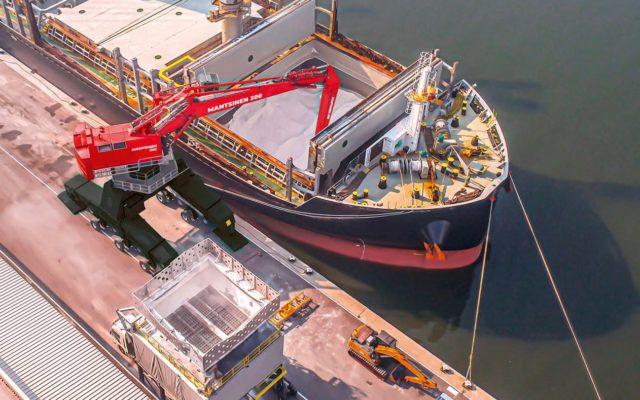
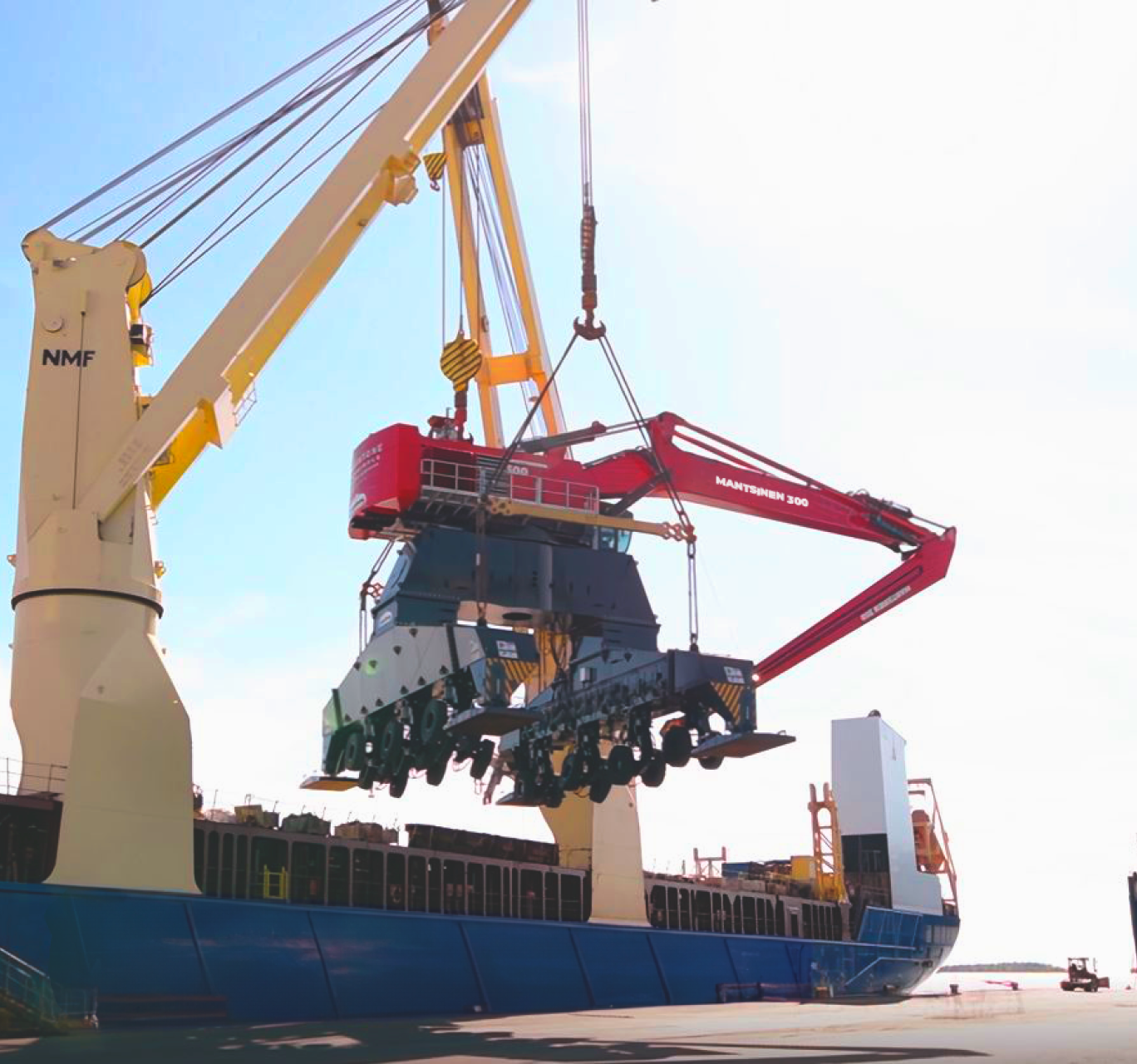
Our flagship product, the Mantsinen 300, is the world’s largest hydraulic material handling machine. A machine of that scale is purpose-built for high-throughput bulk terminals where it will operate continuously for years. The economics of leasing a machine at that capacity tier rarely work in a port’s favor unless the lease term is very long, because the asset is too specialized and too large for a lessor to easily redeploy.
Mid-range machines offer more delivery model flexibility. A port handling mixed cargo types with seasonal variation might lease a mid-capacity machine to cover peak periods while owning a base-load machine for year-round operations. This hybrid approach is increasingly common as ports optimize their equipment fleets rather than standardizing on a single machine type.
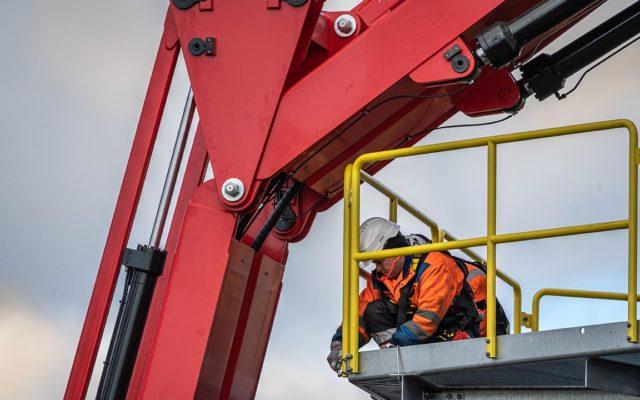
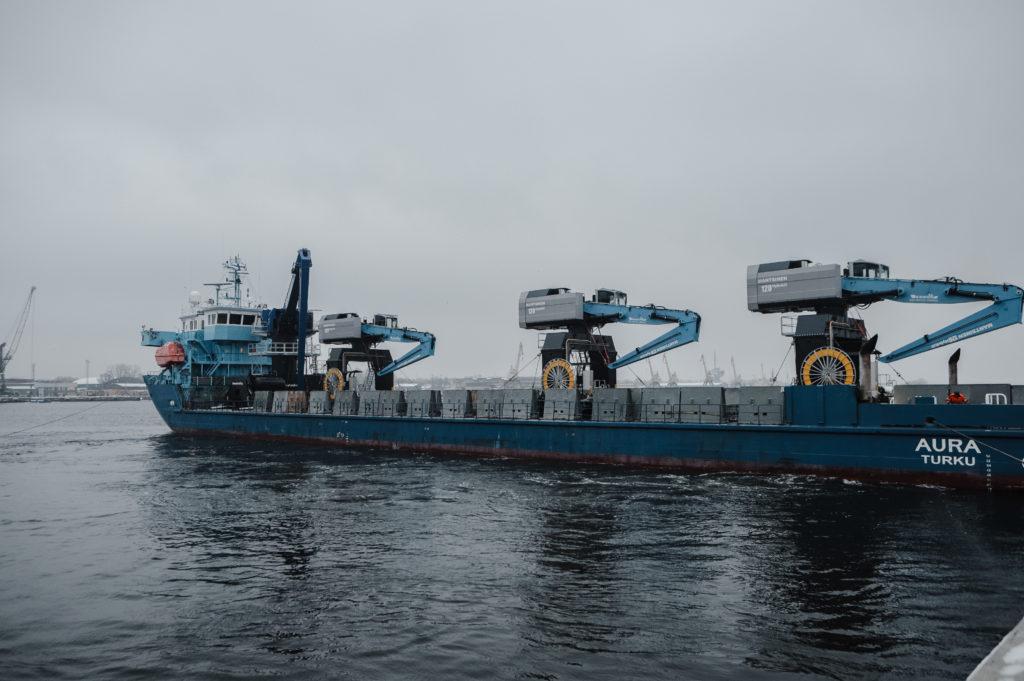
Capacity also affects installation logistics. Larger machines require more complex on-site assembly and commissioning. We work with our partners to optimize each machine delivery for ports, minimizing installation and transportation costs while protecting port operations from unnecessary downtime during the transition.
What role does energy technology play in choosing port equipment?
Energy technology is now a primary factor in port equipment selection, not just a secondary consideration. The choice between diesel, electric, and hybrid power systems affects operating costs, emissions compliance, and long-term asset value. Ports operating in regions with tightening emissions regulations or high energy costs have strong financial incentives to prioritize energy-efficient equipment from the outset.
Our Mantsinen Hybrilift® system reduces energy consumption and costs by up to 50% by recovering energy generated during boom movements and reusing it. Development on this system began as early as 2006, which means it is a mature, field-proven technology rather than an emerging concept. For a port evaluating total cost of ownership over a 15 to 20-year machine lifecycle, that energy saving compounds into a substantial financial advantage.
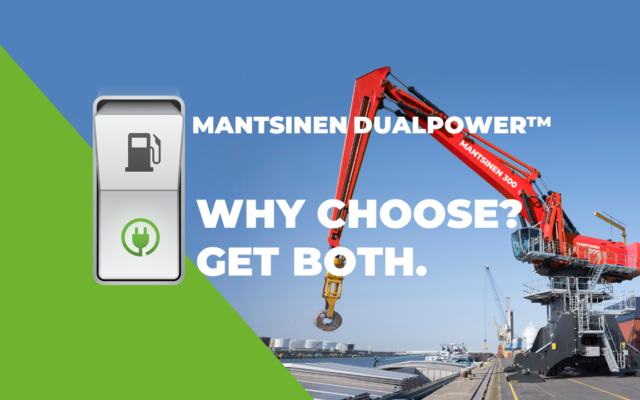
Our Mantsinen DualPower concept takes this further by combining an electric motor and a diesel engine in a single machine. This gives the port the mobility and independence of diesel with the efficiency and lower emissions of electric operation. For terminals that are not yet fully electrified but want to future-proof their fleet, DualPower is a practical bridge technology.
Energy technology also affects which delivery model makes sense. If a port is leasing equipment and expects to upgrade in five to seven years, locking into a diesel-only machine today carries more risk than it did a decade ago. Conversely, a port that owns its machines and commits to a long lifecycle has a stronger incentive to invest in hybrid or electric technology upfront, because it will capture the full energy savings over the machine’s life.
What questions should a port ask before selecting a delivery concept?
Before selecting a machine delivery concept, a port should ask six core questions: What is our projected throughput over the next 10 to 15 years? Do we have the internal expertise to operate and maintain specialized equipment? What is our capital structure and appetite for long-term asset commitment? What emissions regulations apply to our region now and in the near future? How quickly is our cargo mix likely to change? And what level of operational control do we need to maintain our competitive position?
These questions are not independent. The answers interact. A port with high projected throughput, stable cargo mix, and strong maintenance capability is a natural candidate for outright ownership of a high-capacity machine. A port with variable demand, limited technical staff, and exposure to evolving emissions rules may benefit from a lease or service contract that preserves flexibility.
It is also worth asking about lifecycle support before committing to any delivery model. The purchase price of port machinery is only one part of the total cost picture. Operator training, spare parts availability, remote diagnostics, and upgrade pathways all affect how much the machine actually costs to run over its full life.
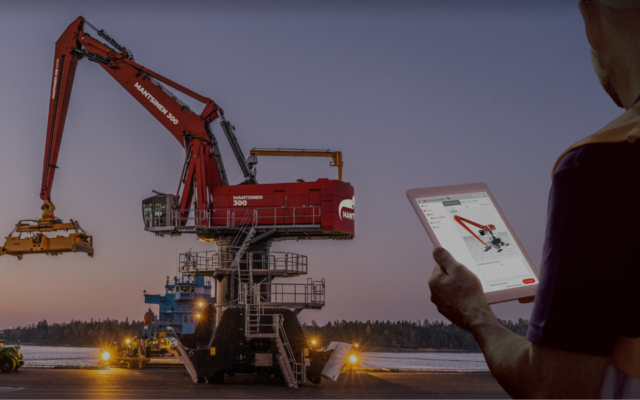
We provide a comprehensive lifecycle services framework that covers everything from on-site commissioning and operator training to remote monitoring through Mantsinen INSIGHT™ telematics, scheduled maintenance, and machine overhauls. When evaluating delivery concepts, understanding what post-delivery support looks like is just as important as the initial acquisition structure. A machine that arrives well-supported, with trained operators and a clear maintenance roadmap, will consistently outperform one that was simply the lowest-cost option at the point of purchase.
The right delivery concept is ultimately the one that aligns your port’s operational goals, financial structure, and long-term growth trajectory. Getting that alignment right from the start is the most reliable path to strong port logistics performance over the full lifecycle of your equipment. Contact our sales team for expert guidance on selecting the delivery model that best fits your port’s specific situation.