How can terminals handle larger vessels with existing infrastructure?
Global shipping has changed dramatically over the past two decades. Vessels are getting bigger, cargo volumes are growing, and terminals designed for a different era are now under pressure to keep up. For port and terminal operators, the challenge is urgent: how do you handle larger vessels efficiently when rebuilding your entire quay is not an option?
The good news is that terminal capacity does not always depend on concrete-and-steel infrastructure. Smart equipment choices—particularly the move toward high-reach hydraulic material handlers—can unlock significantly more throughput from the same footprint. This article answers the most common questions operators ask when facing the pressure of larger vessels and tighter margins.
Why are terminals struggling to handle larger vessels today?
Terminals are struggling because vessel sizes have outpaced the infrastructure built to serve them. Modern bulk carriers and container ships carry far more cargo per call than older vessels, which means each berth visit demands faster turnaround, greater reach, and higher handling volumes. Terminals designed for smaller ships simply were not designed for this level of intensity.
The pressure comes from several directions at once. Shipping lines consolidate routes onto fewer, larger vessels to reduce their own costs, which means port calls become less frequent but far more demanding. A terminal that cannot turn a large vessel around quickly risks losing traffic to a competing port entirely. At the same time, quay structures, storage yards, and logistics flows that worked well for smaller ships create bottlenecks when applied to Panamax- or post-Panamax-class vessels.
Labour costs and environmental compliance add further complexity. Operators need to move more tonnes per hour with fewer emissions and within tighter safety margins. This combination of pressure from larger vessels and operational constraints is why so many terminals are now re-evaluating their equipment strategies rather than waiting for capital-intensive infrastructure projects.
What does ‘existing infrastructure’ actually limit at a terminal?
Existing infrastructure limits a terminal in three primary ways: physical reach over the vessel, the load-bearing capacity of the quay, and the speed at which cargo can move from ship to storage. Each of these constraints directly affects how efficiently a terminal can serve larger vessels without costly civil engineering work.
Reach and outreach limitations
Older cranes and handlers were designed for vessels with narrower beams. A larger ship sits farther from the quay edge, and cargo stacked in the hold requires greater horizontal and vertical reach to access. Equipment that cannot reach the far side of a wide vessel forces crews to reposition the ship mid-operation, which wastes time and increases risk.
Quay load capacity
Heavy equipment places concentrated loads on quay structures. If a terminal’s quay was not built to carry the axle loads of a larger, more powerful machine, upgrading equipment becomes as much a structural question as a procurement one. This is one reason why machine weight distribution and mobility matter when selecting new handling equipment.
Logistics flow and storage bottlenecks
Even when cargo comes off the vessel quickly, existing yard layouts and conveyor systems can create downstream bottlenecks. Port infrastructure improvements often focus on the waterside interface, but the landside flow is equally important for achieving real gains in terminal capacity. Getting a full picture of your logistics flow from the start is essential to making the right equipment and layout decisions.
How can high-reach material handlers increase throughput without rebuilding quays?
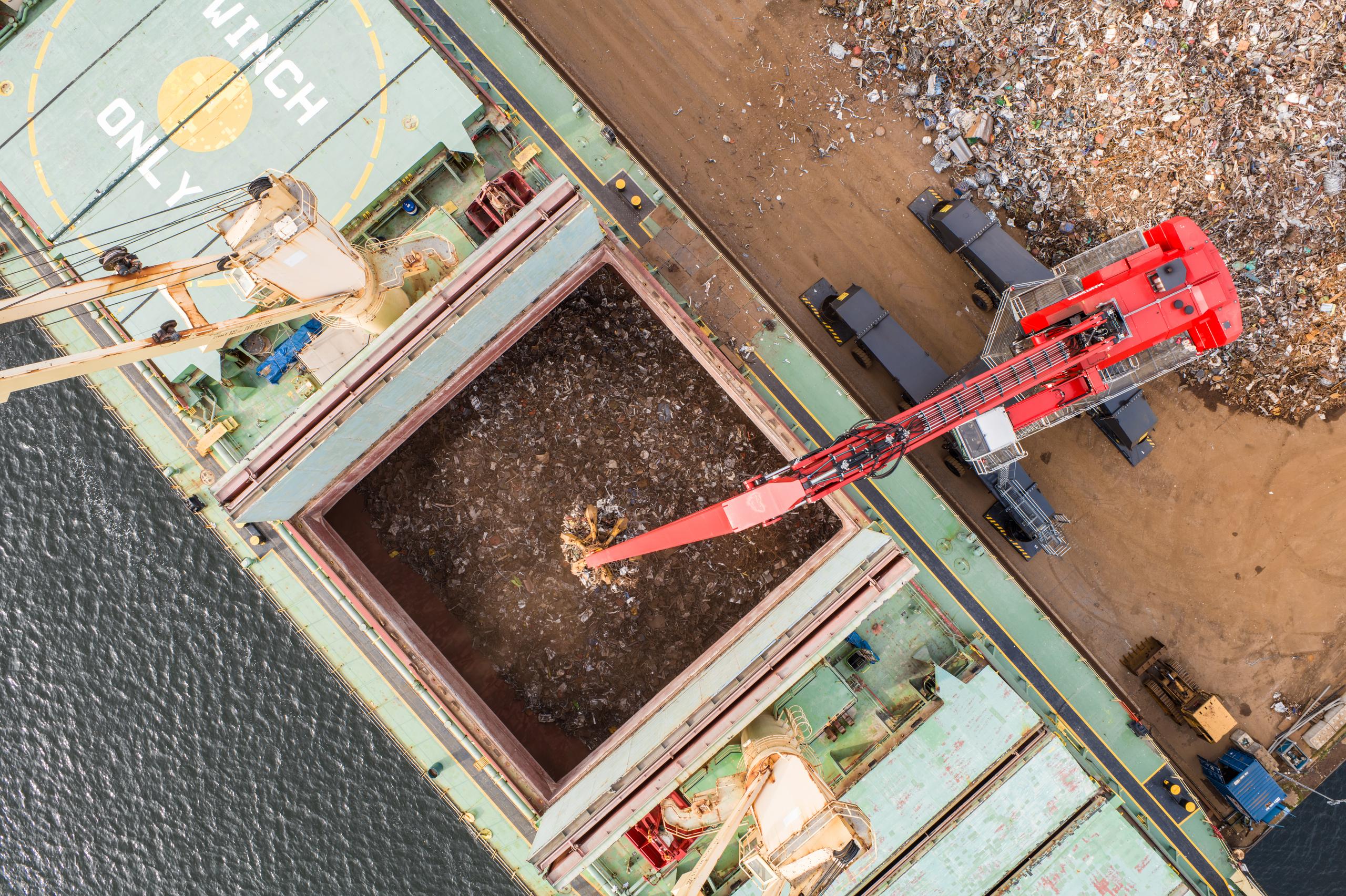
High-reach hydraulic material handlers increase throughput by delivering greater outreach, faster work cycles, and flexible attachment options from a compact, mobile platform. Unlike fixed crane structures, they can be repositioned along the quay to match the vessel’s cargo distribution, which means a single machine can cover more of the ship without requiring new civil works.
The key advantage is work-cycle speed. A hydraulic material handler can complete a grab-and-release cycle significantly faster than a traditional cable crane, and this speed compounds over a full vessel discharge. When handling bulk cargo such as wood chips, grain, or iron ore pellets, the difference in tonnes moved per hour becomes substantial over the course of a ship call.
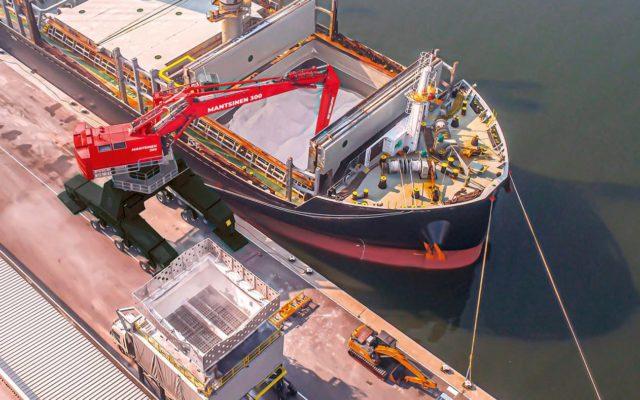
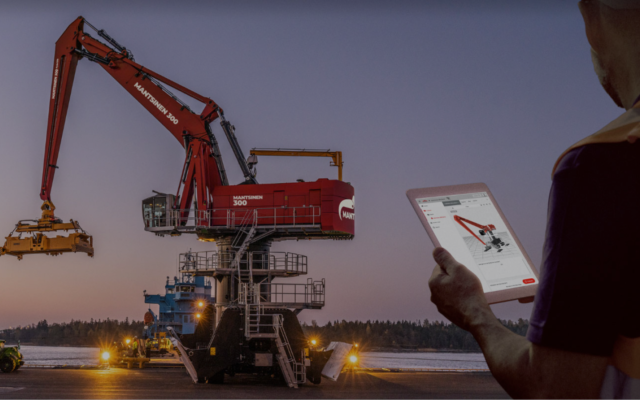
Reach is the other critical factor. Larger machines in the hydraulic handler category are engineered specifically to serve vessels up to the Panamax class. The Mantsinen 300, for example, is the world’s largest hydraulic material-handling machine and can move a full 40-foot container approximately 22 metres without repositioning. That kind of operational flexibility directly addresses the reach limitations that existing quay infrastructure creates when larger vessels arrive.
The mobility of a wheeled or rail-mounted hydraulic handler also means terminals can redeploy the same machine across multiple berths, which improves equipment utilisation and reduces the capital required to upgrade overall terminal capacity.
What is the difference between a harbour crane and a hydraulic material handler for bulk cargo?
The core difference is how each machine grips and moves cargo. A traditional cable harbour crane uses wire ropes and a suspended grab, which limits precision and work-cycle speed. A hydraulic material handler uses a rigid boom with hydraulic actuation, giving the operator direct, precise control over the attachment at all times. For bulk cargo, this translates into faster cycles, better fill rates, and less spillage.
Cable cranes have served ports well for decades and remain relevant for certain container and general cargo operations. However, for bulk materials such as scrap metal, wood chips, grain, or coal, the physics of a suspended load works against efficiency. The grab swings, the operator must compensate, and the cycle slows. A hydraulic handler eliminates that pendulum effect entirely.
Handling capacity is another meaningful distinction. In many bulk-handling scenarios, a hydraulic harbour crane can more than double handling capacity compared with a traditional cable crane. The rigid boom allows the operator to place the grab precisely into the hold, fill it completely, and extract it cleanly without the delays that come from stabilising a swinging load.
Attachment versatility also favours the hydraulic handler. The same machine can switch between clamshell buckets for bulk materials, spreaders for containers, and specialised grapples for scrap or timber, making it a genuinely multipurpose asset for terminals handling mixed cargo types. To find out which configuration suits your operation, speak with our equipment sales specialists directly.
How does hybrid power technology help terminals meet environmental regulations?
Hybrid power technology reduces a terminal’s fuel consumption and emissions by recovering and reusing energy that would otherwise be lost during machine operation. In a hydraulic material handler, the boom generates significant energy during downward movements. A hybrid system captures this energy and feeds it back into the machine’s power cycle, reducing the load on the diesel engine and cutting both fuel use and exhaust emissions.
Environmental regulations on port operations are tightening across Europe and globally. Terminals face restrictions on particulate emissions, noise levels, and carbon output, particularly when operating near urban areas or sensitive ecosystems. Hybrid material handlers directly address these compliance requirements without sacrificing productivity.
Our Hybrilift® energy recovery system has been in development since 2006 and is available across the Mantsinen machine range. It reduces energy consumption and costs by up to 50 percent by harvesting the energy generated by boom movements and putting it back to work. This is not a marginal improvement. Over a full operational year, the fuel-cost savings and emissions reductions are substantial enough to influence both the total cost of ownership calculation and a terminal’s environmental compliance position.
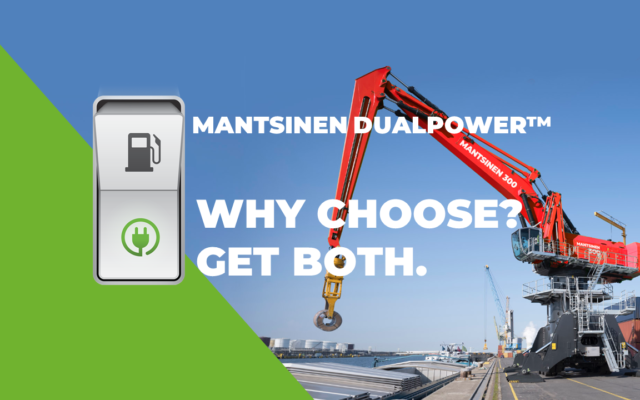
Our DualPower concept takes this further by combining an electric motor with a diesel engine in a single machine. This gives terminals the option to run on shore power when connected to the grid, switching to diesel only when needed. The result is a machine that delivers mobility and full productivity while meeting the strictest emissions standards in environmentally sensitive port locations.
When should a terminal invest in new handling equipment versus upgrading infrastructure?
A terminal should prioritise new handling equipment when the primary bottleneck is throughput speed or reach rather than structural capacity. If the quay can physically support a larger machine and the limiting factor is how quickly cargo moves between vessel and storage, new equipment delivers a faster return on investment than civil works. Infrastructure upgrades make more sense when quay depth, berth length, or load-bearing capacity are the genuine constraints.
The decision often comes down to timelines and reversibility. A new hydraulic material handler can be commissioned and operational within months. A quay extension or structural reinforcement project takes years and carries significant cost and disruption risk. For terminals facing immediate pressure from larger vessels, equipment investment is often the faster and more flexible path to improved harbour efficiency.
There are also cases where both are needed, but sequencing matters. Upgrading handling equipment first allows a terminal to demonstrate improved throughput and justify the business case for infrastructure investment. It also generates operational data that informs better infrastructure design decisions, rather than building first and discovering that the bottleneck has simply moved downstream.
The right answer depends on a clear analysis of where the constraint actually lies in your operation. Layout, dimensions, logistics flows, and machine selection all interact. Getting that analysis right before committing capital is the difference between a targeted investment that delivers results and a costly project that solves the wrong problem. Our terminal equipment support and services team can help you assess your operation and identify the right path forward.