What is the best material handling solution for bulk cargo in ports?
Ports and terminals handle enormous volumes of raw materials every day, and the equipment used to move that cargo has a direct impact on throughput, cost, and environmental performance. Whether a facility handles wood chips, grain, iron ore, or scrap metal, choosing the right bulk cargo material handling solution is one of the most consequential decisions a port operator can make. This article answers the most common questions port managers and logistics decision-makers ask when evaluating their options.
From understanding the fundamentals of bulk handling to comparing hydraulic machines with traditional harbour cranes, the sections below provide direct, practical answers designed to help you make better-informed choices for your operation.
What is bulk cargo material handling in ports?
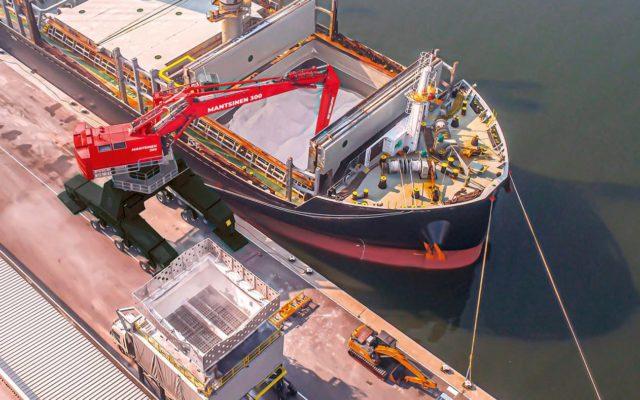
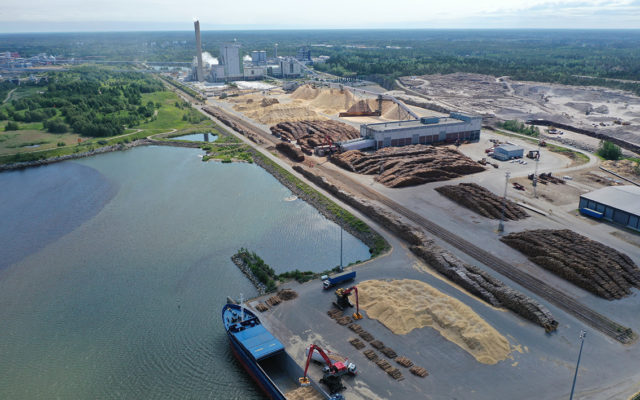
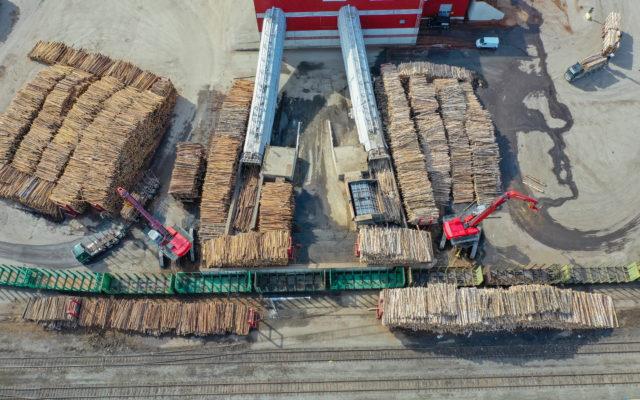
Bulk cargo material handling in ports is the process of loading, unloading, transferring, and storing large volumes of loose or unpackaged materials such as wood chips, grain, coal, fertilisers, iron ore, sand, and scrap metal. It involves specialised equipment, attachments, and logistics systems designed to move these materials efficiently between vessels, storage areas, and transport links.
Unlike containerised cargo, bulk materials cannot simply be stacked or wheeled into position. They require machines capable of scooping, grabbing, or lifting large quantities in a single cycle, often working around the clock to keep vessels on schedule. The scale of these operations means that even small improvements in cycle time or fuel efficiency can translate into significant cost savings over the course of a year.
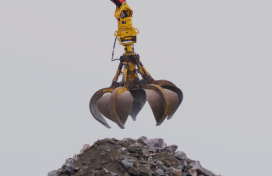
Effective bulk cargo handling also requires matching the right attachment to the right material. Clamshell buckets are suited to loose granular materials like sand and grain, while scrap grapples are designed for irregular, heavy ferrous loads. The properties of each material, including weight, density, and how it flows or compacts, directly influence the design choices made for both the machine and its working tool.
What types of equipment are used for bulk cargo in ports?
The main types of equipment used for bulk cargo in ports include hydraulic material handlers, mobile harbour cranes, conveyor systems, grab cranes, and loaders. For handling a wide variety of bulk materials with flexibility and precision, hydraulic material handlers fitted with specialised attachments are increasingly the preferred choice in modern port operations.
Hydraulic material handlers
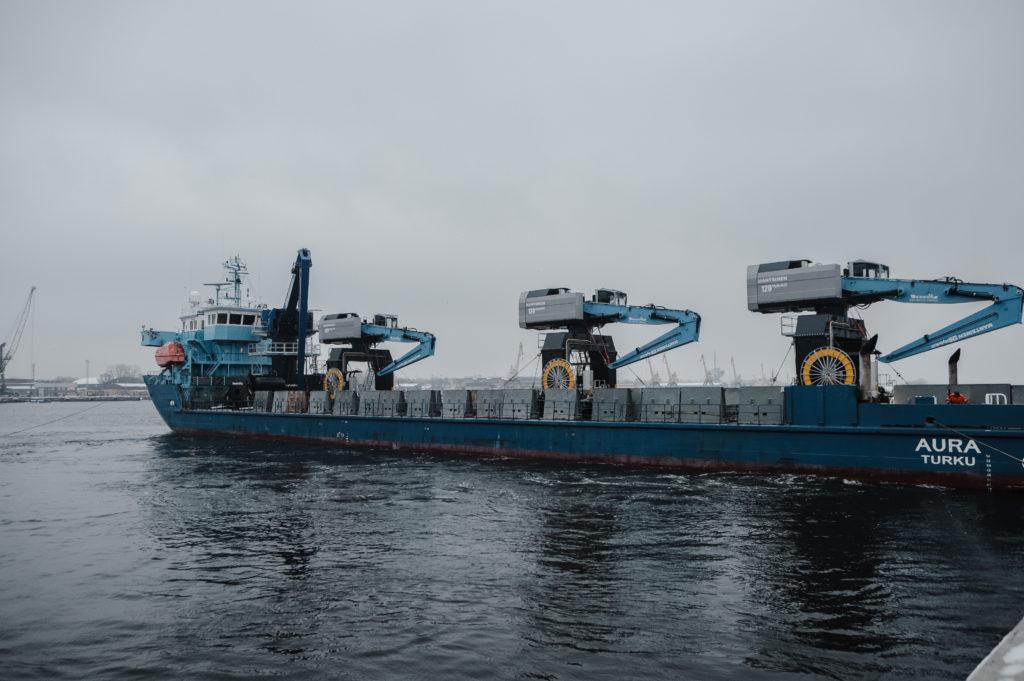
Hydraulic material handlers are purpose-built machines that use hydraulic systems to power their boom, arm, and attachment movements. They can be fitted with a broad range of tools, from clamshell buckets for bulk solids to scrap grapples and container spreaders, making them highly versatile across different cargo types. Their ability to work at high speeds with precise control makes them well suited to busy terminals where multiple material types move through the same facility.
Attachments and working tools
The attachment is often as important as the machine itself. Clamshell buckets come in different shapes and sizes to suit materials ranging from light wood chips to dense iron ore pellets. Scrap grapples are available with four to six tines and in open, semi-open, or closed configurations, allowing operators to optimise for penetration, fill rate, or manoeuvrability depending on the scrap type being handled. Quick-coupler systems allow attachments to be changed rapidly and safely, which is a significant advantage when a single machine handles several different cargo streams throughout a shift.
Conveyor and support systems
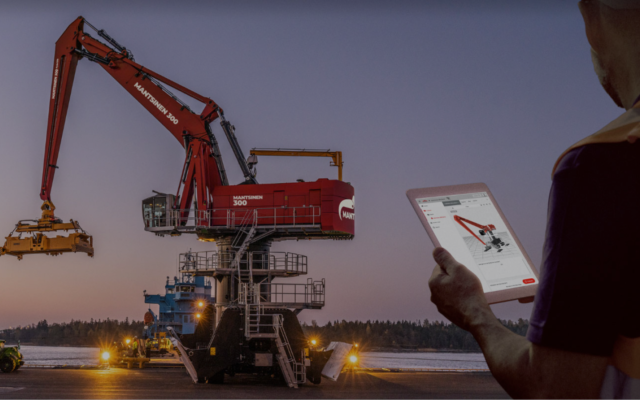
Conveyors, hoppers, and storage systems often work alongside the primary handling machine to create a complete logistics flow. The most productive port operations treat the material handler not as an isolated piece of equipment but as the central link in a coordinated system in which layout, dimensioning, and logistics flows are all optimised together.
What’s the difference between a hydraulic material handler and a harbour crane?
The key difference is that a hydraulic material handler uses a fully hydraulic boom-and-arm system for movement and attachment control, while a traditional cable harbour crane relies on wire ropes and a hook to lift loads. Hydraulic handlers offer faster cycle times, greater precision, and broader attachment compatibility and, in many cases, can more than double handling capacity compared with traditional cable cranes.
Traditional cable cranes were the standard in ports for decades, and they remain in use at many facilities. However, their reliance on wire ropes limits the range of attachments they can use effectively, and the swinging motion of a suspended load requires more careful, slower operation to avoid accidents. This makes them less suited to high-frequency bulk operations where speed and control are both critical.
Hydraulic harbour cranes, by contrast, hold the load rigidly through the hydraulic arm, which means the operator has direct control over the position of the attachment at all times. This enables faster, more repeatable work cycles and allows the machine to handle not just bulk materials but also containers, general cargo, and steel products using the same base machine with different attachments. For ports that handle a mixed cargo portfolio, this versatility is a major operational advantage.
How does a hybrid material handler improve port efficiency?
A hybrid material handler improves port efficiency by recovering energy that would otherwise be lost during boom and arm movements and reusing it to power the machine. This energy recovery can reduce fuel consumption and operating costs by up to 50%, while also reducing emissions and allowing the machine to sustain higher productivity over long shifts without additional energy input.
Our Hybrilift® energy recovery system, developed since 2006 and now patented for our largest machines, captures the kinetic energy generated when the boom lowers and stores it for reuse. This is particularly effective in bulk handling operations where the boom cycles continuously throughout the working day, meaning the energy recovery accumulates significantly over time. The result is a machine that is both more economical to run and better able to sustain peak performance.
Beyond energy savings, hybrid technology also contributes to smoother machine operation. Stored energy can be deployed to assist during peak-demand moments in the work cycle, which reduces stress on the primary power system and contributes to longer machine life and lower maintenance costs. For port operators under pressure to reduce their carbon footprint while also controlling operational expenditure, hybrid material handlers address both challenges simultaneously.
What should ports look for when choosing bulk handling equipment?
When choosing bulk handling equipment, ports should evaluate handling capacity, machine versatility, energy efficiency, reliability, attachment compatibility, and the total cost per tonne handled over the machine’s lifetime. The right machine is not simply the one with the highest headline capacity but the one that delivers the best combination of throughput, uptime, and running costs for the specific materials and volumes the port handles.
Capacity and reach
Matching machine size to the vessels and volumes being handled is fundamental. A machine that is undersized will create bottlenecks, while one that is oversized may carry unnecessary capital and operating costs. Ports handling Panamax-class vessels and very large bulk volumes need machines with the reach and lift capacity to work efficiently across the full width of the hold, while smaller terminals may find that a mid-size machine delivers a better cost per tonne for their specific throughput levels.
Versatility and attachment options
Ports rarely handle just one type of cargo. A machine that can switch quickly between clamshell buckets for bulk solids, scrap grapples for recycled materials, and spreaders for containers gives the operator far more flexibility to respond to changing cargo flows. Quick-coupler systems that allow safe and rapid attachment changes are an important feature to evaluate when comparing machines. To explore the right configuration for your operation, speak with our bulk handling sales specialists about your specific requirements.
Operational support and partnership
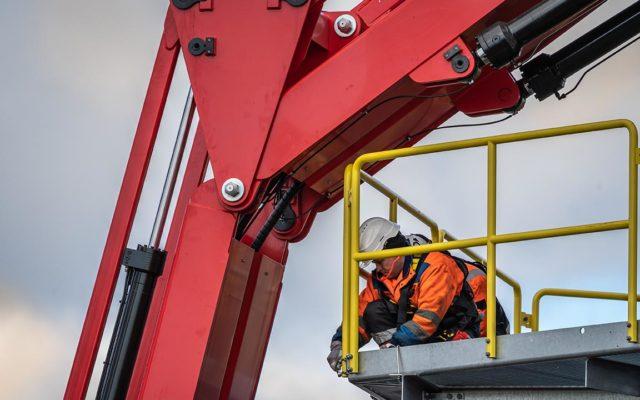
Long-term reliability depends not just on the machine itself but on the support structure behind it. Readily available spare parts, local service capability, and a manufacturer with genuine operational experience all reduce the risk of costly downtime. Our equipment maintenance and support services are backed by direct, day-to-day operational experience, as we both manufacture material handling machines and operate a fleet of them at various sites, which means our design decisions are informed by real-world insight rather than theory alone.
How can ports reduce emissions with modern material handling machines?
Ports can reduce emissions with modern material handling machines by adopting hybrid energy recovery systems, transitioning to dual-power or electric-drive options, and optimising machine selection and logistics flows to minimise unnecessary movements and idle time. Together, these approaches can significantly cut both fuel consumption and exhaust emissions without sacrificing throughput.
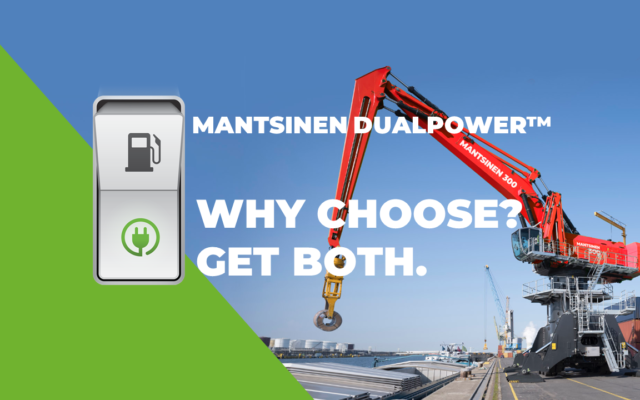
Our DualPower concept combines an electric motor and a diesel engine in a single machine, giving operators the flexibility to run on electric power when shore power is available and switch to diesel when operating in areas without a grid connection. This means ports can progressively electrify their operations as infrastructure allows, without being locked into either a purely diesel or purely electric machine from the outset. The combination delivers the mobility of a diesel machine with the lower emissions and running costs of electric operation where it matters most.
Alongside power system choices, operational efficiency itself is a major lever for emissions reduction. A machine that completes a loading or unloading cycle faster uses less energy per tonne handled, which means that investing in high-productivity equipment is also an investment in lower emissions intensity. Optimising the layout of the terminal, the logistics flow around the machine, and the match between machine size and cargo volume all contribute to a lower emissions outcome per tonne of material moved.
Ports that take a whole-system view, considering not just the machine but the attachments, the layout, and the energy source together, are best placed to achieve meaningful and lasting reductions in their environmental footprint while continuing to grow their handling volumes.