What is the future of material handling in ports?
Ports are the backbone of global trade, and the equipment that moves cargo through them shapes everything from supply chain speed to environmental impact. As demand grows and sustainability pressures intensify, the future of material handling in ports is being defined by smarter machines, cleaner energy systems, and more intelligent logistics. Whether you operate a bulk terminal or manage a mixed-cargo harbour, understanding where port material handling is heading gives you a real competitive edge.
This article answers the most important questions port operators, terminal managers, and logistics decision-makers are asking right now. From energy recovery technology to automation and equipment selection, here is a clear, practical guide to what is changing and why it matters.
What is material handling in ports and why does it matter?
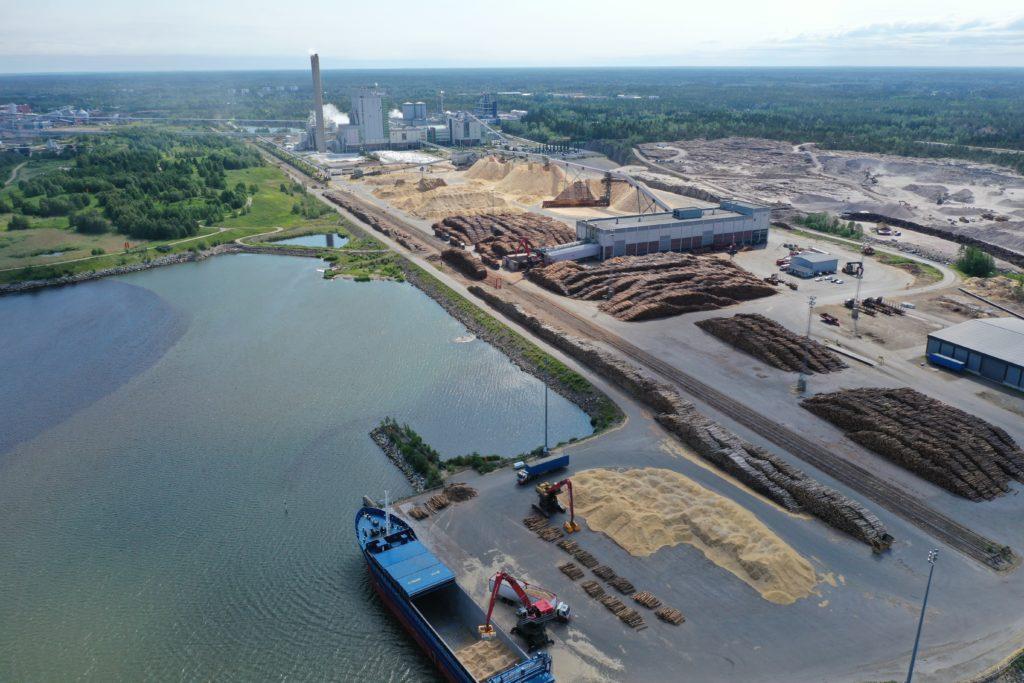
Port material handling refers to the entire process of moving, loading, unloading, and transferring cargo within a port or terminal environment. It covers bulk materials like wood chips, grain, coal, and iron ore, as well as general cargo, containers, and scrap metal. Efficient port material handling directly determines how quickly vessels turn around, how much cargo a terminal can process, and how competitive a port remains in global trade.
The scale of the challenge is significant. Every day, ports around the world handle hundreds of thousands of tonnes of cargo, and even small inefficiencies in the handling process translate into real costs. Slow turnaround times mean vessels wait longer, berth utilisation drops, and operational costs rise. Conversely, a well-optimised material handling setup can more than double throughput compared to older equipment, as hydraulic harbour cranes demonstrate in many applications when compared with traditional cable cranes.
Beyond throughput, port material handling matters because it sits at the intersection of safety, environmental compliance, and long-term profitability. The machines, attachments, and workflows chosen today will shape a terminal’s competitiveness for the next decade or more. That is why the choice of equipment—and the logic behind the entire logistics flow—deserves serious attention.
What are the biggest challenges facing port material handling today?
The biggest challenges in port material handling today are balancing throughput efficiency with stricter environmental regulations, managing equipment downtime, and adapting to increasingly diverse cargo types. Ports also face pressure to reduce emissions, control operational costs, and maintain safety standards—all at the same time and often with ageing infrastructure.
Efficiency and equipment utilisation
Port operations exist in a fiercely competitive environment where only the most efficient techniques survive. Maximising machine utilisation means minimising idle time, reducing cycle times, and ensuring that every piece of equipment is matched to the right task. A mismatch between machine size and cargo volume is one of the most common and costly inefficiencies in terminal operations.
Environmental and regulatory pressure
Environmental regulations are tightening across Europe and globally. Ports are under growing pressure to reduce diesel consumption, cut emissions, and demonstrate sustainability credentials to cargo owners, investors, and local communities. This is pushing operators to evaluate energy consumption not just as a cost line item but as a compliance and reputational issue.
Safety and operator demands
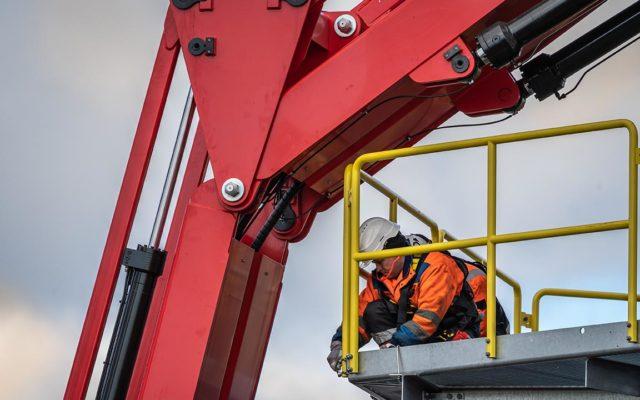
Handling heavy bulk materials, scrap, and containers involves real risk. Modern terminals demand machines that combine high productivity with robust safety systems and comfortable, ergonomic cabins to reduce operator fatigue over long shifts. Downtime caused by safety incidents or equipment failures has cascading effects across the entire logistics chain.
How is energy recovery technology changing port material handlers?
Energy recovery technology is changing port material handlers by capturing energy that would otherwise be wasted during machine operation and reusing it to power subsequent movements, reducing fuel consumption and emissions by up to 50 % compared with conventional diesel-only machines. This makes advanced energy recovery one of the most impactful developments in harbour crane efficiency in recent years.
We have been developing and refining energy recovery systems since 2006. Our Mantsinen Hybrilift® system captures the kinetic energy generated when the machine’s booms lower and reuses it to power the boom’s lifting movement, significantly reducing both energy costs and environmental impact. This is not a theoretical benefit; it is a measurable reduction that directly affects operating costs on every shift.
Beyond energy savings, these systems reduce noise levels and lower heat output, which improves the working environment around the machine. For ports operating in urban or environmentally sensitive areas, this matters both for compliance and for community relations. The technology has matured to the point where it is now available across a wide range of machine sizes, making it accessible to small and medium terminals as well as large bulk-handling operations.
DualPower: combining the best of electric and diesel
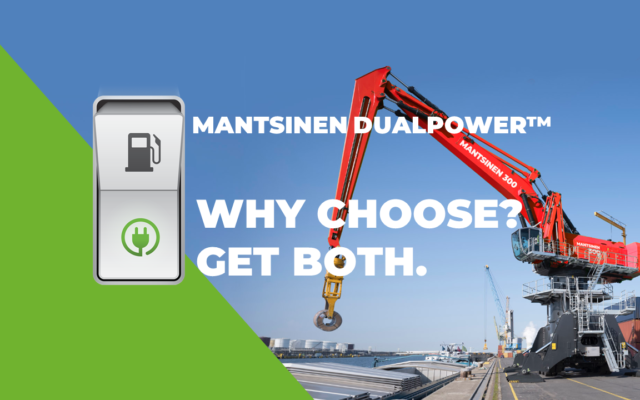
Our Mantsinen DualPower concept takes this thinking further by combining a fully electric motor with a diesel engine in a single machine. The result is a material handler that can operate on grid power when a connection is available, switch to diesel when mobility is needed, and deliver the productivity of a full-size machine with the environmental profile of an electrified solution. This dual-power approach is particularly well suited to ports that are transitioning towards electrification but cannot yet commit to a fully electric fleet.
What role does automation play in the future of port logistics?
Automation plays a growing role in the future of port logistics by enabling more consistent machine performance, reducing human error, and allowing operators to manage higher throughput with greater predictability. Intelligent control systems, load management technology, and data-driven maintenance are the key areas where automation is already delivering measurable value in port material handling.
Full terminal automation remains complex and capital-intensive, particularly for bulk and mixed-cargo operations where material types, vessel sizes, and loading conditions vary constantly. However, semi-automated features within individual machines are becoming standard. Load control systems, for example, help operators maintain precision and safety during high-speed cycles, reducing the skill barrier while improving output consistency.
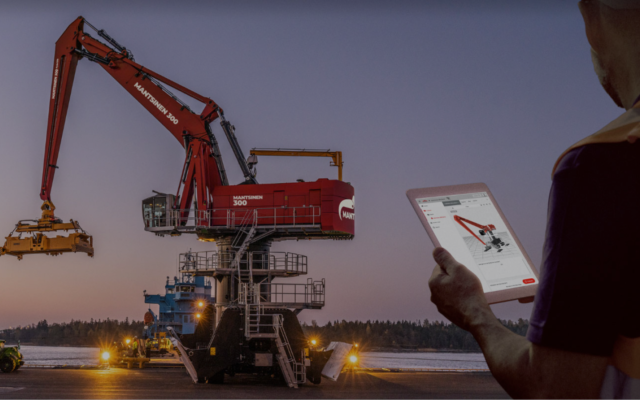
Predictive maintenance is another area where intelligent technology is transforming port logistics. By monitoring machine performance data in real time, operators can anticipate failures before they cause unplanned downtime. In bulk-handling environments where a single machine stoppage can halt an entire vessel-loading operation, this kind of predictability has enormous value. The future of port logistics technology is not about removing operators entirely but about giving them better tools and better information to make faster, smarter decisions.
How do ports choose the right material handling equipment?
Ports choose the right material handling equipment by evaluating cargo type and volume, required reach and lifting capacity, site layout constraints, energy infrastructure, and total cost of ownership over the machine’s working life. The right machine is not simply the most powerful one available but the one that best matches the terminal’s specific operational profile. Our sales team for port equipment solutions can help match the right machine to your operational needs.
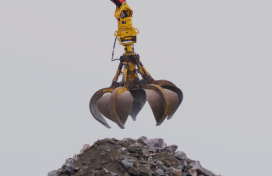
Cargo type is the starting point. Bulk materials like grain, wood chips, or iron ore require different attachments and machine characteristics compared with scrap metal, containers, or steel products. A port handling heavy scrap needs a robust machine built to the highest design classification, while a terminal focused on roundwood or timber operations benefits from a machine with a long track record in forestry logistics. Matching the attachment range to the material mix is as important as selecting the base machine.
Machine size and site layout
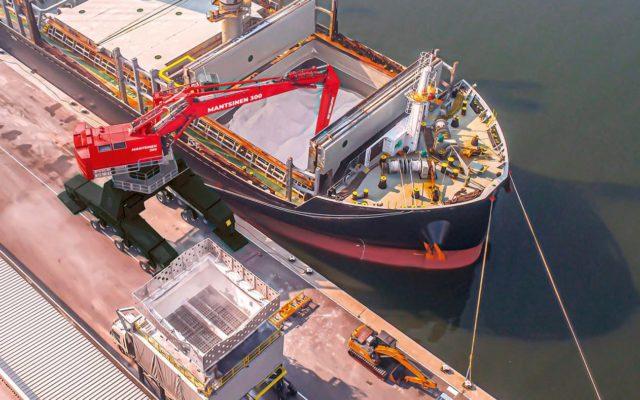
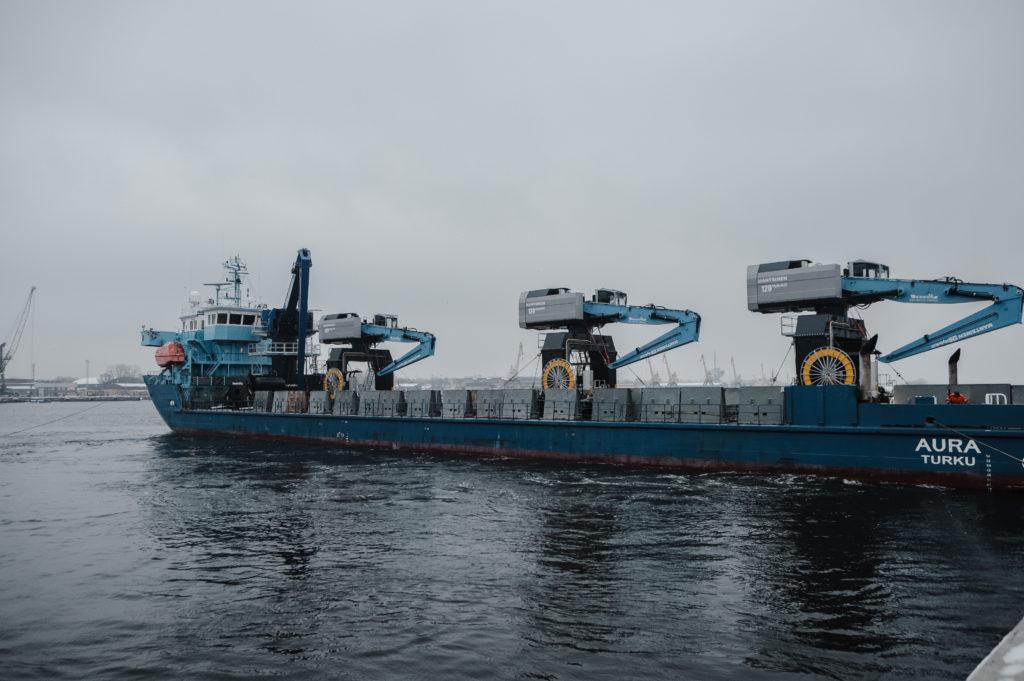
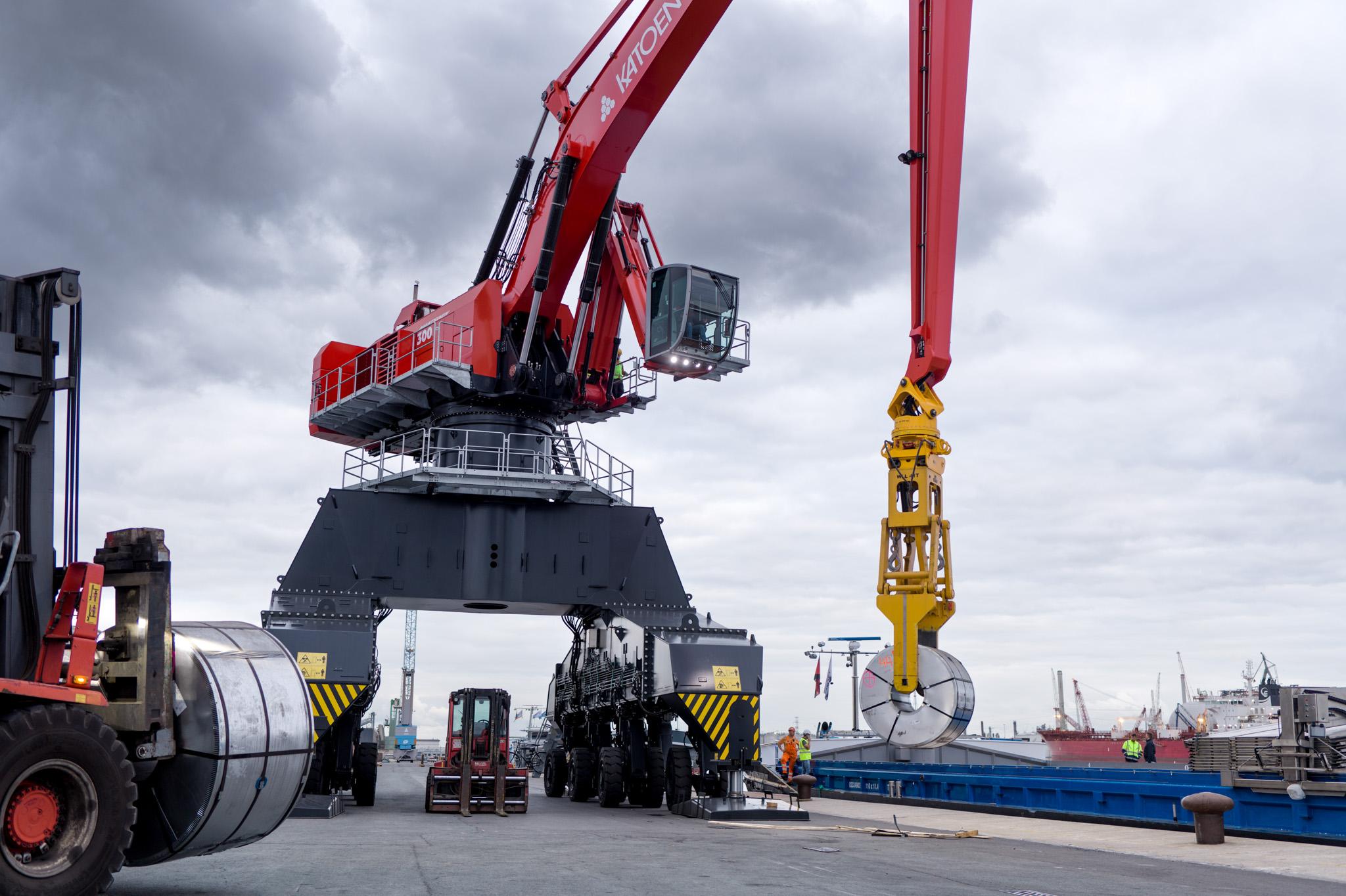
Reach, lifting height, and outreach all need to align with the vessel sizes the port regularly handles. Our Mantsinen 300, the world’s largest hydraulic material handling machine, is designed to work with vessels up to Panamax class, while our smaller models, such as the Mantsinen 120 and Mantsinen 90, serve as the backbone of small and mid-size port operations where speed and flexibility are the priority. Choosing the wrong size in either direction means leaving productivity on the table.
Total cost of ownership
Purchase price is only one part of the equation. Energy consumption, maintenance requirements, parts availability, and local support coverage all contribute to the true cost of operating a machine over its lifetime. We offer long-term partnerships that include comprehensive maintenance and support services, which reduces the risk of unexpected costs and keeps machines performing at their best throughout their working life.
What do sustainable port operations look like in the future?
Sustainable port operations in the future mean combining high productivity with low emissions, minimal energy waste, and logistics processes designed to reduce the total environmental footprint of every tonne of cargo handled. It is not about choosing between efficiency and sustainability but about achieving both simultaneously through better technology and smarter operational design.
The transition is already underway. Machines equipped with energy recovery systems and dual-power machines are replacing older diesel-only equipment in progressive terminals across Europe and beyond. Electrification of port equipment is accelerating as grid infrastructure improves and the economics of electric operation become more compelling. At the same time, attachment technology is improving to reduce material spillage and energy waste during each handling cycle.
Sustainability in port logistics also means thinking beyond individual machines to the entire flow of cargo through the terminal. Layout optimisation, logistics flow design, and the integration of machine data into broader terminal management systems all contribute to lower emissions per tonne handled. We help port operators think through these challenges holistically, providing guidance on layout, dimensioning, and logistics flows alongside the machines themselves, because the most sustainable solution is one in which every element of the operation works together efficiently.
The future of bulk material handling in ports belongs to terminals that invest in the right combination of technology, expertise, and long-term thinking. The machines are getting smarter, the energy systems are getting cleaner, and the operators who move early will hold a lasting advantage in an increasingly competitive global logistics market.