What causes low productivity in bulk terminals?
Bulk terminal productivity is one of the most closely watched metrics in port and logistics management, yet many operations still struggle to meet their throughput targets. Whether you are handling wood chips, grain, iron ore, or scrap metal, the gap between potential capacity and actual output is often wider than it needs to be. Understanding what drives that gap is the first step toward closing it.
This article addresses the most common questions that port and terminal operators ask when diagnosing low productivity in bulk material handling. Each section provides a direct answer, followed by the context you need to act on it.
What is productivity in bulk terminal operations?
Productivity in bulk terminal operations is the rate at which a terminal moves material through its system, typically measured in tonnes per hour or tonnes per machine shift. It reflects how efficiently equipment, people, and processes work together to load, unload, and transfer bulk cargo with minimal delay, downtime, or waste.
The metric goes beyond raw machine speed. A terminal can have powerful equipment and still deliver poor productivity if its layout, logistics flows, or attachment selection creates bottlenecks. True bulk terminal productivity accounts for the full cycle: vessel arrival, berth occupancy time, material transfer rates, storage management, and onward dispatch. Each link in that chain contributes to, or subtracts from, the overall result.
For operators handling diverse materials such as fertilisers, wood chips, coal, or iron ore pellets, productivity also depends on how well equipment is matched to each material type. A machine running the wrong attachment on a dense material will underperform regardless of its rated capacity. This is why productivity is best understood as a system outcome rather than a single machine specification.
What are the most common causes of low productivity in bulk terminals?
The most common causes of low productivity in bulk terminals are equipment mismatches, poor terminal layout, insufficient machine capacity, unplanned downtime, and slow work cycles caused by outdated technology. These factors often compound each other, meaning one bottleneck creates pressure across the entire operation.
Equipment and attachment mismatches
Using a grab or clamshell bucket that is not optimised for the material being handled is one of the most frequent and preventable causes of lost throughput. Different bulk materials have different densities, flow characteristics, and abrasion properties. A bucket designed for light wood chips will underperform on dense iron ore pellets, and vice versa. Selecting the right attachment for each application directly affects fill rates and cycle times.
Layout and logistics flow problems
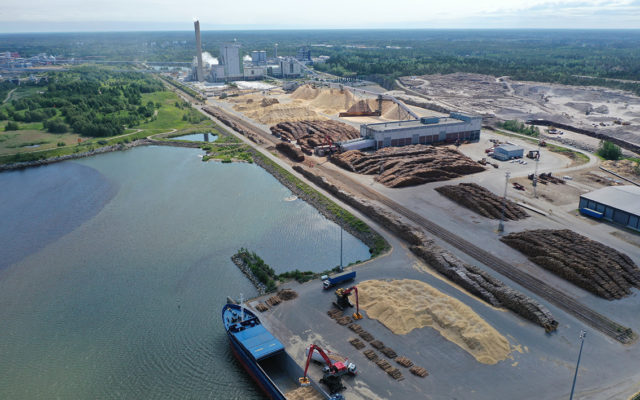
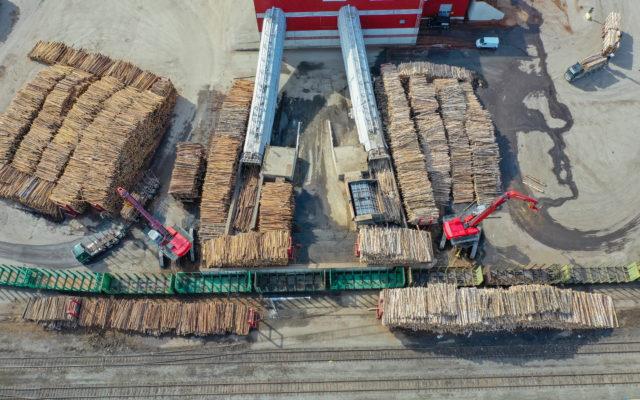
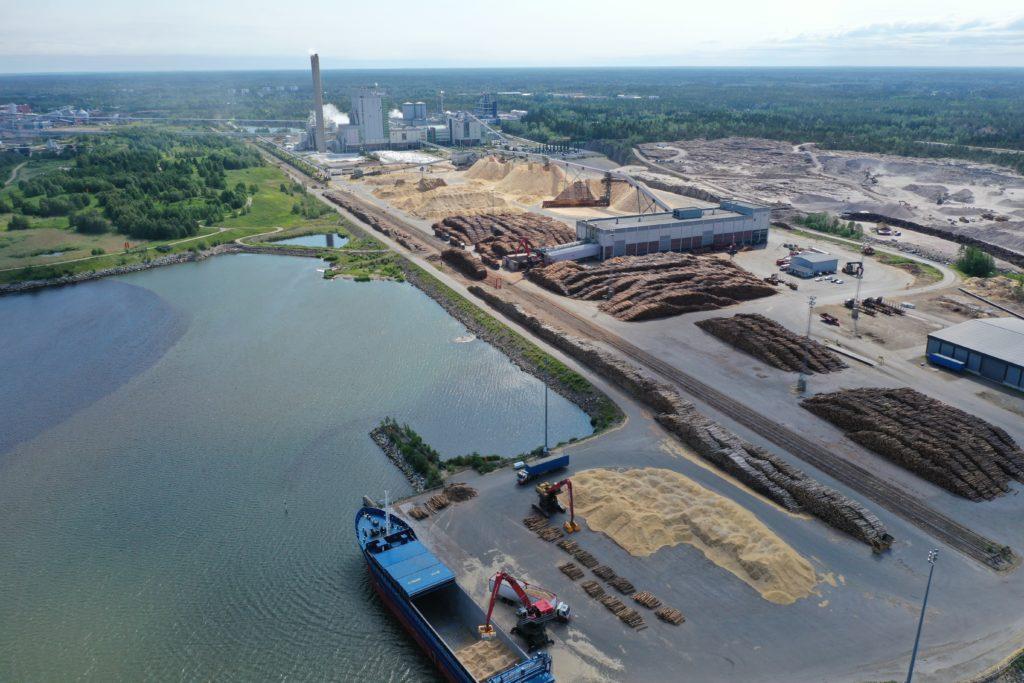
Terminal layout has a direct impact on how many moves a machine can complete per hour. If a handler must travel long distances between the vessel hold and the stockpile, or if traffic congestion on the quay interrupts cycles, throughput drops even when the machine itself is performing well. Poor dimensioning of storage areas and inadequate road or rail access compound this further.
Unplanned downtime and maintenance gaps
Reactive maintenance, rather than planned servicing, is a persistent productivity killer. Every unscheduled breakdown during a vessel call creates delays that ripple through berth scheduling and storage capacity. Terminals that track machine health proactively and schedule maintenance around operational windows consistently achieve higher availability rates than those that wait for faults to appear.
How does ageing equipment affect bulk terminal throughput?
Ageing equipment reduces bulk terminal throughput in three main ways: slower work cycles, more frequent breakdowns, and increasing energy consumption. As hydraulic systems wear, response times slow, cycle speeds drop, and operators must compensate manually, which adds variability and reduces consistency across shifts.
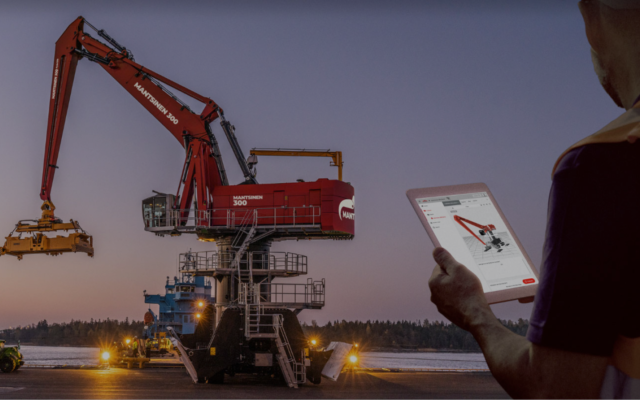
Older machines also lack the intelligent control systems and load-monitoring technology that modern material handlers use to optimise every lift. Without real-time feedback, operators cannot consistently maximise fill rates or adapt quickly to changing material conditions. Over time, this translates into a measurable gap between what the terminal could handle and what it actually processes.
The maintenance burden of older equipment adds another layer of impact. Spare parts become harder to source, service intervals become more frequent, and the risk of unplanned stoppages during critical vessel calls increases. For terminals handling high volumes of bulk cargo under competitive pressure, the cumulative cost of running ageing machines often exceeds the investment required to replace them with modern, high-efficiency handlers. Exploring professional equipment and maintenance services can help terminals assess the right path forward.
Why does energy inefficiency slow down bulk material handling?
Energy inefficiency slows down bulk material handling because machines that consume more power than necessary generate more heat, experience greater component stress, and require more frequent cooling or throttling cycles. This reduces the sustainable work rate a machine can maintain over a full shift without risking overheating or mechanical strain.
There is also a direct operational cost dimension. High energy consumption increases the cost per handled tonne, which puts pressure on terminal margins and can lead operators to reduce machine utilisation to manage fuel or electricity budgets. The result is a deliberate throttling of throughput that is driven entirely by energy economics rather than actual capacity limits.
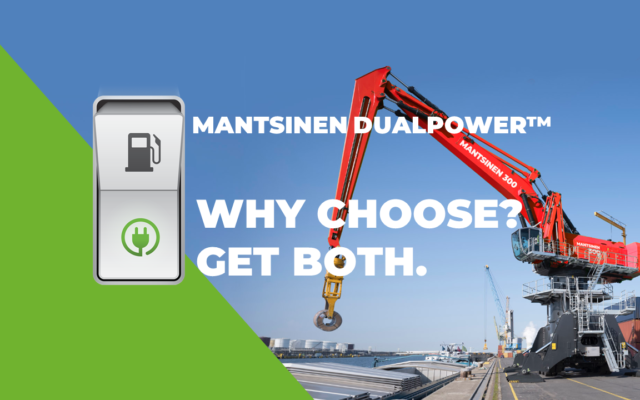
Modern energy recovery systems address this directly. Our Hybrilift® energy recovery system, for example, captures energy generated by boom movements and feeds it back into the machine’s power cycle, reducing energy consumption by up to 50 percent. This means machines can sustain higher work rates for longer without the energy cost penalties that older hydraulic systems impose. When energy efficiency improves, the sustainable throughput ceiling rises with it.
What’s the difference between high-capacity and standard material handlers for ports?
The key difference between high-capacity and standard material handlers for ports is reach, lift capacity, and work cycle speed at scale. High-capacity machines are designed to handle Panamax-class vessels and move significantly larger volumes per cycle, while standard handlers are optimised for speed and flexibility in smaller or mid-size port operations.
High-capacity handlers
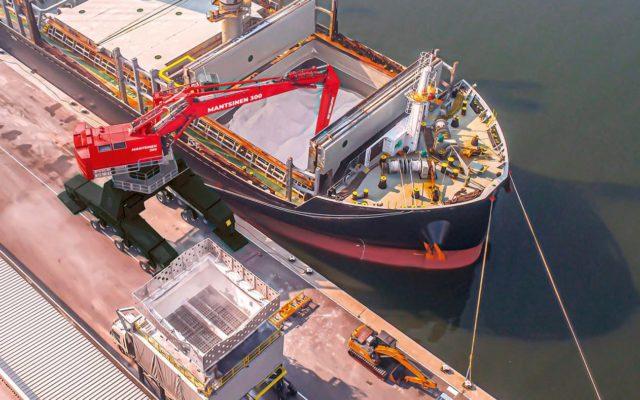
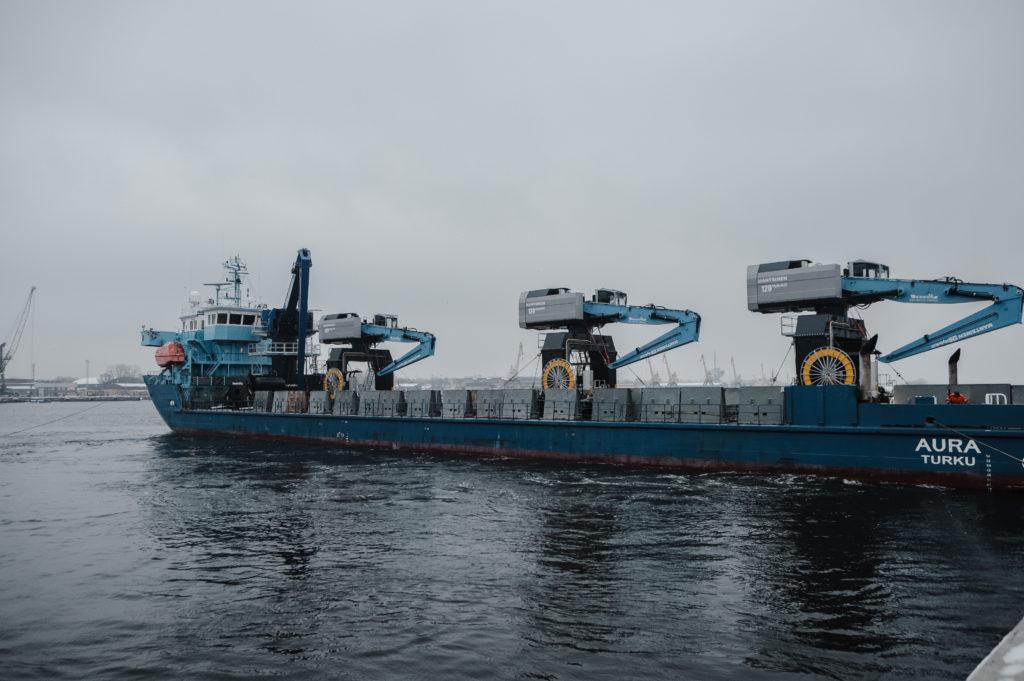
Large material handlers such as the Mantsinen 200 and Mantsinen 300 are built for operations where vessel size and cargo volume demand maximum throughput. The Mantsinen 300, the world’s largest hydraulic material handling machine, delivers the fastest work cycle in its size class and can move cargo from Panamax-class vessels while remaining agile enough to reposition without losing efficiency. These machines are the right choice when berth time is the critical constraint and every hour of vessel occupancy carries significant cost.
Standard and mid-range handlers
Mid-range machines such as the Mantsinen 120 and Mantsinen 140 offer a different value proposition. They combine speed, flexibility, and lower operating costs in a package that suits smaller and mid-size ports, terminals, and mill operations. The Mantsinen 120, for instance, is the backbone of many small and mid-size port operations precisely because it delivers the speed and precision needed for frequent, varied cargo cycles without the footprint or investment of a large handler.
Choosing between the two categories is not simply a question of budget. It depends on vessel size, cargo type, berth layout, and the balance between throughput volume and operational flexibility. Getting this decision right is one of the most important factors in achieving strong bulk terminal productivity over the long term.
How can bulk terminals improve productivity without halting operations?
Bulk terminals can improve productivity without halting operations by focusing on attachment optimisation, planned maintenance scheduling, operator training, and incremental equipment upgrades that fit within existing operational windows. Most productivity gains do not require a complete shutdown and can be implemented progressively.
Attachment selection is often the fastest win. Reviewing whether the current grab or clamshell bucket is matched to the materials being handled, and switching to a more appropriate attachment, can improve fill rates and reduce cycle times immediately. Quick-coupler systems make this change fast and safe, meaning a terminal can adapt its tooling to different cargo types within a single shift without extended downtime.
Planned maintenance is the second lever. Shifting from reactive to scheduled servicing, timed around vessel calls and cargo windows, reduces the risk of unplanned stoppages during high-value operations. Terminals that build maintenance predictability into their scheduling consistently achieve higher machine availability than those that respond to breakdowns as they occur.
For terminals considering longer-term improvements, we offer support that goes beyond machine supply. Our experience operating material handling machines at woodyards and terminals worldwide gives us direct insight into layout, dimensioning, and logistics flow optimisation. That combination of manufacturing expertise and operational knowledge means we can help terminals identify bottlenecks and implement solutions that improve throughput without requiring a full operational pause. A long-term partnership approach, with local support and continuous improvement built in, is how sustained productivity gains are achieved in practice. Contact our bulk terminal sales specialists to discuss how these improvements can be applied to your operation.