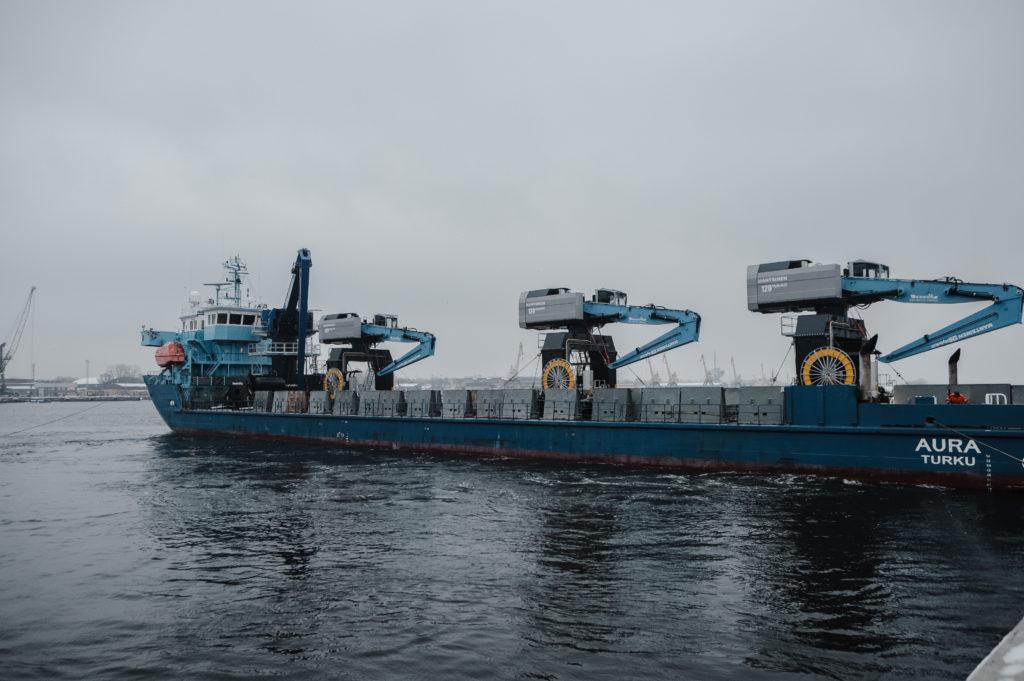
What role does automation play in bulk cargo terminals?
Bulk cargo terminals are under more pressure than ever to move greater volumes faster, with fewer errors and a smaller environmental footprint. Automation in bulk cargo terminals has emerged as one of the most significant shifts in port and terminal operations over the past decade, reshaping how operators think about efficiency, safety, and long-term competitiveness. Whether you manage a mid-sized timber terminal or a large-scale, multi-commodity port, understanding what automation can and cannot do is essential to making smart investment decisions.
This article answers the key questions terminal operators and logistics decision-makers are asking right now—from what automation actually means in a bulk-handling context to how it supports sustainability targets and what to watch out for when getting started.
What is automation in bulk cargo terminals?
Automation in bulk cargo terminals refers to the use of technology, intelligent control systems, and semi-autonomous or fully autonomous machinery to perform material-handling tasks with reduced or no direct human intervention. It covers a wide spectrum, from simple sensor-assisted controls on individual machines to fully integrated terminal management systems that coordinate entire logistics flows.
In practice, automation in this context includes features such as load monitoring, anti-sway systems, remote operation capabilities, automated positioning, and data-driven workflow management. It is important to understand that automation is not a single switch you flip. It exists on a continuum, and most terminals today operate somewhere in the middle, using intelligent machines that assist skilled operators rather than replacing them entirely.
Bulk cargo handling involves materials such as wood chips, grain, coal, iron ore, fertilizers, and metal scrap, each with unique properties and handling requirements. Effective automation must account for this variability, which is why purpose-built material-handling machines with adaptable attachment systems form the foundation of any credible automation strategy in bulk terminals.
Why does automation matter for bulk terminal operations?
Automation matters for bulk terminal operations because it directly addresses the core challenges of the industry: increasing throughput, reducing operational costs, improving safety, and meeting tightening environmental regulations. Terminals that fail to automate risk falling behind competitors that can handle more cargo in less time at a lower cost per ton.
Port operations worldwide are constantly evolving and face fierce competition. Only the most efficient techniques and solutions survive in this environment. The pressure to maximize machine utilization, minimize downtime, and keep operators safe is relentless. Automation helps on all three fronts simultaneously.
From a business perspective, the financial case is straightforward. Automated and semi-automated systems reduce costly errors, lower maintenance costs through predictive monitoring, and allow terminals to operate for longer hours with fewer personnel on the ground. From a regulatory standpoint, automation also makes it easier to document operations, monitor emissions, and demonstrate compliance with increasingly strict port authority requirements.
How does automation improve bulk material handling efficiency?
Automation improves bulk material-handling efficiency by optimizing work cycles, reducing idle time, and enabling machines to operate at consistently high performance regardless of operator fatigue or shift changes. Intelligent systems can calculate optimal grab angles, load weights, and movement paths in real time, which translates directly into more tons handled per hour.
Faster work cycles and higher throughput
One of the most measurable gains from automation is reduced cycle time. When machines are equipped with intelligent load control systems, anti-collision technology, and automated positioning, each individual movement becomes faster and more precise. Over hundreds of cycles per shift, these marginal gains add up to a significant increase in total throughput.
Reduced downtime through predictive systems
Automated monitoring systems continuously track machine performance data, flagging potential issues before they cause breakdowns. This shift from reactive to predictive maintenance is one of the most valuable efficiency gains automation delivers. Terminals with high machine availability can commit to tighter vessel turnaround times, which is a major competitive advantage in port logistics.
Consistent performance across shifts
Human operators naturally vary in performance over the course of a working day. Semi-automated assistance systems help maintain consistent output levels by guiding operators through optimal movement sequences and alerting them to load deviations. The result is more predictable operations and better planning accuracy across the entire terminal.
What types of automation are used in bulk cargo terminals?
Bulk cargo terminals use several types of automation, ranging from machine-level intelligent features to terminal-wide management platforms. The most common categories include assisted-operation technology, remote and semi-remote control systems, automated attachment management, and integrated terminal operating systems.
- Assisted-operation technology: Load control systems, anti-sway functions, and automated boom positioning that help operators work faster and more safely without removing them from the cab.
- Remote operation: Systems that allow an operator to control a machine from a control room rather than an onboard cabin, improving safety in hazardous environments and enabling one operator to oversee multiple machines.
- Predictive maintenance platforms: Sensor networks and data analytics tools that monitor machine health in real time and generate maintenance alerts before failures occur.
- Attachment management systems: Quick-coupler technology combined with intelligent identification systems that allow fast, safe switching between grabs, clamshell buckets, spreaders, and other tools depending on the material being handled.
- Terminal management software: Platforms that coordinate vessel scheduling, machine allocation, cargo tracking, and reporting across the entire terminal operation.
The right combination of these technologies depends heavily on the terminal’s cargo mix, volume, layout, and existing infrastructure. A terminal handling a single bulk commodity such as grain will have different automation priorities than a multi-purpose port moving wood chips, scrap metal, and containers within the same shift.
How does automation support sustainability goals in ports?
Automation supports sustainability goals in ports by reducing energy consumption, minimizing unnecessary machine movements, enabling electrification, and generating the data needed to monitor and report emissions. Smarter operations are inherently greener operations because wasteful movement and idling both consume energy.
Energy recovery systems are a strong example of how intelligent machine design and automation intersect with sustainability. We developed the Mantsinen Hybrilift® energy recovery system, which captures kinetic energy from the boom’s lowering movement and reuses it to power the boom during lifting, reducing energy consumption and costs by up to 50 percent. This kind of technology works most effectively when combined with automated load management because the system can optimize energy recovery across consistent, repeatable work cycles.
Automation also supports the transition to electric and dual-power machines. The Mantsinen DualPower concept, which combines an electric motor with a diesel engine, relies on intelligent power management to determine which power source to use at any given moment. This kind of automated power switching would not be practical without the underlying control systems that monitor load, cycle phase, and grid availability in real time.
Beyond energy, automated monitoring makes it far easier for terminal operators to track and report their carbon footprint—a requirement that is becoming standard across European ports and increasingly expected in other markets as well.
What should terminal operators consider when adopting automation?
Terminal operators adopting automation should consider their current operational baseline, the compatibility of automation technology with their existing machine fleet, the skills of their workforce, and the total cost of ownership over a realistic investment horizon. Jumping straight to full automation without addressing these foundations leads to underperforming systems and frustrated teams.
Start with a clear operational assessment
Before investing in any automation solution, map your current logistics flows, identify your biggest sources of downtime and inefficiency, and define what success looks like in measurable terms. Automation should solve specific problems, not just modernize for its own sake. Layout, dimensioning, and logistics-flow analysis are critical first steps that determine which technologies will deliver genuine value in your specific environment.
Choose machines and systems designed for your materials
Not all automation solutions are built with bulk material handling in mind. The properties of materials such as wood chips, iron ore pellets, grain, and scrap metal vary enormously, and the machines, attachments, and control systems you choose need to account for that variability. Working with a partner that has direct operational experience handling these materials—not just manufacturing machines for others to use—provides a level of practical insight that generic technology vendors simply cannot match. To discuss the right solution for your terminal, contact our bulk terminal sales specialists for tailored guidance.
Plan for workforce development
Automation changes the role of operators rather than eliminating it. Operators need training on new control systems, data interpretation, and maintenance-monitoring tools. Terminals that invest in workforce development alongside technology adoption consistently see better results than those that treat automation as a purely technical project.
Prioritize long-term support and scalability
Automation systems require ongoing support, software updates, and the ability to scale as your terminal grows. Choosing partners that offer long-term terminal equipment support services and local support infrastructure reduces the risk of being left with a system that cannot evolve with your operational needs. The goal is a partnership built on continuous improvement, not a one-time equipment purchase.