Is a hydraulic material handler better than a rope crane or balanced cranes for ports?
For most high-volume bulk material handling in ports, a hydraulic material handler outperforms both rope cranes and balanced cranes. Hydraulic handlers offer superior flexibility, faster cycle times, and the ability to switch between material types and attachments without significant downtime. That said, the right machine depends on your port’s specific cargo mix, throughput targets, and infrastructure. This article breaks down each key comparison so you can make a confident decision.
What are the key differences between hydraulic handlers, rope cranes, and balanced cranes?
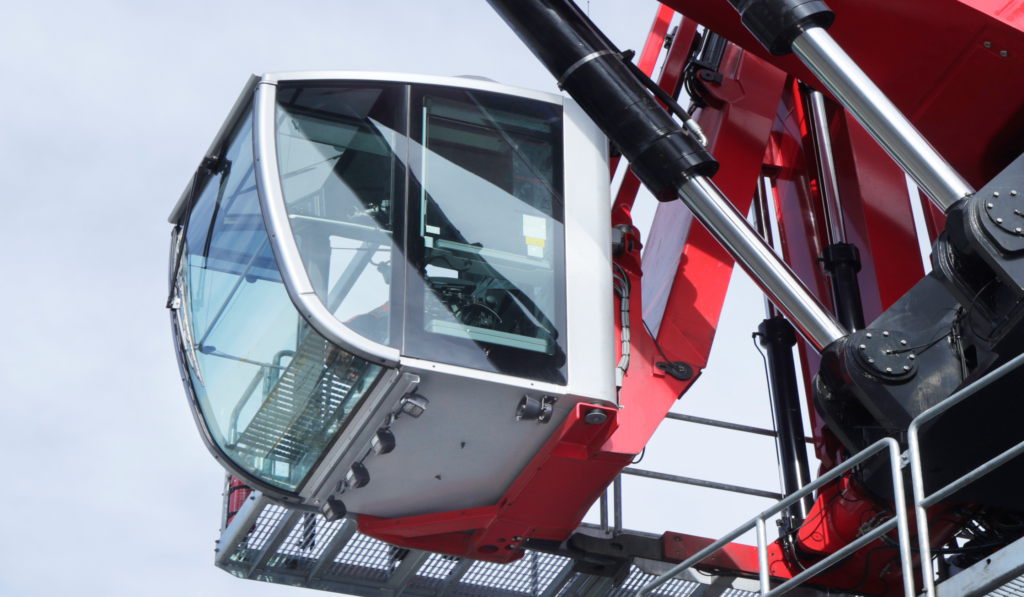
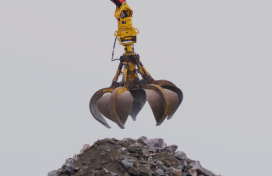
The core difference lies in how each machine generates and transfers lifting force. A hydraulic material handler uses a pressurised hydraulic system to power a multi-jointed boom arm, giving operators precise, three-dimensional reach and the ability to use interchangeable attachments such as grabs, magnets, and grapples. A rope crane lifts loads vertically using steel cables and a fixed or travelling hoist. A balanced crane uses counterweights to offset the load, reducing motor effort but limiting flexibility.
In practical port terms, these differences translate into very different operational profiles. Hydraulic handlers can work close to vessel hulls, reach into awkward hold shapes, and switch from handling wood chips to scrap metal within minutes. Rope cranes excel at straight vertical lifts of heavy, uniform loads but lack the reach versatility of a hydraulic arm. Balanced cranes are well-suited to repetitive, predictable lifting cycles but tend to be slower to reposition and less adaptable to mixed cargo operations.
Maintenance complexity also differs significantly. Hydraulic systems require regular fluid management and seal inspections, while rope cranes demand careful monitoring of cable wear and drum condition. Balanced cranes have fewer moving parts in the lifting mechanism itself, which can simplify servicing in stable, single-purpose environments.
Which machine handles the highest volumes of bulk material in ports?
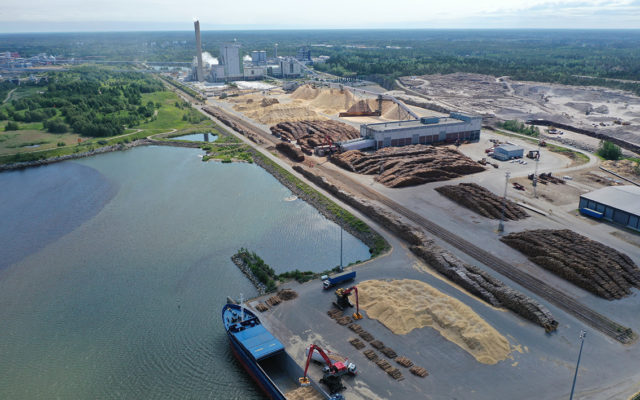
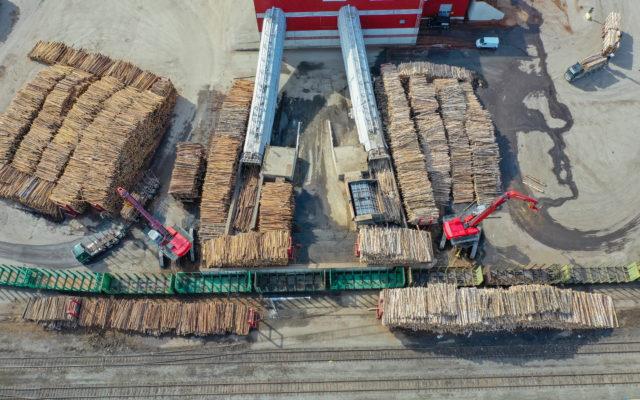
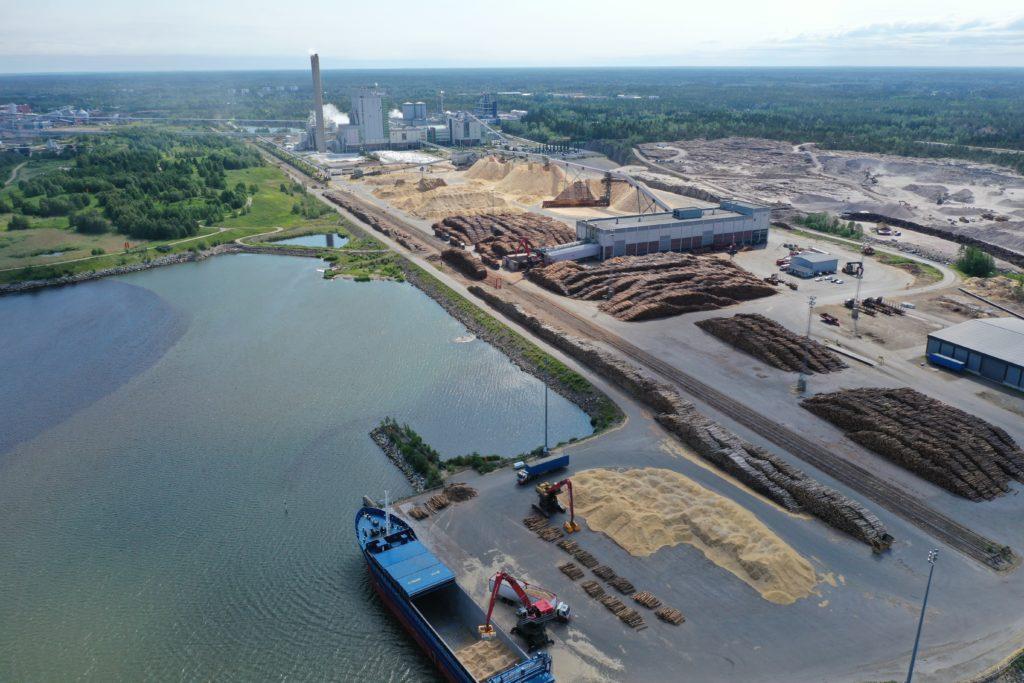
Hydraulic material handlers consistently achieve the highest throughput rates in bulk port operations. Their ability to grab, swing, and release material in rapid, continuous cycles gives them a clear edge over rope cranes and balanced cranes when processing large volumes of loose bulk cargo such as wood chips, coal, grain, or metal scrap.
Cycle time is the key metric here. A hydraulic handler can complete a full grab-and-release cycle faster than a rope crane because the boom moves through multiple axes simultaneously rather than waiting for a vertical hoist to travel up and down. This parallel motion capability compounds across a full shift, delivering meaningfully higher tonnage per hour.
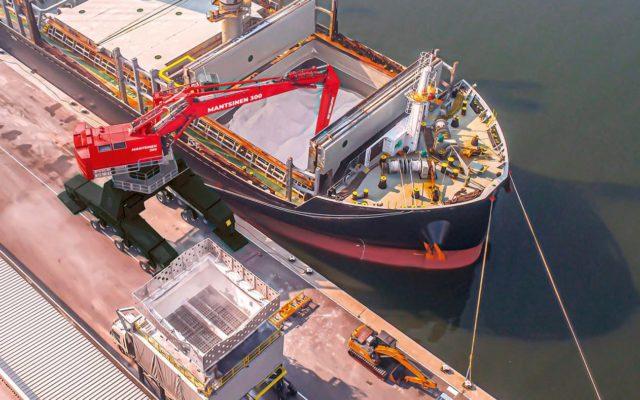
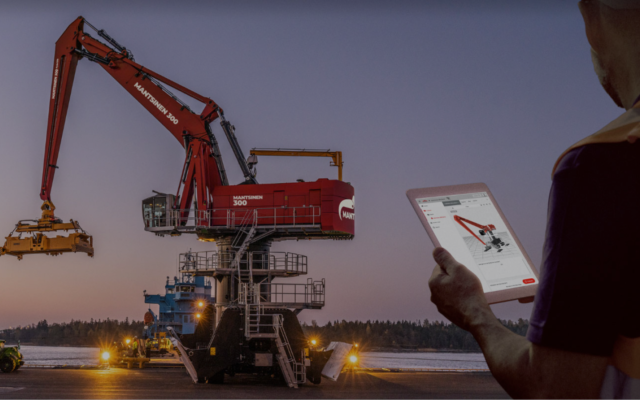
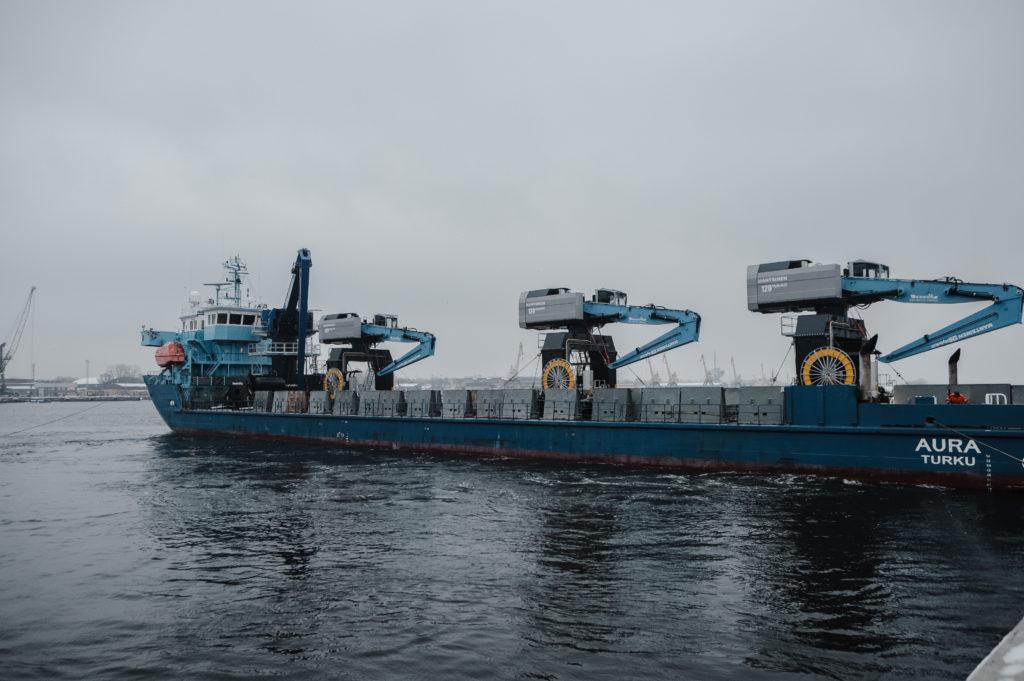
We build machines specifically optimised for this kind of sustained high-volume work. Our flagship model, the Mantsinen 300, is the world’s largest hydraulic material handler, designed to move exceptional volumes of bulk material in demanding port and terminal handling environments. When throughput is the primary objective, no other machine type matches the output a well-specified hydraulic handler can deliver.
How does energy consumption compare across the three crane types?
Rope cranes and balanced cranes have traditionally been viewed as energy-efficient because their mechanical designs reduce the load on drive motors. However, modern hydraulic material handlers equipped with energy recovery systems now match or outperform both in real-world energy consumption, particularly during intensive bulk handling cycles.
Our Mantsinen Hybrilift® system captures the kinetic energy generated when the boom lowers under load and feeds it back into the machine’s power supply for use in subsequent boom lifting movements. This energy recovery approach reduces total energy consumption by up to 50% compared to conventional hydraulic machines, fundamentally changing the efficiency equation. Development of Hybrilift® began in 2006, making it a mature and proven technology rather than a recent addition.
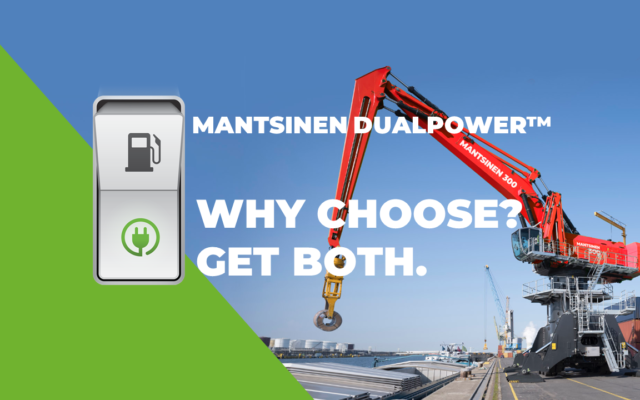
For ports with access to grid electricity, our DualPower concept takes this further by combining an electric motor with a diesel engine. Operators can run on electricity during grid-connected work and switch to diesel when mobility is needed, reducing both fuel costs and emissions. Rope cranes running on fixed electric hoists can be efficient for straight vertical lifts, but they cannot recover energy from the load-lowering phase the way a Hybrilift®-equipped handler can. Balanced cranes recover some energy through counterweight mechanics, but the recovery is passive and limited compared to an active regenerative system.
When is a rope crane or balanced crane a better fit than a hydraulic handler?
A rope crane is a better fit when your port handles very heavy, uniform loads that require long vertical lifts with minimal horizontal repositioning, such as large containerised cargo or heavy industrial components. Balanced cranes suit operations where loads are predictable, repetitive, and within a fixed working radius, and where capital cost is a primary constraint.
Rope cranes also have an advantage in certain heavy-lift scenarios where their rated capacity at the hook exceeds what a hydraulic arm can deliver at full extension. If your port regularly handles single lifts exceeding the reach-adjusted capacity of available hydraulic handlers, a rope crane may be the more appropriate primary machine.
Balanced cranes remain relevant in workshop or light industrial port settings where operators need to position loads carefully over short distances without the complexity of a full hydraulic system. They are rarely the right choice for high-volume bulk handling, but in a specialised, low-throughput context, they offer simplicity and low operating cost.
What is the total cost of ownership for each machine type in a port environment?
Total cost of ownership for a hydraulic material handler is higher at the point of purchase but typically lower over a ten-to-fifteen-year operational lifespan when throughput, energy savings, and maintenance costs are factored in together. Rope cranes and balanced cranes carry lower upfront costs but often generate higher per-tonne handling costs over time due to slower cycle rates and less energy recovery.
The main cost drivers to compare across all three types are:
- Purchase price: Rope cranes and balanced cranes generally have lower initial investment requirements than large hydraulic handlers
- Energy costs: Hydraulic handlers with regenerative systems can cut fuel and electricity bills substantially over their working life
- Maintenance: Hydraulic systems require consistent fluid and seal management; rope cranes require cable inspection and replacement; balanced cranes have lower routine maintenance demands
- Downtime costs: A machine with faster cycle times generates more revenue per operational hour, meaning unplanned downtime is more costly for high-throughput hydraulic handlers, but the revenue upside is also greater
- Attachment flexibility: Hydraulic handlers support multiple attachment types, which can eliminate the need for separate specialist machines and reduce overall fleet costs
For ports handling diverse bulk materials at scale, the productivity advantages of a hydraulic handler typically offset the higher capital investment within a few years of operation.
Which machine type is best suited for multi-material port operations?
Hydraulic material handlers are the clear choice for multi-material port operations. Their ability to swap between grabs, magnets, grapples, and other attachments in a short time means a single machine can handle wood chips in the morning, scrap metal at midday, and grain in the afternoon without significant reconfiguration delays.
Rope cranes can be fitted with different hook configurations, but the range of compatible attachments is narrower and changeover takes longer. Balanced cranes are generally designed around a specific load type and working radius, making them a poor fit for ports where cargo variety is a daily operational reality.
Multi-material versatility also reduces fleet size requirements. A port that might otherwise need separate machines for different cargo streams can consolidate around one or two hydraulic handlers, lowering capital expenditure, reducing maintenance complexity, and simplifying operator training. For port and terminal operators managing a broad cargo mix under pressure to control costs and improve harbour crane efficiency, a hydraulic material handler is the most practical and productive long-term solution. Learn more about our machine maintenance and support services to understand the full lifecycle value of a hydraulic handler.