How can ports reduce emissions in material handling?
Ports can reduce emissions in material handling by switching to low-emission and electric equipment, optimising machine duty cycles, and integrating energy recovery systems into their operations. These changes target the diesel-heavy machinery that drives the majority of port carbon footprints. The questions below unpack the specific technologies, fuels, regulations, and measurement tools shaping green port operations in 2026.
What technologies are cutting emissions in port material handling?
The technologies cutting emissions in port material handling include drive systems with energy recovery, fully electric material handlers powered by shore power, and intelligent machine control software that reduces idle time and unnecessary fuel consumption. Together, these approaches address both the combustion source and the inefficiencies that amplify it.
Energy-recovering material handlers combine a diesel engine with an electric motor and an onboard energy storage system. When the machine lowers a load or brakes a boom, kinetic and gravitational energy that would otherwise be lost as heat is captured and fed back into the system. This recovered energy then powers the next lift cycle, reducing the net demand on the diesel engine.
Fully electric machines eliminate combustion entirely at the point of use, drawing power from the port’s grid connection. Where the grid is supplied by renewables, this translates directly into near-zero operational emissions. Software-driven load management systems complement both approaches by ensuring machines run at optimal engine load rather than idling at high fuel consumption between cycles.
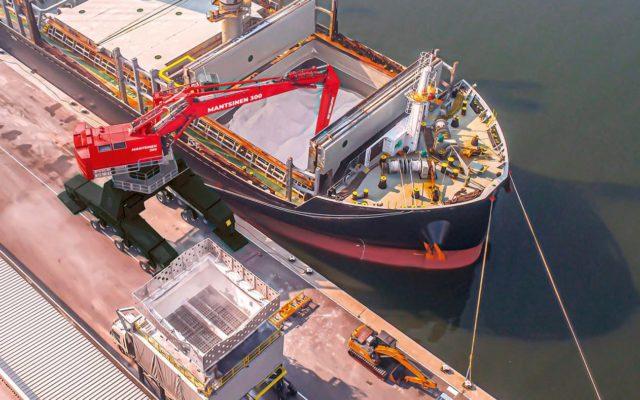
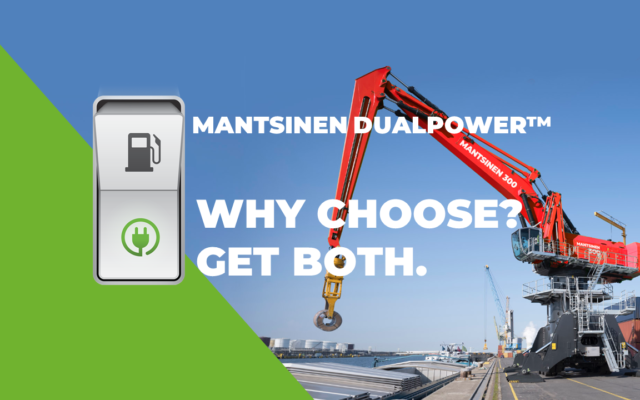
We at Mantsinen have developed two complementary technologies along these lines. Our Hybrilift® system captures energy from the boom’s lowering movement and recycles it for use in subsequent boom lifts, while our DualPower concept pairs an electric motor with a diesel engine so operators can switch between grid power and independent diesel operation depending on site conditions.
How much can energy-recovering material handlers reduce fuel consumption?
Material handlers equipped with energy recovery systems can reduce fuel consumption by up to 50% compared with conventional diesel-only machines, depending on the duty cycle, the type of material being handled, and how consistently the energy recovery system is engaged. Real-world savings in port environments typically fall in the range of 30 to 50 percent.
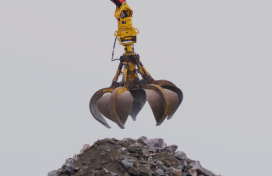
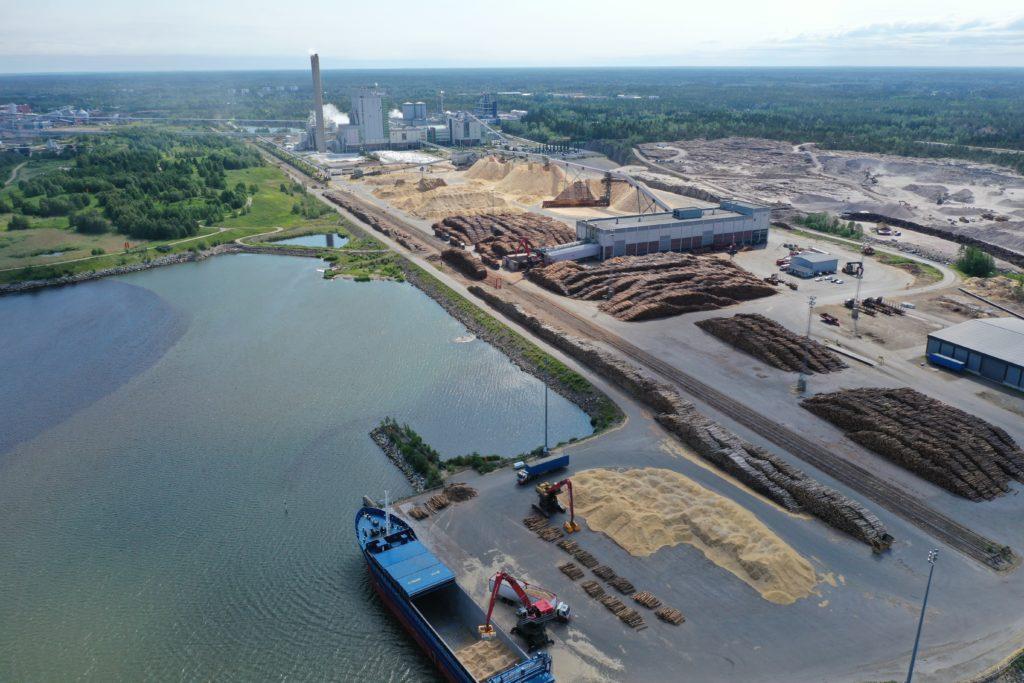
The savings are highest in operations with frequent lifting and lowering cycles, because that repetitive motion generates more recoverable energy. Handling bulk materials like wood chips or scrap metal, where grab buckets are raised and released dozens of times per hour, creates ideal conditions for energy recovery systems to deliver maximum benefit.
Fuel savings translate directly into lower CO2 emissions, reduced operating costs, and longer engine service intervals. Over the working life of a large material handler, the cumulative reduction in diesel consumption is substantial, making energy recovery technology one of the most commercially compelling tools available for port decarbonisation.
What is the difference between energy-recovering and fully electric material handlers?
The key difference between energy-recovering and fully electric material handlers is their power source and operational flexibility. A machine equipped with an energy recovery system retains a diesel engine alongside an electric motor and energy storage, allowing it to operate anywhere. A fully electric machine relies entirely on a grid connection or large battery system, eliminating combustion but requiring fixed infrastructure.
Energy-recovering material handlers
Machines with energy recovery systems offer operational independence. They can work in areas without shore power connections, move freely around a terminal, and continue operating during grid outages. The diesel engine acts as a backup and primary power source, while the electric components handle peak demand and energy recovery. This makes them well suited to large terminals where machines travel significant distances between working areas.
Fully electric material handlers
Fully electric machines produce zero direct emissions at the point of use and have lower mechanical complexity because they remove the combustion drivetrain. Their limitation is infrastructure dependency. A cable reel or overhead power supply must be available wherever the machine operates, which suits fixed-position or rail-guided applications more than free-roaming bulk handling. Where ports and terminals handle bulk cargo with access to renewable electricity, fully electric machines offer the clearest path to zero-carbon material handling.
Which bulk materials create the highest emissions in port handling?
The bulk materials that create the highest emissions in port handling are those requiring the most intensive machine cycles, the longest travel distances, or specialised equipment running at high engine loads. Coal, iron ore, scrap metal, and wood chips consistently appear among the most energy-intensive materials to handle at scale.
Dense materials like iron ore and coal demand high lifting forces, keeping machines operating at or near maximum hydraulic pressure throughout each cycle. Scrap metal handling is particularly demanding because irregular load shapes make grabs work harder and require more repositioning. Wood chips and biomass, while lighter per cubic metre, are handled in enormous volumes, meaning machines run almost continuously during vessel loading or unloading windows.
Grain and fertiliser handling tends to be less emissions-intensive per tonne because these materials flow predictably and allow faster, more efficient cycles. However, volume still drives total emissions, and any high-throughput operation will accumulate a significant carbon footprint regardless of material type.
How do ports measure and track their handling emissions?
Ports measure and track their handling emissions by recording fuel consumption per machine, converting that data into CO2 equivalent figures using standard emission factors, and aggregating results across their equipment fleet. More advanced ports layer in telematics systems that log machine activity in real time, enabling emissions to be tracked by shift, cargo type, or berth.
The most common starting point is fuel-based calculation. Each litre of diesel burned produces a known quantity of CO2, so accurate fuel records provide a reliable emissions baseline. Many modern material handlers include onboard fuel monitoring as standard, making data collection straightforward.
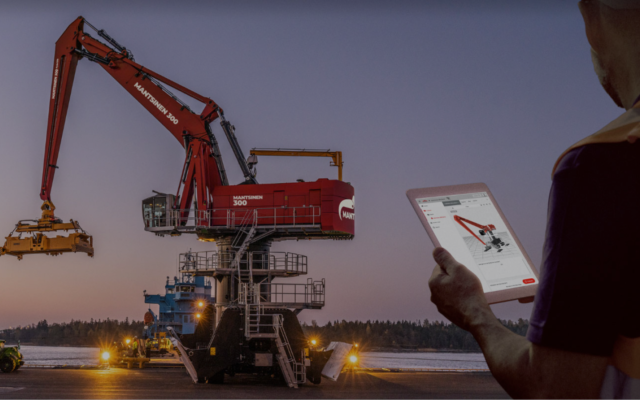
Telematics and machine management platforms go further by capturing idle time, load cycles per hour, engine load percentage, and energy recovery data on machines equipped with energy recovery systems such as Hybrilift®. This granular information allows port operators to identify which machines, operators, or cargo types are driving disproportionate emissions and to set targeted reduction goals. Mantsinen’s own telematics solution, Mantsinen Insight, takes this a step further by automatically notifying operators or owners of upcoming service needs and enabling factory technical customer service teams to troubleshoot most issues remotely in real time. This connectivity significantly improves problem resolution times and overall machine uptime, giving port operators a clearer and more actionable picture of their fleet’s performance and emissions profile. Some ports also participate in voluntary or mandatory reporting frameworks that require third-party verification of their carbon footprint data.
What regulations are pushing ports to reduce material handling emissions?
The regulations pushing ports to reduce material handling emissions include the European Union’s Fit for 55 package, the FuelEU Maritime regulation, the EU Emissions Trading System extended to shipping, and increasingly strict local air quality standards in port cities. These frameworks create both compliance obligations and financial incentives to decarbonise port operations.
The EU ETS extension to maritime transport means that shipping companies calling at European ports now face a carbon price on their voyage emissions. While this targets vessels directly, it creates pressure on ports to demonstrate low-emission terminal operations as part of their overall value proposition to shipping lines. Ports that can offer faster, cleaner cargo handling become more attractive partners.
FuelEU Maritime sets progressive targets for the greenhouse gas intensity of energy used on ships docked at EU ports, which indirectly affects shore power provision and terminal electrification plans. At the national level, many European countries have introduced clean air zones and non-road mobile machinery emission standards that apply directly to the material handlers, reach stackers, and cranes operating within port boundaries.
Beyond Europe, the International Maritime Organization’s greenhouse gas strategy sets a global trajectory toward net-zero shipping emissions by or around 2050, creating long-term demand signals that influence investment decisions in port equipment today. Ports that begin their decarbonisation journey now are better positioned to meet tightening requirements without disruptive and costly last-minute upgrades. Choosing a supplier like Mantsinen, which can tailor the shipping and delivery concept to each terminal’s specific conditions — including fully assembled machine delivery to minimise disruptions and reduce risks associated with heavy component handling on-site — and which backs every machine with preventive maintenance support and a comprehensive dealer network and after-sales services, helps ports build a resilient, future-ready operation from the outset.