How do ports reduce downtime caused by material handling equipment?
Ports reduce downtime caused by material handling equipment by combining proactive maintenance strategies, smart equipment selection, and modern electric machine technology. The most effective operations treat downtime prevention as an ongoing system, not a one-time fix. Below, we unpack the key questions every port operator should be asking in 2026.
What are the most common causes of downtime in port material handling?
The most common causes of downtime in port material handling are unplanned mechanical failures, hydraulic system faults, operator error, and inadequate maintenance scheduling. Wear on high-cycle components such as slew rings, hydraulic pumps, and grab mechanisms accounts for a significant share of unplanned stoppages, particularly in high-volume bulk terminals handling materials like wood chips, coal, scrap metal, or grain.
Beyond mechanical wear, environmental factors play a real role. Dust, moisture, and temperature extremes accelerate component degradation in outdoor port environments. Electrical faults and sensor failures are increasingly common as machines become more sophisticated, and these can be harder to diagnose quickly without the right diagnostic tools on site.
Operational pressure also contributes. When throughput targets push machines beyond their intended duty cycles, wear accelerates and the window for routine maintenance shrinks. The result is a reactive maintenance culture where teams are always catching up rather than staying ahead of failures.
How does predictive maintenance reduce unplanned equipment stoppages?
Predictive maintenance reduces unplanned equipment stoppages by using real-time data from sensors and telematics to identify developing faults before they cause a breakdown. Instead of waiting for a failure or relying on fixed service intervals, predictive maintenance flags abnormal vibration, temperature spikes, hydraulic pressure drops, or unusual current draws, giving maintenance teams time to act during planned downtime windows.
Modern bulk material handlers increasingly come equipped with onboard monitoring systems that log machine performance continuously. Reviewing this data regularly allows port maintenance teams to spot trends, such as a gradual increase in hydraulic cycle times, that point to a specific component nearing the end of its service life. Addressing it during a scheduled shift avoids the far greater cost of an unplanned stoppage during peak operations.
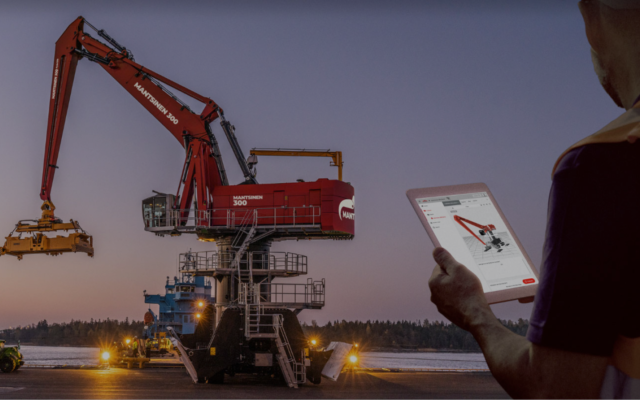
Mantsinen supports this approach through the Mantsinen Insight telematics system, which can automatically notify the operator or owner of an upcoming service need. When the machine is maintained by one of Mantsinen’s partners through its comprehensive dealer network, operational reliability and predictability are greatly improved. Mantsinen Insight also provides a direct connection for the factory’s technical customer service team to troubleshoot most issues remotely, delivering real-time support to local service teams and significantly reducing problem resolution times.
The operational benefit compounds over time. Ports that build predictive maintenance into their standard workflows report fewer emergency callouts, lower parts costs from catching failures early, and better overall equipment availability across their fleets.
What role does equipment selection play in minimising port downtime?
Equipment selection plays a decisive role in minimising port downtime because a machine designed and sized for its specific application will experience less stress, less wear, and fewer failures than one that is under-specified or mismatched to the task. Choosing a bulk material handler with the right lifting capacity, reach, and duty cycle rating for your terminal’s actual workload is the single most important uptime decision a port or terminal operation makes.
Reliability is also built into design choices. Machines engineered with fewer hydraulic connections, simplified service access, and robust structural components reduce both the frequency and duration of maintenance interventions. When service points are easy to reach and parts are standardised, maintenance teams work faster and machines return to operation sooner.
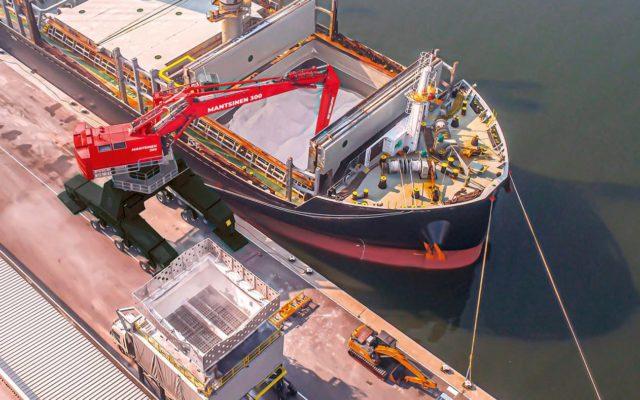
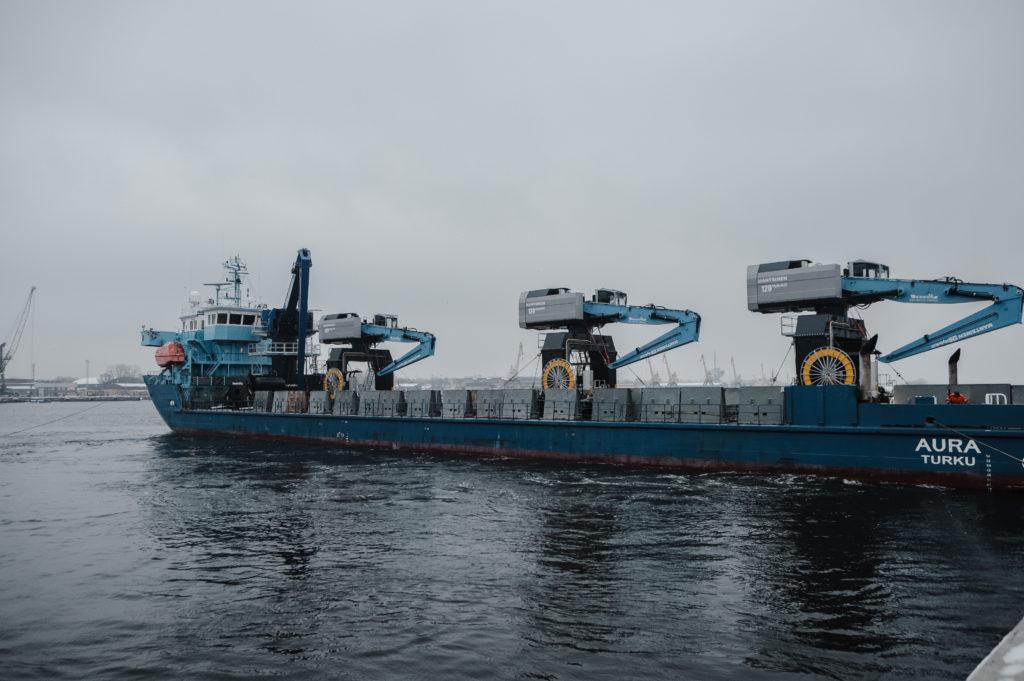
Manufacturer support matters too. Mantsinen, for example, tailors its shipping and delivery concepts to the specific conditions of each terminal, taking into account the operating location, availability of offloading berths, and space constraints. One proven approach is fully assembled machine delivery, which minimises disruptions to local operations and significantly reduces the risks and hazards associated with moving and lifting heavy machine components on site. Equipment backed by this level of logistical expertise, combined with strong spare parts availability and a responsive service network, keeps downtime short when something does need attention.
How do energy-efficient material handlers improve operational uptime?
Energy-efficient material handlers improve operational uptime by reducing the number of failure-prone components, lowering thermal stress on drive systems, and enabling energy recovery that reduces the load on primary power sources. Fewer moving parts in the drivetrain means fewer points of failure, and energy-efficient operation means components run cooler and last longer.
Our Hybrilift® system, for example, captures energy generated when the boom is lowered and feeds it back into the machine’s power system during boom lifting, reducing energy consumption by up to 50%. This not only cuts fuel and electricity costs but also reduces engine load cycles, which directly extends service intervals and lowers wear on powertrain components.
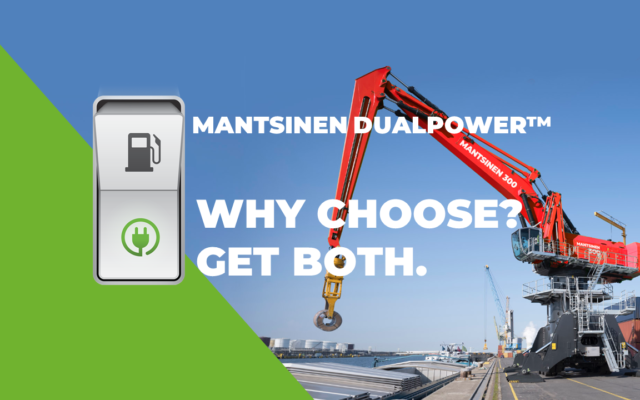
Our DualPower concept takes this further by combining an electric motor with a diesel engine, giving operators the flexibility to run on grid power where available and switch to diesel when needed. This dual-source approach eliminates the vulnerability of depending on a single power source, which is a common cause of unplanned stoppages when grid supply is interrupted or diesel systems develop faults.
From an uptime perspective, machines equipped with energy recovery and electric drive systems also tend to generate richer operational data, making predictive maintenance easier to implement and more accurate in its fault detection.
What maintenance practices keep bulk material handlers running longer?
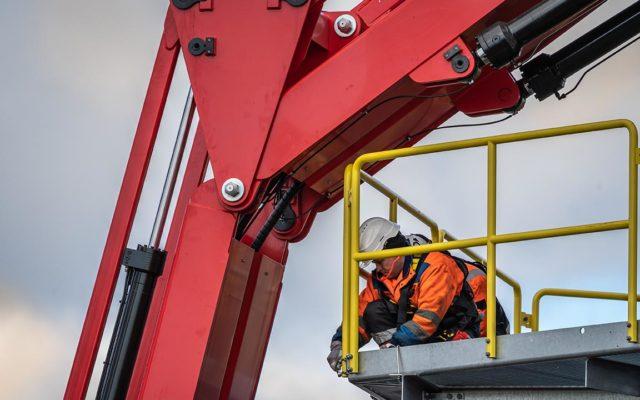
The maintenance practices that keep bulk material handlers running longer are structured daily inspections, consistent lubrication schedules, hydraulic fluid management, and proactive component replacement based on condition rather than failure. These practices, applied consistently, extend machine life significantly and protect the high availability that port operations depend on. Mantsinen recommends that periodic maintenance be carried out through its comprehensive and knowledgeable dealer network, ensuring that expert maintenance and support services are performed to the standard required to maximise machine up-time.
- Daily operator checks: Operators who inspect their machines at the start of each shift catch early warning signs, such as fluid leaks, unusual noises, or abnormal response times, before they develop into failures.
- Lubrication discipline: High-cycle machines like port material handlers have numerous grease points that require regular attention. Missed lubrication is one of the fastest routes to premature bearing and slew ring wear.
- Hydraulic fluid analysis: Regular oil sampling identifies contamination and degradation before it damages pumps, valves, and cylinders. Hydraulic system failures are among the most disruptive and expensive in any material handler.
- Structural inspections: Cracks or deformation in boom structures and attachments should be caught during scheduled inspections, not during operation. Fatigue damage is cumulative and accelerates under heavy duty cycles.
- Software and firmware updates: Modern machines rely on control systems that benefit from regular updates to improve performance, fix known issues, and maintain compatibility with diagnostic tools.
When should a port consider replacing rather than repairing ageing equipment?
A port should consider replacing rather than repairing ageing equipment when cumulative repair costs begin to approach or exceed the cost of a new machine, when the equipment can no longer meet the terminal’s throughput requirements, or when downtime frequency consistently disrupts operations. Age alone is not the deciding factor, but it becomes significant when combined with declining availability and rising maintenance spend.
A useful threshold many operators apply is when annual maintenance and repair costs exceed 20 to 30 percent of the machine’s current replacement value. At that point, the economics of continued repair rarely make sense, especially when a newer machine would deliver better fuel efficiency, lower emissions compliance risk, and higher throughput from the first day of operation.
Obsolescence is another trigger. When spare parts become difficult to source, when manufacturer support for a model ends, or when a machine no longer meets current safety or emissions standards, the risk profile of keeping it in service rises sharply. A single extended breakdown caused by an unavailable part can cost more in lost throughput than the price difference between repair and replacement.
Ports that evaluate their fleet systematically, rather than making replacement decisions reactively after a major failure, tend to manage their total cost of ownership more effectively and maintain higher average equipment availability across their operations.